The store manager said they’ll “take care of everything”—should I trust that?

Picture this: You slip on a wet spot in a big-box store. Your back lights up. Your pride takes a hit. You’re embarrassed, shaken, and trying to get to your car without making a scene. Then the manager pulls you aside with a calm voice and a friendly smile, saying they'll take care of everything...Now, after the emotions have subsided and the chaos is over, you're wondering, "Should I trust that?" It sounds reassuring—like the problem is taken care of. But here’s the reality in Florida injury cases: a store manager’s promise is not a settlement, not a check, and definitely not a legal deadline extension. In many cases, it’s the beginning of a process run by a claims department that has one job: pay as little as possible, as late as possible, or not at all. And because Florida’s statute of limitations recently changed, waiting can cost you your entire case. Verbal promises vs. the claims department: two different worlds Store employees are trained to de-escalate. They may genuinely want to help. But most businesses—especially chains—don’t “handle” injury claims in the store. They report the incident, and the file gets kicked to corporate risk management or an insurance adjuster. That’s when the tone often changes: “We’re still investigating.” “We don’t see negligence.” “Can you give a recorded statement?” “We can offer you a small amount for your trouble—today.” None of that is “taking care of everything.” It’s positioning. A helpful way to think about it: the manager is like the front desk at a hotel after a bad room. They can apologize and offer a new key. The claims department is the corporate office deciding whether they owe you a refund at all. Why [...]


I Signed Some Papers at the Hospital and Now I’m Worried: What You Probably Signed and What to Do Next

"I signed some papers at the hospital, and now I’m worried." Here's a simple guide about what you signed and what to do next. If you’ve ever been treated in an ER or admitted to a hospital, you know the routine: a clipboard, a stack of forms, and someone saying, “Just sign here, here, and here.” When you’re in pain, shaken up, or worried about a loved one, you’re not reading fine print—you’re trying to get help. Then, days later, you start thinking: What exactly did I sign? Did I accidentally give up my rights? Did I agree to pay something I can’t afford? Did I authorize an insurance company to do something behind my back? Take a breath. Most hospital paperwork is standard. But a few specific forms can create real headaches if you don’t understand what they do. Here’s what those papers might have been—and what you should do now. Why hospitals hand you so many forms: Hospitals don’t just treat patients; they also have to get paid, comply with privacy laws, and document consent. That means you’ll often sign forms that cover: Permission to treat you (consent) Who pays the bill (financial responsibility) How they bill insurance (assignment of benefits) How they can share records (HIPAA / authorizations) Whether someone else gets paid from your claim (liens) Sometimes, language that looks like a “release” (this is the one that raises eyebrows) Let's break these down into simple terms so there is no confusion or assumption on what they mean or what they are for. 1) Consent to treat: “Yes, help me.” This is usually exactly what it sounds like: you agree to evaluation, treatment, testing, and procedures that may be necessary. It [...]

What to Do If You’re the Victim of a Hit-and-Run in Florida (And How to Protect Your Claim)

Being a victim of a hit-and-run is one of the most infuriating kinds of crashes. One minute you’re driving home, heading to school pickup, or running errands, and the next you’re staring at damage, dealing with pain, while watching the other driver disappear. If this happened to you in Florida, you’re not powerless. But what you do in the first minutes, hours, and days matters more than you may think. It can affect your health, your ability to identify the driver, and the amount of compensation available to help you recover. Here’s the practical, plain-English roadmap I give clients when the other driver decides not to stay at the scene. Step 1: Get safe first (do not chase them) Your instincts might scream, “Go after them!” Don’t. A hit-and-run driver is already making reckless decisions. Chasing can escalate the situation, put you in danger, and create another crash. Your job is to get yourself and your passengers to safety. If you can, move your vehicle out of traffic. Then call 911. Florida specifically lists hit-and-run crashes as situations where you should notify law enforcement and call 911, and it ties this requirement to Florida Statute 316.065. (FL Highway Safety) Step 2: Capture details fast (your memory fades quicker than you think) After a crash, adrenaline scrambles time. The details you swear you’ll remember can blur within minutes. If you can safely do it, look for: License plate number (even partial plates help) Make/model/color (and anything distinctive: decals, dents, company logos) Direction of travel and last known location Description of the driver (only if you saw them) Time of day and traffic conditions Pro tip: Say it out loud into your phone as a voice memo. [...]

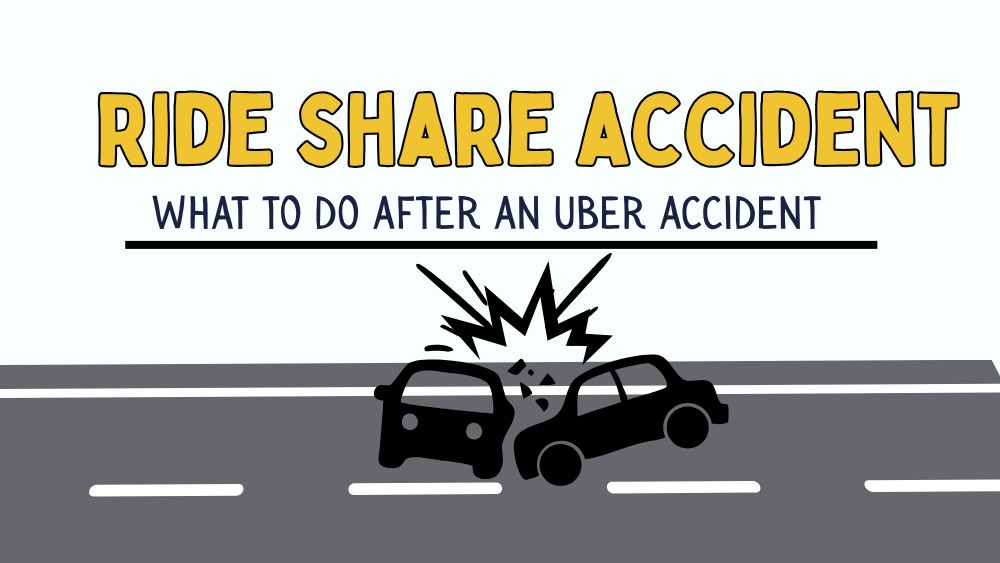
What to Do After an Uber Accident

If you’ve been in an Uber accident in Florida, you’re likely to deal with two problems at once. Those being, your injuries and the confusing question of “who’s responsible?”. Here is what to do after an Uber accident and how to protect yourself. Lots of questions flood your mind after an accident, and some of those are, "Was the Uber driver at fault, or the other driver?" "Does Uber’s insurance apply?", "What if you were a passenger and had no control over anything that happened?" and the answer to all of those questions is a little complicated because, what you do in those first minutes and days after a rideshare crash, as well as the choices you make, can protect your health and your claim or unintentionally damage both. Our firm wanted to provide a clear, step-by-step checklist to help you move forward. At Tucker Law, our firm is always here to lend a helping hand. You can always call us at 1-800-TUCKERWINS. Step 1: get to a safe location and call 911 Your first job is survival and medical help, not “figuring it out” on the side of the road. Avoid arguing "who's at fault" at the scene, especially if you are not in a safe location (on the highway, etc). Do this immediately: Move to a safe location if you can, away from traffic Call 911 and request law enforcement and medical assistance Accept paramedic evaluation even if you “feel okay.” A lot of serious injuries don’t fully show up until later, especially injuries such as concussions, soft tissue injuries, and back/neck trauma. Step 2: Document the scene like you’re building a case because you are In Uber crashes, evidence disappears fast. Cars [...]

Should I see a doctor even I feel fine? After a car accident

After a car accident, it’s completely normal to ask yourself: “Do I really need to see a doctor after a car accident if I feel okay?” A lot of people don’t want to overreact and convince themselves that they are fine because they feel "fine". Maybe your car is banged up, your nerves are rattled, but you’re standing there thinking, “I’m fine.” Maybe you’re sore, maybe you’re not, and the idea of sitting in an urgent care waiting room feels unnecessary. Here’s the frank answer: yes, you should still get checked out. Why get checked out after a car accident if you feel fine? Because it’s a health decision, not a money decision.  After a crash, your body can mask pain. Adrenaline and shock can make you feel normal for hours or even days. That’s why a lot of common accident injuries don’t show up right away. People often feel okay at the scene, then later develop neck stiffness, headaches, dizziness, back pain, or soreness that wasn’t there before.  Seeing a doctor doesn’t mean you’re trying to exaggerate anything. It’s the same kind of responsible step you’d take after any sudden impact or trauma. The goal is to make sure nothing serious is going on and to get guidance on what symptoms to watch for.  In many cases, the best outcome is the doctor telling you everything looks fine. That peace of mind is valuable. And if there is an injury, catching it early can prevent it from getting worse and helps you recover faster.  So the reason to get checked out is simple: confirm you’re okay, catch hidden injuries early, and protect your long-term health. At Tucker Law, we’ve handled many cases where clients [...]

Go to Top