Who Is at Fault in a Chain-Reaction Car Accident in Florida?
A chain-reaction accident claim can be harder to investigate than an ordinary two-car collision. Several impacts may occur within seconds, drivers may experience the sequence differently, and more than one person may share responsibility. Each insurer may focus on evidence that shifts fault elsewhere.
Fault is not decided simply by counting the vehicles or assuming that every rear driver caused every impact. Investigators examine the timing, spacing, speed, road conditions, driver conduct, and physical evidence. These eight steps can help preserve the clearest possible record.
1. Identify every impact you felt
As soon as you are safe, write down the sequence in your own words. Did you feel one impact or several? Were you pushed forward before being struck from behind? Did your vehicle hit the one ahead only after the rear impact? Note what you saw, heard, and felt without guessing about facts you could not observe.
A prompt account can be valuable because details fade quickly. Keep it private and factual rather than posting it online.
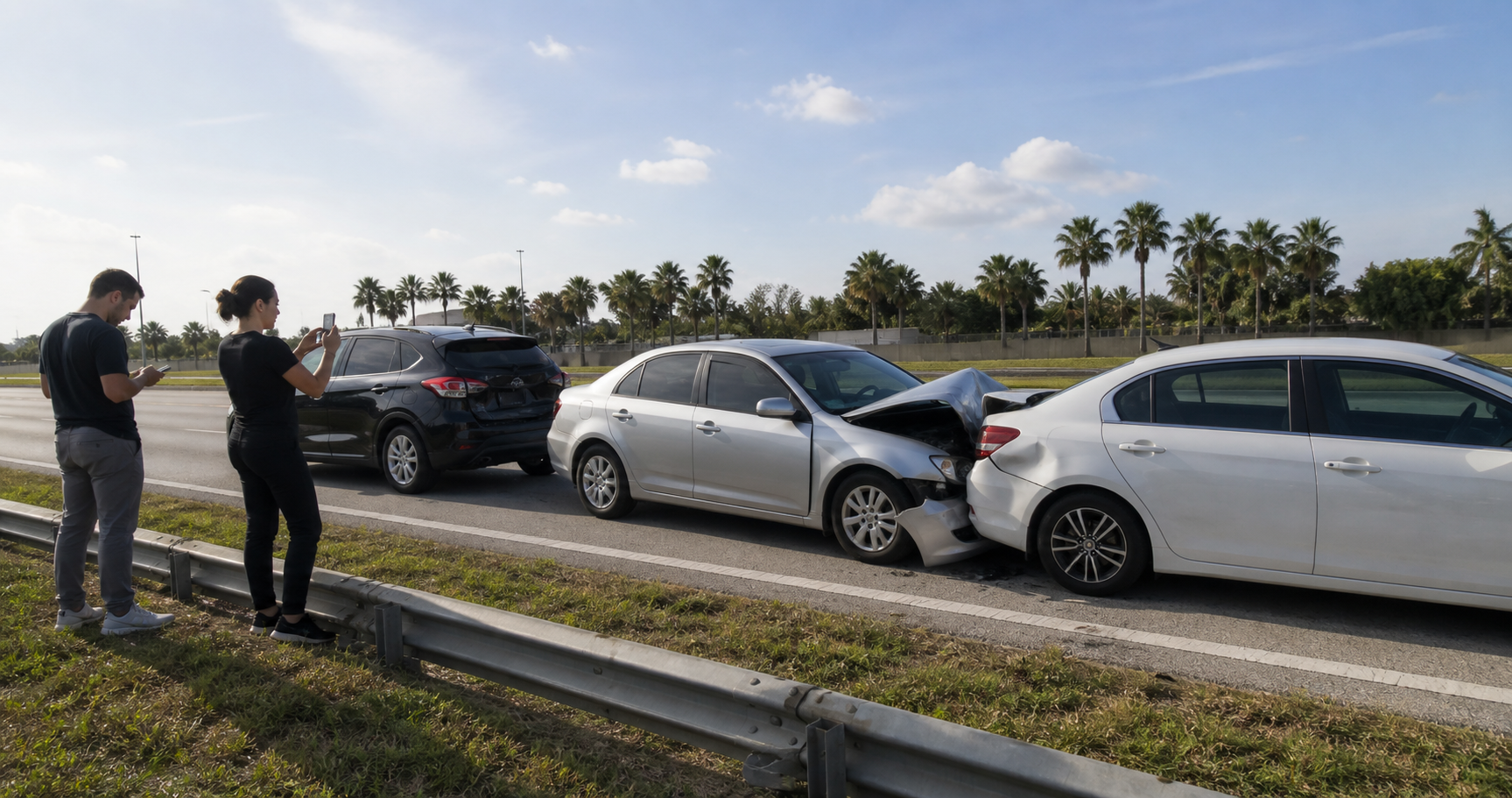
2. Photograph the entire vehicle line
Take wide photos showing all vehicles in their resting positions, the lanes, shoulders, traffic controls, debris, and skid or tire marks. Then photograph each vehicle’s front, rear, sides, interior damage, and license plate. Damage patterns may help an expert evaluate the order and force of impacts.
Do not limit photographs to your own bumper. A strong chain-reaction accident claim often depends on understanding what happened to every vehicle.
3. Gather information from every driver and witness
- Names and contact details for drivers, owners, passengers, and witnesses
- Driver’s-license and insurance information
- Vehicle descriptions and plate numbers
- Employer information if any driver was working
- A brief note about where each witness was located
Independent witnesses may have seen the first impact when the involved drivers did not. Do not argue about fault at the scene. Preserve the contact information and let the evidence be evaluated.
4. Look for video and electronic evidence
Dashboard cameras, traffic systems, nearby businesses, doorbell cameras, buses, and commercial vehicles may have useful recordings. Some video is automatically overwritten within days or weeks. Identify possible sources immediately and send appropriate preservation requests.
Modern vehicles may also store event data related to speed, braking, throttle, and restraint use. The availability and meaning of this information vary by vehicle. Avoid repairs or disposal before potentially important data and damage are documented.
5. Understand that fault may be divided
One driver may have stopped carelessly, another may have followed too closely, and a third may have been distracted or speeding. Road design, debris, a mechanical failure, or a commercial driver’s conduct can add further issues. Florida’s current comparative-fault statute may affect how responsibility and recovery are analyzed.
The statute’s application depends on the type of claim and the evidence. A lawyer can evaluate potential fault involving parties who were not originally identified.
6. Report the collision and protect medical benefits
Call 911 when anyone is injured, complains of pain, a vehicle must be towed, or another reportable circumstance exists. If no officer prepares a report, review our guide on what to do after a Florida car accident with no police report.
Report the crash to the appropriate insurers according to policy terms. Florida personal injury protection coverage may apply to initial medical expenses regardless of who caused the collision. Current Florida Statute § 627.736 generally requires initial services and care within 14 days for PIP medical benefits.
7. Document each injury and treatment course
Multiple impacts can move occupants in different directions. Tell medical providers how many impacts you remember and where you were seated. Describe when symptoms began, prior conditions, and changes in daily activities. Attend recommended follow-up appointments and save bills, receipts, work notes, and treatment instructions.
If an old injury became worse, see our article about a pre-existing condition injury claim in Florida. Honest before-and-after documentation can clarify what the new crash changed.
8. Avoid an early assumption about coverage
Each vehicle may have a different insurer, policy limit, owner, or business connection. One insurer may accept responsibility for only part of the event. Uninsured or underinsured motorist coverage may become relevant if available liability coverage is insufficient.
Passengers may have access to a different priority of coverage than drivers. Our guide explains how passenger injury claims work after a Florida car accident.
Common mistakes after a multi-vehicle crash
- Assuming the last car is automatically responsible for everything
- Giving an estimated speed or distance when you do not know
- Repairing the vehicle before documenting all damage
- Ignoring witnesses because a crash report exists
- Signing one insurer’s release without understanding its effect
- Waiting until video and vehicle data are gone
How Tucker Law can help
A chain-reaction accident claim may require coordinated requests to several insurers and careful reconstruction of the impact sequence. Tucker Law can review the reports, photographs, medical records, video, vehicle evidence, and available coverage. Visit our personal injury practice areas or contact Tucker Law to discuss the circumstances.
This article is general information and not legal advice. Fault, coverage, damages, and deadlines depend on the specific facts and current law.