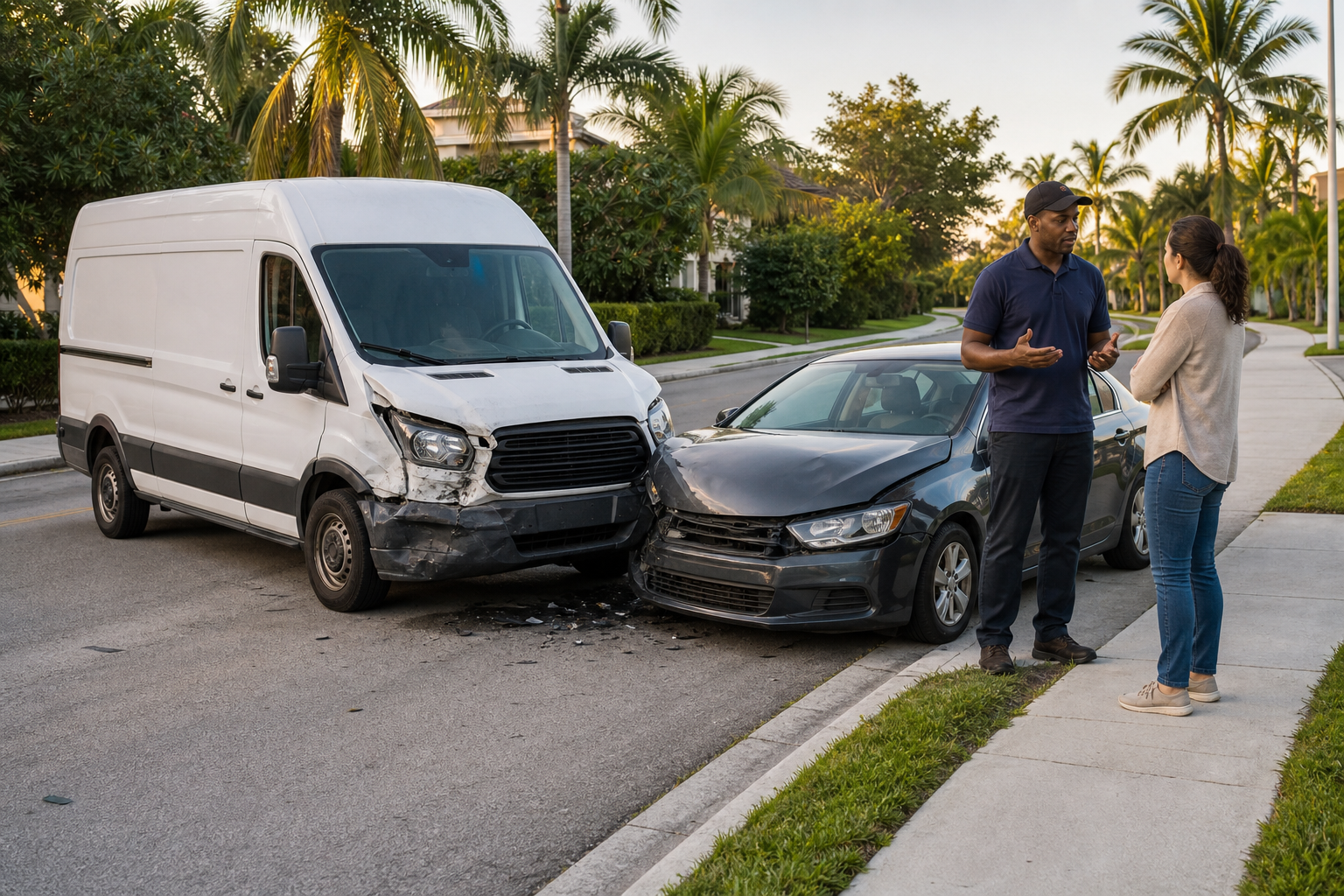
Who May Be Liable After a Delivery Driver Accident in Florida?
A delivery driver accident claim can involve more than the person behind the wheel. Depending on the work arrangement and what the driver was doing, responsibility may extend to an employer, a contractor, a vehicle owner, or another business. Different insurance policies may also apply.
Delivery work has expanded beyond traditional company fleets. Drivers may use branded vans, rented trucks, personal cars, or vehicles owned by a subcontractor. The following questions help identify the evidence and coverage that may matter after a Florida collision.
1. Was the driver working at the time?
Start with the driver’s purpose. Was the person making a delivery, traveling between stops, picking up an order, returning to a facility, or using the vehicle for a personal errand? A business may be responsible for negligent conduct by an employee acting within the course and scope of employment. The analysis becomes more complicated when work and personal activity overlap.
Time, route, dispatch, and delivery records can help answer this question. Do not rely only on what the driver says at the scene.
2. Was the driver an employee or an independent contractor?
A uniform, app, or vehicle sign does not conclusively establish the legal relationship. Companies may classify drivers as employees, contractors, franchise workers, or workers for a separate delivery service. Courts and insurers may look beyond the label to facts such as control over routes, schedules, training, equipment, and work methods.
This distinction can be central to a delivery driver accident claim. Preserve the company name, vehicle markings, order information, and any statements about the driver’s work status.
3. Who owned and insured the vehicle?
The driver may own the car, while a company may own or lease a van. Another entity could provide the vehicle through a fleet or rental agreement. Obtain the driver’s insurance information and photograph the registration when possible. Record every visible business name and identification number without entering the vehicle or touching cargo.
Several policies may need to be reviewed: personal auto coverage, commercial auto coverage, employer liability coverage, or coverage maintained by a delivery platform. Exclusions and coverage periods can affect which policy responds.
4. What conduct caused the collision?
Delivery pressure can create risks, but a claim still requires evidence. Relevant conduct may include speeding, unsafe turns, following too closely, distracted driving, illegal parking, reversing without a clear view, fatigue, or failure to yield. Vehicle condition may also matter if worn brakes, tires, lights, or mirrors contributed.
Photograph the scene, vehicle positions, cargo, sight obstructions, skid marks, traffic controls, and damage. Identify doorbell, dashboard, vehicle, and business cameras immediately because recordings may be overwritten.
5. Could the business be directly responsible?
In addition to responsibility for a worker’s driving, a business may face separate questions about hiring, training, supervision, maintenance, scheduling, or safety policies. The facts must support the theory. A lawyer may seek driver qualification records, prior incidents, inspection logs, dispatch messages, electronic location data, and policies governing deliveries.
A delivery driver accident claim should be investigated before vehicles are repaired, data is deleted, or records are routinely destroyed. A preservation letter can identify material that should not be discarded.
6. What should you do at the scene?
- Call 911 when there is injury, pain, a road hazard, or another reportable circumstance.
- Move to safety if possible and follow emergency instructions.
- Photograph every vehicle, plate, business marking, and the full scene.
- Collect contact details from drivers, owners, passengers, and witnesses.
- Note whether packages, a route device, an app, or delivery paperwork were visible.
- Avoid debating fault or posting details online.
If an officer does not prepare a report, our guide on a Florida car accident with no police report explains additional documentation steps.
7. How do Florida insurance and fault rules affect the claim?
After a Florida motor-vehicle accident, personal injury protection coverage may pay certain initial medical and disability benefits regardless of fault, subject to the policy and statute. Current Florida Statute § 627.736 generally requires initial services and care within 14 days for PIP medical benefits.
Responsibility can also be divided among multiple people or entities. Florida’s current comparative-fault statute may affect recovery when a claimant shares responsibility. The specific application depends on the claim and facts.
What compensation may be considered?
Depending on proof and coverage, damages may include medical expenses, lost income, reduced earning capacity, property damage, and the human effects of injury. A fair evaluation considers expected future care and limitations, not just the first emergency-room bill.
Passengers can face a different coverage path than drivers. Our guide explains when a passenger may file an injury claim after a Florida crash.
Protect the evidence early
Delivery cases can involve corporate record systems and several insurers. Report the crash, obtain medical care when needed, keep treatment and expense records, and avoid signing a broad release before the full situation is understood.
Tucker Law can investigate a delivery driver accident claim, identify potentially responsible parties, and review available coverage. Explore our personal injury practice areas or contact Tucker Law to discuss your circumstances.
This article is general information, not legal advice. Employment relationships, insurance terms, liability, and damages depend on the evidence and current law.