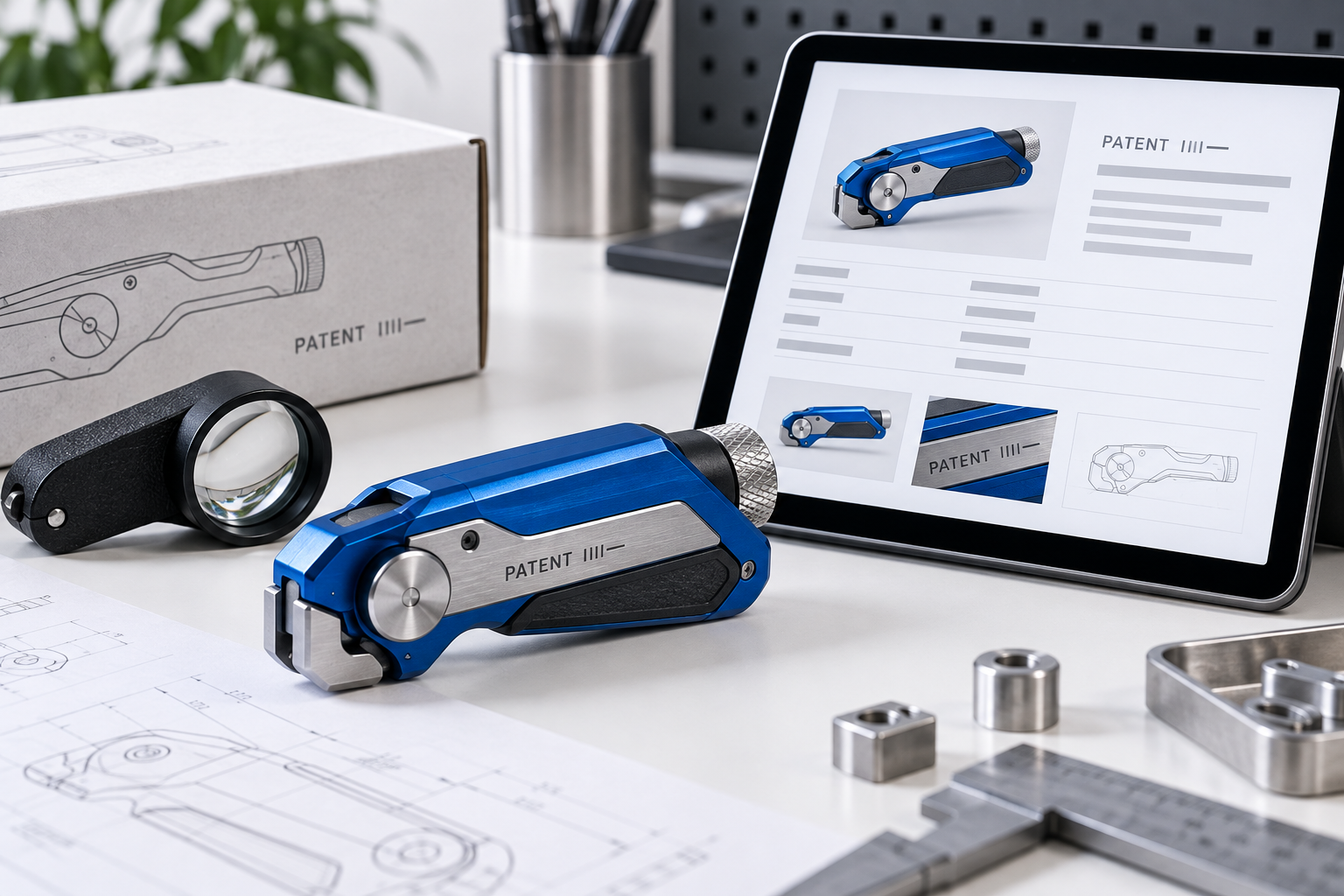
Patent Marking and Virtual Marking: Protecting the Right to Pre-Suit Damages
A patent owner can win on infringement and still lose years of potential damages because its products—or a licensee’s products—were not properly marked. That is the practical force of the patent-marking statute, 35 U.S.C. § 287(a).
For companies that sell patented products, marking should not be treated as a packaging detail to address after infringement appears. It is an ongoing compliance system connecting patent prosecution, product engineering, licensing, marketing, and litigation. A well-run system can preserve constructive notice to the market. A weak one can restrict recovery to infringement occurring after the accused infringer received actual notice.
This guide explains when patent marking matters, how traditional and virtual marking work, why licensees create special risk, and what records a business should maintain before a dispute begins.
What the patent-marking statute actually does
Section 287(a) allows a patentee—and people making, offering, selling, or importing a patented article for or under the patentee—to give public notice that the article is patented. If a covered product is not marked, the statute generally bars damages for infringement occurring before the accused infringer was notified of the infringement and continued infringing. Filing an infringement action constitutes notice, but that may be much later than the infringement began.
The rule does not invalidate the patent or excuse infringement. It limits the period for which damages may be recovered. That distinction matters because the separate six-year damages limit in 35 U.S.C. § 286 does not guarantee six years of pre-suit damages. Section 287 can shorten the recoverable period when marking was required but not proven.
TuckerUp previously discussed the issue in a case-specific article about Correct Craft IP Holdings v. Trick Towers. The broader lesson is worth making operational: marking compliance must be designed before a demand letter or complaint is needed.
Traditional marking and virtual marking
The statute recognizes two principal ways to mark a patented article.
Traditional marking places the word “Patent” or the abbreviation “Pat.” on the product together with the applicable patent number. When the character of the article makes direct marking impractical, the statute permits a label containing the notice to be placed on the article or its package.
Virtual marking places “Patent” or “Pat.” on the article together with an internet address. That address must lead to a page accessible to the public without charge that associates the patented article with the applicable patent number or numbers.
Virtual marking can be easier to maintain when a product is covered by several patents or when the portfolio changes. The physical product can point to one stable URL while the web page is updated as patents issue, expire, or cease to cover a redesigned product. But virtual marking is not merely putting a general “patents” link in a website footer. The public-facing page should allow a reader to determine which patent numbers are associated with which products.
“Patent pending” serves a different purpose. It may tell the market that an application is pending, but it does not identify an issued patent in the manner § 287(a) specifies. Once a patent issues and a product is covered, the marking process should be updated promptly.
Which products need to be evaluated?
The first step is not printing a label. It is determining whether the business sells an article that practices one or more claims of an issued patent.
That analysis should be claim-specific and product-specific. A product name alone is not enough. Engineering changes can move one model outside the claims while a prior version remains covered. Related products may practice different patents, and a patent may contain both apparatus and method claims.
Pure method claims generally present different marking issues because there may be no patented article to mark. Mixed portfolios require care, however. In its December 17, 2025 opinion in Ortiz & Associates Consulting, LLC v. Vizio, Inc., the Federal Circuit noted that a patentee could not avoid the problem by pointing to method claims when apparatus claims remained in the case. The court did not review the underlying dismissal because that ruling had not been timely appealed, but it affirmed an exceptional-case fee award after the plaintiff failed to address a repeatedly identified marking defect in its damages theory.
The safer business practice is to map issued claims to actual products and versions, document why each item is or is not covered, and revisit that analysis after material redesigns.
The licensee problem: marking obligations extend beyond the patent owner
A patent owner may mark every product it sells and still face a damages problem if an authorized licensee sells covered products without proper notice.
The Federal Circuit addressed that risk in Arctic Cat Inc. v. Bombardier Recreational Products Inc. The license agreement at issue expressly said the licensee had no marking obligation, and the patent owner made no effort to ensure that licensed products were marked. The court explained that licensees must also comply with § 287 because the statute reaches people making or selling patented articles “for or under” the patentee.
Arctic Cat also clarified the proof framework. An accused infringer has an initial, relatively low burden to identify specific unmarked products it believes practice the asserted patent. Once that burden is met, the patentee bears the burden of proving that the identified products do not practice the patent—or otherwise proving compliance with the marking requirement.
This makes marking a contract issue as well as a product issue. A patent license should address who must mark, the permitted form of notice, how product-to-patent mappings will be updated, what records must be kept, and whether the patent owner may audit compliance. A clause requiring marking is useful only if the parties implement it.
Stopping unmarked sales does not automatically restore earlier damages
A company may discover a marking problem after an unmarked product has left the market. It should not assume the passage of time cures the defect.
In a second Arctic Cat appeal, the Federal Circuit held that merely stopping sales of unmarked products did not excuse the earlier noncompliance. After unmarked sales have occurred, the court explained, the patentee must begin compliant marking or provide actual notice to the alleged infringer to start recovering damages. The court also held that a finding of willful infringement does not substitute for actual notice under § 287.
That holding can surprise businesses. The accused company’s knowledge of the patent—even knowledge that might support willfulness under a different analysis—is not the same as the patent owner performing the notice required by the marking statute.
Actual notice requires more than general awareness
When constructive notice through marking is unavailable, a patent owner may establish actual notice. But a general announcement that the patent exists is not necessarily enough.
Federal Circuit law focuses on the patent owner’s affirmative communication, not merely the accused infringer’s knowledge. The communication should identify the patent and make a specific charge of infringement concerning a specific accused product or device. A complaint satisfies the statute by its terms, but a carefully prepared pre-suit notice may establish an earlier date.
This is not a reason to send an improvised accusation. A notice letter can have consequences for declaratory-judgment jurisdiction, willfulness allegations, business negotiations, and later claim construction. Before communicating with a suspected infringer, the owner should complete a claim analysis and coordinate the notice strategy with patent-litigation counsel.
How to build a defensible virtual-marking system
A sound program should make compliance easy to prove years later. The public page is important, but so is the evidence behind it.
Use a stable, public URL
The URL printed on the product or packaging should remain accessible without a login, subscription, or payment. If the website is redesigned, redirects should preserve the marked address. A broken or abandoned URL undermines the notice the system is supposed to provide.
Associate products with patents clearly
List recognizable product names, model numbers, or product families next to the applicable patent numbers. Avoid a single undifferentiated list of every patent the company owns. The statute calls for an association between the patented article and the patent number.
Preserve dated records
Keep copies of packaging, product photographs, manuals, label specifications, website snapshots, and the dates on which the virtual-marking page changed. Maintain sales dates by product version. These records can become important when the parties disagree about when compliant notice began or which models practiced the claims.
Connect the page to the patent docket
A patent can issue after manufacturing files are finalized. Claims can change during prosecution, and products can be redesigned. The person managing the patent docket should trigger a marking review when a patent issues, a continuation produces new claims, a patent expires, or a relevant product changes.
Include licensees and manufacturers in the process
Provide marking specifications to licensees and contract manufacturers, require confirmation before commercial shipment, and retain evidence of compliance. If a partner controls packaging or product molds, the agreement should allocate responsibility and provide a workable update mechanism.
Overmarking is not a safe shortcut
Some businesses respond to the complexity by listing every portfolio patent against every product. That can create its own problems. A virtual-marking page should be based on a reasonable claim-to-product analysis and updated when the association changes. Accuracy makes the notice more useful to the public and makes the records more credible in litigation.
A strong process therefore includes both additions and removals. When a product no longer practices a claim, when a patent expires, or when a listing error is found, the company should correct the page and preserve the history of the change.
Patent marking belongs in the product-launch checklist
Marking works best when it is integrated into commercialization rather than handled as an emergency response. Before launch, the business should identify issued patents that cover the product, choose physical or virtual marking, confirm the exact notice on the article or packaging, and assign responsibility for future updates. The same review should occur during acquisitions, portfolio licenses, and significant redesigns.
This is one reason a patent strategy should extend beyond obtaining an issued patent. Tucker Law’s patent practice helps businesses connect prosecution, licensing, and enforcement decisions to how products are actually made and sold.
If your company sells patented products, licenses a portfolio, or is preparing an infringement claim, contact Tucker Law to evaluate marking, notice, and damages issues before they become avoidable litigation problems.
This article provides general legal information and is not legal advice. Patent-marking obligations and damages consequences depend on the claims, products, licenses, notice history, and procedural posture of a particular matter.