When a Car Catches Fire After a Florida Collision: From Emergency Response to Injury Claim
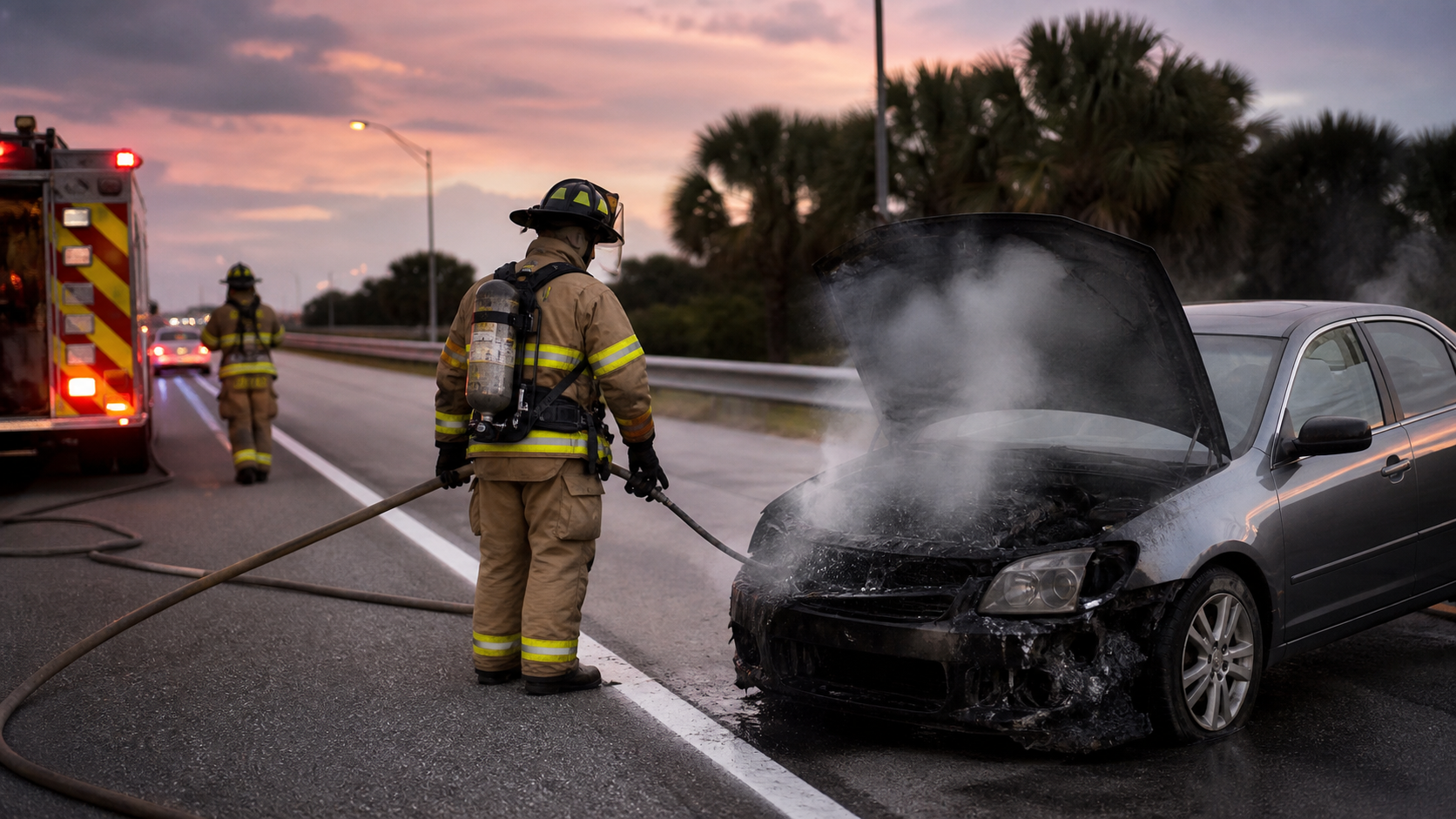
A post-collision vehicle fire claim requires two investigations at once: why the vehicles collided and why fire, smoke, or extreme heat followed. The first minutes are about survival. The later work is about preserving evidence before cleanup, towing, insurance handling, or salvage changes the scene.
At the scene: distance and emergency care come first
Move away from traffic, smoke, leaking fluids, and the vehicle if it is safe to do so. Call 911 and follow firefighters’ instructions. Do not return for property. Smoke inhalation, burns, cuts, and impact injuries may not be fully apparent during an emergency, so report symptoms accurately and accept appropriate evaluation.
Photographs should be taken only from a safe location. Wide images can show vehicle positions, debris, burn patterns, lane markings, guardrails, and nearby cameras. Record which doors opened, whether occupants escaped on their own, and when smoke or flames were first noticed, but do not disturb the vehicle.
During the response: official records begin the timeline
Obtain the crash report and identify the fire department, emergency medical agency, tow company, and storage location. Dispatch logs, 911 recordings, fire reports, body-camera video, and ambulance records may preserve observations that later photographs cannot.
Names and contact information for rescuers and civilian witnesses matter. A witness may have seen the first smoke location, heard a sound, noticed leaking fluid, or recorded the event. Request nearby business, traffic, and dash-camera footage promptly because retention periods can be short.
Before the vehicle is moved again: preservation decisions matter
A burned vehicle can contain evidence about batteries, wiring, fuel delivery, crash deformation, aftermarket equipment, airbags, seat belts, and escape routes. Give written preservation notice before destructive testing, repair, auction, or disposal when a component issue is reasonably suspected. Photograph all sides, the interior when safe, the engine or battery area, and detached parts.
A collision fire does not automatically prove a defect. Investigators may need to distinguish crash damage from an earlier maintenance problem or later firefighting damage. TuckerUp’s component-evidence guide explains why service records and physical inspection should be evaluated together.
In the following days: identify every possible cause
The collision may have ruptured a fuel system, damaged wiring, affected a battery, or ignited cargo. An earlier defect or negligent repair may also be involved. Obtain maintenance invoices, recall notices, prior warning-light information, purchase documents, photographs, and any telematics alerts. Keep damaged personal property if it safely can be preserved.
Florida Statute section 316.261 addresses brake equipment, one example of why vehicle condition can become part of crash analysis. The relevant system in a fire case depends on the origin evidence, not assumption.
As treatment continues: separate impact, smoke, and burn injuries
Tell providers how each symptom began and whether there was smoke exposure, heat, shattered glass, emergency extraction, or physical contact with the vehicle. Keep specialist, therapy, pharmacy, wage, travel, and home-care records. Photograph healing injuries consistently without filters.
Psychological symptoms after a fire can also be real and should be discussed honestly with an appropriate provider. Documentation should describe actual limitations rather than use dramatic language.
When insurers begin their reviews
Different claims may address the negligent driver, a vehicle owner, repair facility, manufacturer, or another product company. The evidence may also implicate collision, medical payments, personal injury protection, bodily injury, or uninsured motorist coverage. Obtain complete policies and avoid signing a broad release while the medical and technical investigation is unfinished.
If multiple impacts occurred before the fire, TuckerUp’s chain-reaction article can help organize the sequence. The firm’s practice-area overview describes personal-injury services, and injured people may contact Tucker Law Group for a case-specific discussion.
Before resolution: preserve a complete chronology
Combine crash evidence, fire records, towing history, inspections, repairs, medical care, wage loss, insurer communications, and product notices in one timeline. Confirm who possesses the vehicle and parts at every stage. A post-collision vehicle fire claim is easier to evaluate when the origin evidence and injury evidence remain connected.
Property handling can protect—or destroy—the evidence
Ask the tow yard and insurer for written confirmation of the storage address, fees, release requirements, and any planned transfer. If the vehicle is declared a total loss, ownership paperwork may move quickly. A technical inspection should be coordinated before title transfer or salvage when the fire origin is genuinely disputed.
Personal items can matter too. A charger, battery pack, tool, fuel container, or aftermarket device should not be discarded merely because it looks damaged. Photograph its location and condition and seek safe handling guidance. At the same time, never store a heat-damaged battery or contaminated object in a home without professional advice.
Statements should stay factual: when smoke was first seen, where it appeared, what warning lights or odors existed, and what responders did. Avoid adopting an investigator’s theory before the reports and physical evidence are available.
This article is general information and is not legal advice. Product, insurance, and injury claims depend on the specific facts and governing law.