A Rearview Camera Goes Black Before a Florida Crash: What a New Recall Can Prove
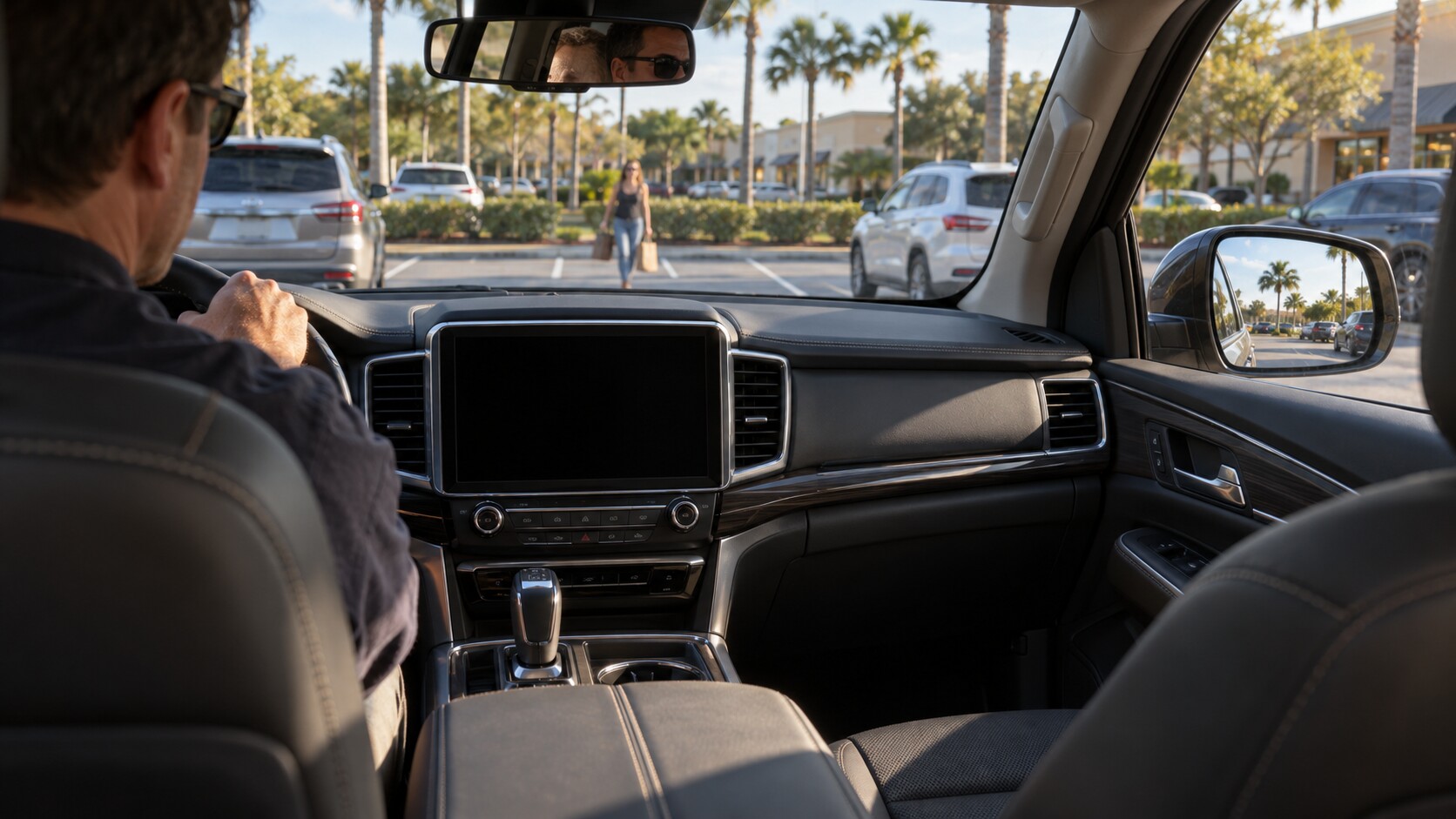
The driver shifts into reverse. The center display should show the area behind the vehicle, but the screen stays dark. A few seconds later, the vehicle strikes a person, bicycle, shopping cart, or another car.
That sequence is no longer merely hypothetical for a large group of newer vehicles. On August 25, 2026, FCA US filed NHTSA Safety Recall Report 26V531, identifying 844,027 potentially affected vehicles across selected Dodge, Jeep, Chrysler, and Ram models. The filing says suspect radio software may prevent the rearview image from appearing during a backing event, without providing a warning. The planned remedy is a software update delivered over the air or by a dealer.
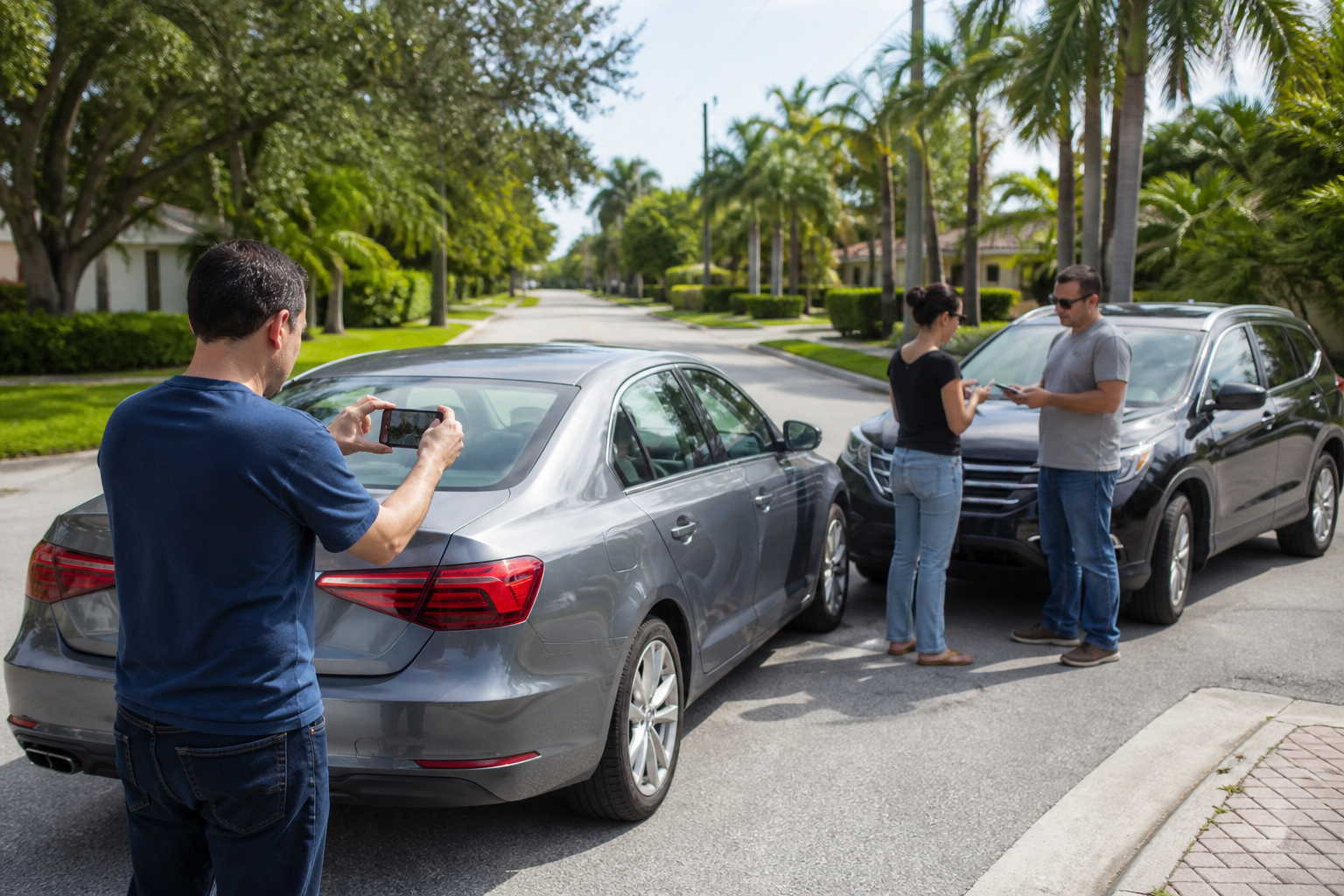
For someone injured in a Florida backing crash, the recall can be important. But it does not answer the case by itself. The real questions are whether the specific vehicle was included, whether the camera failed at the relevant moment, why it failed, and whether that failure contributed to the collision. Those questions turn on evidence that can change—or disappear—when the vehicle is repaired or its software is updated.
What the August 2026 rearview-camera recall says
The recall covers selected 2026 and 2027 model-year vehicles spanning 16 product lines, including certain Ram trucks and vans, Jeep SUVs, Chrysler minivans, and Dodge Chargers. A model name alone is not enough to determine coverage. Production dates and vehicle identification numbers matter, so owners should use the official NHTSA VIN lookup and retain the result.
According to the Part 573 filing, the affected software may prevent the rearview image from displaying when the vehicle is backing. That matters because Federal Motor Vehicle Safety Standard No. 111 requires the rear-visibility system to default to a compliant rearview image at the beginning of each backing event. FCA’s filing states that failure to display the image can increase the risk of a crash.
The recall chronology is also relevant. FCA reported opening an investigation in May 2026, recognizing the issue in July, and determining on August 6 that a noncompliance existed in certain vehicles. The NHTSA filing was submitted August 25, with phased owner notifications planned from September 1 through September 25, 2026.
Those dates can help frame an investigation, especially when a collision happened before an owner received a notice. They do not, standing alone, establish that a particular screen went black during a particular crash.
A recall is a lead, not a verdict
It is tempting to treat a recall notice as proof that the manufacturer caused the crash. Florida law requires a more specific showing.
A product-liability claim can involve allegations of a manufacturing defect, design defect, inadequate warning, negligence, or another theory supported by the facts. The Florida Standard Jury Instructions in Civil Cases describe the issues juries may be asked to decide in product cases, including whether a product was defective and whether the defect was a legal cause of injury. The recall may support the investigation of defect and notice, but causation still connects the alleged problem to the event.
Imagine that an affected vehicle backs into a pedestrian. The recall record may show that the vehicle’s software belonged to a population capable of losing the rearview image. The remaining evidence must address what actually happened: Did the display activate? Was the correct software installed? Had an update already been completed? Did the driver see a black screen and continue backing? Could the driver see the pedestrian through mirrors or by looking behind? Did another obstruction, distraction, or mechanical issue contribute?
A careful claim does not force those facts into a single theory too early. It investigates both the conduct of the driver and the performance of the vehicle.
The driver and the product may be separate parts of the same crash
A rearview camera is an important safety system, but its presence does not eliminate a driver’s obligation to use reasonable care. A driver may still bear responsibility for backing without confirming that the path was clear. At the same time, a software failure can remove a view the vehicle was federally required to provide at the beginning of the maneuver.
Florida’s comparative-fault statute expressly includes products-liability actions within its negligence framework and generally allocates responsibility according to each party’s proven share of fault. That means a case may involve the driver, a manufacturer or other product defendant, and sometimes additional actors. The available claims depend on the evidence and the relationships among the parties; a recall does not make every company in the distribution chain automatically liable.
This distinction is especially important for a pedestrian or cyclist. An insurer may focus exclusively on what the driver should have done, while a vehicle manufacturer may focus exclusively on driver behavior. Both questions can matter. The investigation should not allow one potential cause to erase another before the electronic and physical evidence is collected.
The best evidence may be changed by the recall repair
The most important evidence may not appear in the police report. It may be inside the vehicle’s infotainment system, software history, diagnostic records, dealer files, and connected-services data.
A prompt preservation effort should identify the vehicle by VIN and document its condition before avoidable changes occur. Useful material may include photographs and video of the display while the vehicle is placed in reverse; the radio and infotainment software version; diagnostic trouble codes; update and installation history; dealer repair orders; warranty claims; owner-notification records; customer-service communications; and data retained by the manufacturer, dealer, or software supplier.
The vehicle’s event data recorder may also contain information about speed, braking, throttle, and other inputs, depending on the vehicle and event. But an event data recorder should not be assumed to capture whether a rearview image appeared on the screen. The display problem and the driving data may live in different modules and require different forms of examination.
Nearby video can provide the outside view that electronic records lack. Homes, apartment complexes, retail stores, parking garages, buses, and other vehicles may have captured the backing movement and the injured person’s position. Tucker Law’s discussion of vanishing evidence after a Florida collision explains why requests for digital evidence should not wait until litigation.
Safety comes first when an update is pending
No one should keep operating a vehicle believed to be unsafe merely to preserve a lawsuit. Owners should follow recall instructions and avoid conduct that places people at risk.
When circumstances permit, however, the condition of the vehicle can be documented before a software update or dealer repair changes it. That may require coordination among the owner, insurer, dealer, manufacturer, and qualified experts. A written request can ask that relevant software versions, diagnostic results, update logs, and removed components be preserved even when the safety repair must proceed.
Save the recall letter, its envelope, screenshots of the VIN result, appointment messages, dealer invoices, and every version number shown before and after service. If the update arrives over the air, record when the vehicle first offered or installed it. A repair that makes the vehicle safer is important; it should not silently erase the record of what existed when the crash occurred.
What if the recall was announced after the collision?
A later recall can still be relevant to an earlier crash, but the timing needs careful treatment. The August filing identifies a suspect population and describes FCA’s investigation. It does not establish that every included vehicle experienced the failure, or that a failure occurring months earlier had the same cause.
The investigation should compare the crash date with the vehicle’s build date, software version, service history, and FCA’s chronology. Prior complaints, warranty records, technical communications, and diagnostic information may help determine whether the same condition existed before the public announcement. Conversely, proof that the vehicle had already received a corrective update may point the investigation elsewhere.
NHTSA’s VIN search is valuable, but the agency cautions that VIN results may not show a recall already repaired and may lag newly announced recalls while VINs are being identified. A present-day “zero unrepaired recalls” result therefore does not necessarily reconstruct the vehicle’s status on the date of an earlier crash.
Deadlines can differ within the same incident
A backing crash involving both driver negligence and an alleged vehicle defect can create claims with different legal deadlines. Under the 2026 version of Florida Statutes section 95.11, an action founded on negligence is generally subject to a two-year limitation, while an action for personal injury founded on the design, manufacture, distribution, or sale of personal property is listed under a four-year period. Product claims may also involve a separate statute of repose and fact-specific accrual questions.
The safest approach is not to assume the longest possible period applies. Evidence deadlines are often much shorter than filing deadlines anyway. Software changes, surveillance overwrites, repairs, vehicle sales, and lost communications can weaken a claim long before a statute of limitations expires.
Build the case around the vehicle that was actually involved
Recall 26V531 is a significant safety development, but a strong Florida claim will not stop at the headline or the total number of vehicles. It will connect the VIN, software, backing event, driver conduct, physical scene, and injuries into a supported account of what happened.
If a rearview display failed before a serious collision, preserve the vehicle and its electronic history as early as possible. Tucker Law handles Florida car-accident claims and maintains a Personal Injury Information Center for injured people and their families. Cases involving life-changing harm may also require the longer-term damages analysis discussed in the firm’s catastrophic-injury practice.
If you were injured in a backing crash involving a blank or malfunctioning camera display, contact Tucker Law before the vehicle is repaired, sold, or updated when that can be done safely. A VIN-specific, evidence-first review can determine whether the recall belongs in the case and what must be preserved now.
This article provides general information and is not legal advice for any particular crash, vehicle, or claim.