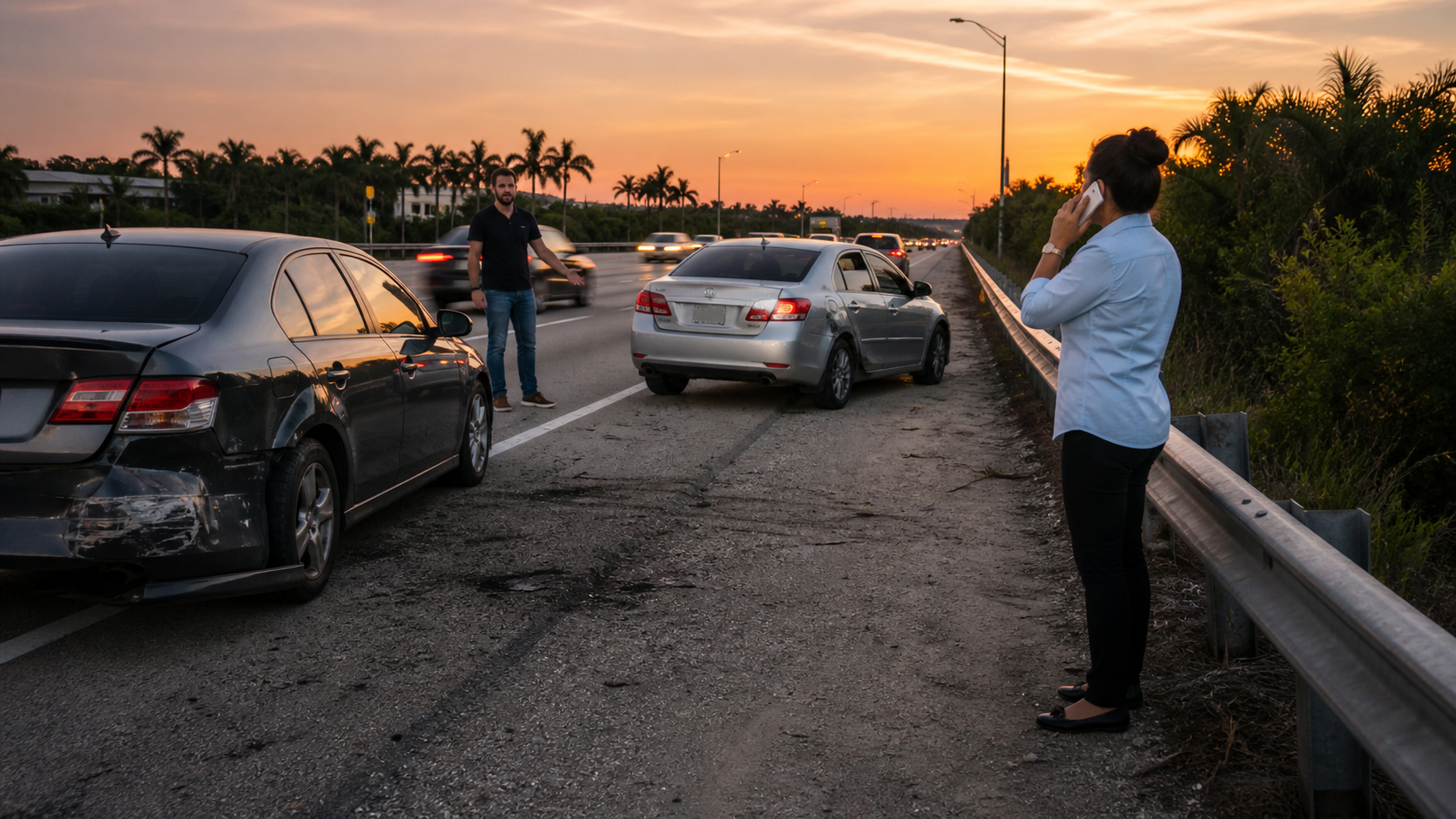
What Should You Do After a Road Rage Accident in Florida?
A road rage accident claim begins with personal safety. If another driver is following, threatening, blocking, or intentionally striking your vehicle, do not stop to argue. Move toward a well-lit public place or police station when safe, call 911, and follow the dispatcher’s directions.
After the immediate danger passes, evidence becomes critical. Aggressive-driving incidents may involve fast-moving events, conflicting stories, possible criminal conduct, and insurance questions that differ from an ordinary negligence claim. These eight steps can help.
1. Do not engage or pursue the other driver
Avoid eye contact, gestures, shouting, braking in retaliation, or following the vehicle. Keep doors locked and windows up. Do not get out of the car unless directed by law enforcement or necessary for immediate safety.
If you can do so without creating more risk, increase distance and let the other vehicle pass. Your goal is to end the encounter, not gather a perfect photograph.
2. Call 911 and describe the danger clearly
Give the dispatcher your location, direction of travel, vehicle description, plate information if known, and the conduct you observed. State whether there was a collision, visible weapon, threat, injury, or active pursuit. Do not exaggerate or speculate.
Florida’s current reckless-driving statute addresses driving in willful or wanton disregard for the safety of persons or property. Whether a particular incident meets that standard is for authorities to determine.
3. Preserve dashboard and phone evidence
Save dashboard-camera footage immediately so it is not overwritten. If a passenger safely recorded video, preserve the original file. Keep call logs, messages, location history, and photographs related to the event. Do not edit, filter, crop, or post recordings online.
Video may show repeated braking, swerving, following, threats, or the impact sequence. It can be central to a road rage accident claim.
4. Identify independent witnesses
Obtain names and contact details for motorists, passengers, pedestrians, employees, or residents who observed the driving or collision. Note where each person was located. Nearby businesses, homes, buses, and traffic systems may also have video that is routinely deleted.
Prompt preservation requests matter. A witness who saw the conduct before the impact may have information that a crash-scene photograph cannot show.
5. Document every vehicle and the entire scene
Once police say the area is safe, photograph all damage, vehicle positions, debris, skid or tire marks, traffic controls, lane markings, and surrounding cameras. Record the other vehicle’s description and plate, but do not approach an aggressive driver to obtain them.
If several vehicles were involved, our article about a chain-reaction accident claim explains how to document the sequence of impacts.
6. Obtain medical care and report the crash
Adrenaline can mask pain. Seek appropriate care for head, neck, back, shoulder, chest, or other symptoms. Tell providers how the event occurred and when symptoms began. Keep bills, discharge instructions, prescriptions, and work notes.
Report the collision to the appropriate insurers according to policy terms. Florida personal injury protection coverage may apply to certain initial medical and disability benefits. Current Florida Statute § 627.736 generally requires initial services and care within 14 days for PIP medical benefits.
7. Expect complicated insurance questions
Coverage can become disputed when an insurer contends that damage resulted from an intentional act rather than negligent driving. Policy language, the driver’s conduct, the impact sequence, and the theory of liability all matter. Uninsured or underinsured motorist coverage may also require review.
Do not accept a blanket statement that “road rage is never covered” or that every aggressive act is automatically treated the same. A lawyer can analyze the facts and actual policy provisions.
8. Protect your credibility
- Give accurate statements without guessing about speed or intent.
- Do not threaten the other driver or retaliate online.
- Preserve the complete recording, not only a favorable excerpt.
- Follow medical advice and document missed appointments.
- Do not sign a release before the injuries and coverage are understood.
What if no report was made?
When an officer does not prepare a report, other evidence becomes even more important. Review our guide to a Florida accident with no police report and act quickly before footage and witness memories disappear.
Talk with Tucker Law
A road rage accident claim may involve law enforcement, several insurers, safety concerns, and disputed intent. Tucker Law can review the video, witnesses, vehicle evidence, medical records, and available policies. Explore our personal injury practice areas or contact Tucker Law.
This article is general information, not legal advice. Criminal issues, civil liability, insurance coverage, and damages depend on the facts and current law.