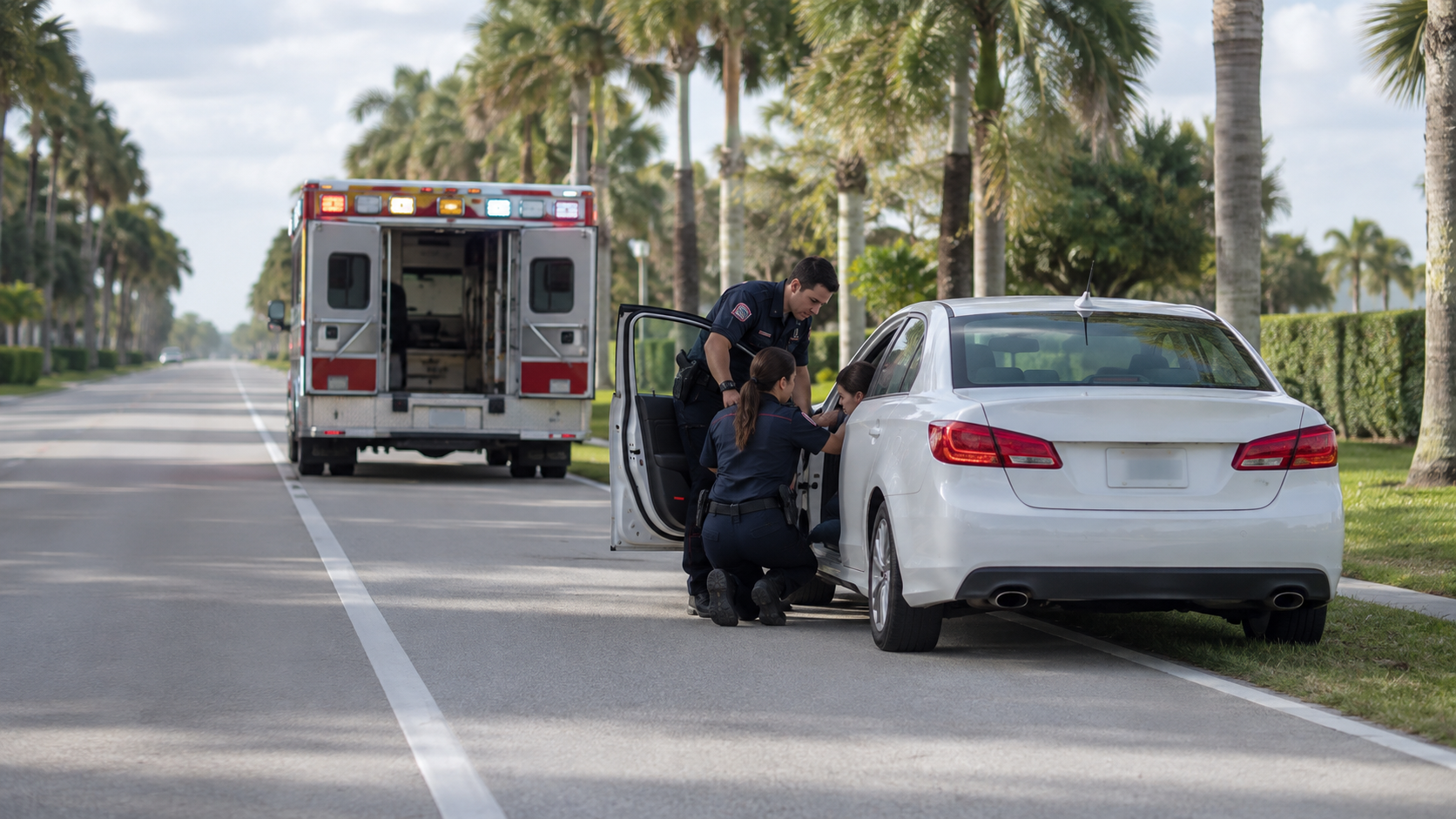
Sudden Medical Emergency Behind the Wheel: How a Florida Crash Claim Is Evaluated
A sudden medical emergency crash claim can be unusually difficult because the collision may look like ordinary driver error while the driver says an unexpected health event made control impossible. Florida claims are decided from evidence, not from the label used by either side. The central questions are what happened medically, whether warning signs existed, and whether the event truly caused the loss of control.
Myth: Saying “medical emergency” ends the inquiry
Fact: The statement begins the inquiry. Investigators compare the driver’s account with medical records, witness observations, 911 calls, vehicle data, and the path of the car. A diagnosis after the crash does not necessarily prove that the condition caused the crash. Likewise, a real medical event does not answer whether it was reasonably foreseeable.
Witnesses may describe slumping, stiffness, confusion, unusual speech, or an absence of braking. Paramedic notes can preserve blood pressure, glucose, heart rhythm, consciousness, medication information, and statements made close in time. Those details often matter more than a later summary.
Myth: A prior condition automatically proves fault
Fact: A medical history is relevant only in context. A stable condition with no prior loss of consciousness is different from recent episodes, instructions not to drive, missed medication, or symptoms that began before the trip. The evidence should show dates, advice, treatment, and what the driver actually knew rather than invite speculation based on a diagnosis.
Privacy rules mean medical information must be requested through lawful claim procedures. A focused request can address the condition at issue without treating every lifetime medical record as fair game.
What the roadway evidence can reveal
The vehicle’s route may show whether the driver braked, steered, accelerated, or drifted. Photograph tire marks, lane departures, impact points, traffic controls, sight lines, and final positions. Event data, dash-camera footage, nearby surveillance, and phone records may help test timing. TuckerUp’s overcorrection evidence guide explains why the vehicle’s path deserves careful documentation.
Florida Statute section 316.1925 addresses careless driving, but a citation or its absence does not by itself resolve a civil claim. The factual reason for the movement remains important.
Other explanations should be tested
Mechanical failure, distraction, fatigue, impairment, medication effects, or a roadway hazard can resemble a medical emergency. Preserve the car before repair or disposal when steering, brakes, acceleration, or safety systems are disputed. TuckerUp’s brake-failure article describes how maintenance and component evidence can change the analysis.
Also identify each impact. A driver may suffer a medical event, strike one vehicle, and cause a chain reaction. The Florida chain-reaction guide discusses separating the timing and force of multiple collisions.
Insurance and injury proof remain separate issues
Even when the cause is disputed, injured people should document medical care, symptoms, missed work, expenses, and functional limitations. Obtain complete policies and endorsements. Personal injury protection, bodily injury liability, and uninsured or underinsured motorist coverage may involve different requirements and defenses.
Do not exaggerate or guess in a recorded statement. It is reasonable to say that the cause is still under investigation. Preserve correspondence, claim numbers, and any request for a broad authorization before responding.
A fair evaluation needs a timeline
Build one chronology covering earlier symptoms, medical advice, the trip, witness observations, the crash, emergency treatment, vehicle inspection, and later care. Compare time stamps rather than relying on memory alone. If records conflict, identify the conflict directly.
Tucker Law Group’s practice-area overview explains its injury services. Someone hurt in a medically disputed Florida collision may contact the firm for a fact-specific review of the crash, available coverage, and preservation needs.
How a sudden medical emergency crash claim is reviewed
Useful questions include whether the driver felt symptoms before leaving, whether anyone urged the driver not to continue, when medication was last taken, and whether a similar episode occurred before. Investigators should also ask who first used the phrase “medical emergency” and what information supported it at that time.
The injured person can help by preserving photographs, witness contacts, medical bills, repair estimates, and every insurer letter. For a sudden medical emergency crash claim, a short written request can ask that the vehicles, digital data, and recordings be retained while the parties determine what happened. These steps do not decide the claim, but they reduce the risk that time decides it by erasing evidence.
Finally, distinguish inability from poor judgment. If an event was truly instantaneous and unforeseeable, the analysis may differ from a driver who continued after dizziness, confusion, chest discomfort, or another warning. That distinction should come from contemporaneous proof and qualified medical review, not hindsight.
This article provides general information, not legal advice. Every claim depends on its facts, applicable law, and available evidence.