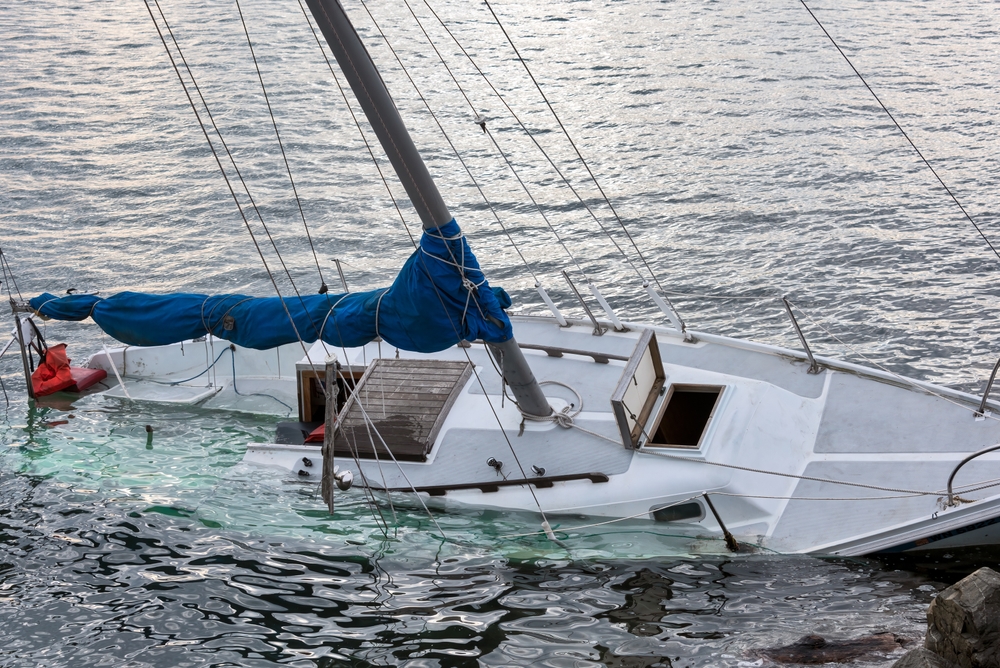
Crashing a Rental Boat in Florida: What to Do Next (and What Not to Say)
Crashing a rental boat in Florida can feel extremely scary. You’re on vacation with your friends and family, or you just wanted a day on the water!
It’s supposed to feel like a reset button. Sun, salt air, maybe a cooler and a playlist. Florida does that better than just about anywhere. But when a rental boat crash happens, the vibe changes in an instant. One minute you’re lining up to dock, the next you’re dealing with injuries, police reports, angry phone calls from the rental company, and that sinking feeling that you’re about to be blamed for everything.
If you crashed a boat you rented in Florida, here’s the practical, real-world guide I’d give a friend: what to do immediately, what to avoid, and how liability usually works when rental agreements and insurance get involved.
First: make sure everyone is safe (then think about fault later)
In the first five minutes after a crash, don’t play detective. Play medic and safety officer.
1) Check for injuries and get help
Call 911 if anyone is hurt, unconscious, bleeding heavily, or showing signs of head/neck injury. On the water, “we’re fine” can turn into “why can’t I move my arm?” fast—especially with adrenaline masking pain.
2) Prevent a second accident
If you can do so safely:
- Turn off the engine if there’s a risk of fire or propeller injury
- Put on life jackets if anyone isn’t wearing one
- Move to a safer area if the boat is taking on water or you’re in a channel (but don’t abandon someone in the water to do it
3) Call for on-water assistance
Depending on where you are, the U.S. Coast Guard, Florida Fish and Wildlife Conservation Commission (FWC), local marine units, or tow services may be involved. If you’re near a busy inlet or channel, getting help quickly matters.
Report it the right way and document (your future self will thank you)
Boat accidents aren’t handled exactly like car crashes. The “official” report may come from FWC or the Coast Guard, and the rental company will usually have its own incident process.
Here’s what you should do:
- Notify authorities when required
Florida has reporting rules for boating accidents, especially if there are injuries, deaths, or significant property damage. Even when it’s not strictly required, having an official report often helps keep the story honest when memories get fuzzy. - Take photos and video before anything changes
This is huge. Water scenes change fast—boats drift, people move things, light changes, and someone eventually “cleans up” the mess.
Capture:- Damage to all boats involved (wide and close)
- The rental boat’s registration/hull ID and any visible defects
- The area: markers, signs, docks, sandbars, no-wake zones
- Weather and water conditions (waves, visibility, glare)
- Any injuries (if appropriate)
- Screenshots of your route or GPS if you have it
- Get witness info
If another boater stops to help, get a name and number. Same with passengers. People disappear back into vacation mode quickly. - Don’t “fix” or “patch” things unless safety requires it
If a repair is necessary to prevent sinking or further injury, do what you must—but document everything first if you can.
What you say next matters a lot. Keep it short and factual.
After a rental boat crash, you’ll usually get a call from:
- The rental company
- Their insurer
- Someone asking for a recorded statement
- Sometimes law enforcement or an investigator
Here’s the best rule: do not guess, do not blame, do not “be polite” by taking responsibility.
Say simple, factual things like:
- “We had a collision at approximately [time].”
- “We’re getting medical attention.”
- “I’m not sure yet what caused it. I’m still gathering information.”
Avoid:
- “It was totally my fault.”
- “I must have missed the marker.”
- “I only had a couple drinks.”
- “I was going slow, like 10 mph” (when you’re not sure)
- Any detailed play-by-play while you’re shaken up
Even if you think you caused it, there may be other issues in play—mechanical problems, missing safety instructions, confusing signage, another boat speeding through a no-wake zone, or a rental company that sent you out in conditions you weren’t prepared for. You don’t want your first stressed-out sentences to become the “official story” forever.
So who pays when you crash a rented boat in Florida?
This is the question everyone asks, and the frustrating truth is: it depends. But here are the common buckets we see.
1) The rental agreement and “damage waiver” language
Most boat rental contracts are written to protect the rental company. Many include:
- Security deposits or credit card holds
- Damage waivers with exceptions (often lots of exceptions)
- Clauses shifting responsibility to the renter for negligence, misuse, or violation of rules
But contracts don’t magically override Florida law, and not every clause is enforceable the way companies act like it is. Also, a damage waiver is not always the same thing as insurance.
2) Insurance: yours, theirs, and any add-ons
Coverage can come from several places:
- Rental company’s insurance (sometimes limited; sometimes only protects them)
- Optional coverage you purchased at checkout
- Your own boat insurance (if you have it, sometimes extends)
- Homeowners or umbrella policies (occasionally, but not reliably)
- Credit card benefits (rare for boats, but check)
A big trap: people assume the rental company’s insurance means they’re protected. Often, it mostly protects the rental company’s asset, not your injury claim, not your liability exposure, and not the full bill they may try to send you.
3) Liability for injuries to passengers
If someone on your boat was injured, you could be blamed as the operator. Florida and maritime-related rules can overlap depending on where the accident occurred (certain navigable waters can trigger maritime principles). Either way, the key questions usually become:
- Were you operating safely for the conditions?
- Were you impaired or distracted?
- Were you speeding or ignoring no-wake zones?
- Were proper safety procedures followed?
4) Liability when another boat is involved
Many rental boat crashes are not “single-boat” events. Another boater may be:
- speeding through a no-wake zone
- cutting across a channel
- operating recklessly near swimmers, docks, or sandbars
- inattentive or impaired
Fault can be shared, and evidence matters. The earlier you preserve it, the harder it is for someone else to rewrite the scene.
5) Rental company responsibility (yes, sometimes)
Rental companies can have responsibility if, for example:
- The boat had mechanical issues (steering, throttle, engine failure)
- Safety equipment was missing or defective
- They failed to provide reasonable instructions for operation and local hazards
- They rented to someone clearly unfit to operate (depending on circumstances)
- They sent renters out in unsafe conditions without proper warnings
This is why it’s smart not to assume “it’s automatically my fault because I rented it.”
Common mistakes that make rental boat crashes worse:
I get it—when you’re embarrassed or stressed, your brain tries to “clean up” the situation. But these choices can cost you later:
- Leaving the scene without making proper reports
- Giving a recorded statement while still shaken (or medicated)
- Posting about it on social media (especially jokes or “we were flying!” videos)
- Not getting medical care because you “don’t want drama”
- Letting the rental company take the boat and control all the evidence
- Accepting a quick blame narrative to make the phone calls stop
How a lawyer helps after a Florida rental boat crash
A rental boat accident claim isn’t just “file some paperwork.” It’s usually a tug-of-war over:
- what actually happened
- what the contract really means
- who had insurance and what it covers
- how serious the injuries are
- whether maritime issues apply based on location
At Tucker Law, our job is to take the chaos and turn it into a clear, supported case. That often includes:
- Securing incident reports and investigating the scene
- Preserving evidence before it disappears (boat condition, maintenance, photos, witness info)
- Handling calls from insurers and rental companies so you don’t get boxed into a statement
- Building damages the right way: medical records, future care, lost wages, pain and disruption to daily life
- Evaluating all responsible parties, not just the easiest one to blame
If you’re injured, or someone is trying to stick you with a massive bill, you shouldn’t have to navigate that alone—especially when you’re still figuring out what hurts and what your coverage actually is.
A simple checklist: what to do in the first 24 hours
- Get medical care, even if symptoms feel “minor”
- Report the incident appropriately (FWC/Coast Guard/local authorities when required)
- Take and save photos/videos and witness contacts
- Keep your communications factual and minimal
- Don’t agree to recorded statements without guidance
- Save the rental contract, receipts, texts, emails, and any waiver/insurance paperwork
- Write down your memory of events while it’s fresh (time, location, conditions, speeds only if you truly know)
If you crashed a rented boat in Florida, talk to someone before you’re pressured into a story
A boat crash can leave you dealing with injuries, blame, and financial stress all at once. And because it happened on the water, people are often surprised by how quickly it gets complicated.
If you’re not sure what you’re on the hook for, or you’re getting calls that feel more like pressure than help, we can walk you through what to do next. Call Tucker Law at 1-800-TUCKERWINS. Our firm listens, asks the right questions, and help you protect yourself while the facts are still there to be found.
This article is general information, not legal advice. Every case turns on its specific facts.