Your Spouse Wasn’t Physically Injured. Florida Law May Still Recognize Their Loss.
After a serious injury, the most visible losses belong to the person who was hurt. The medical records show the surgery. Pay stubs show the missed work. Photographs may show the scar.
The spouse’s losses are harder to place in a folder.
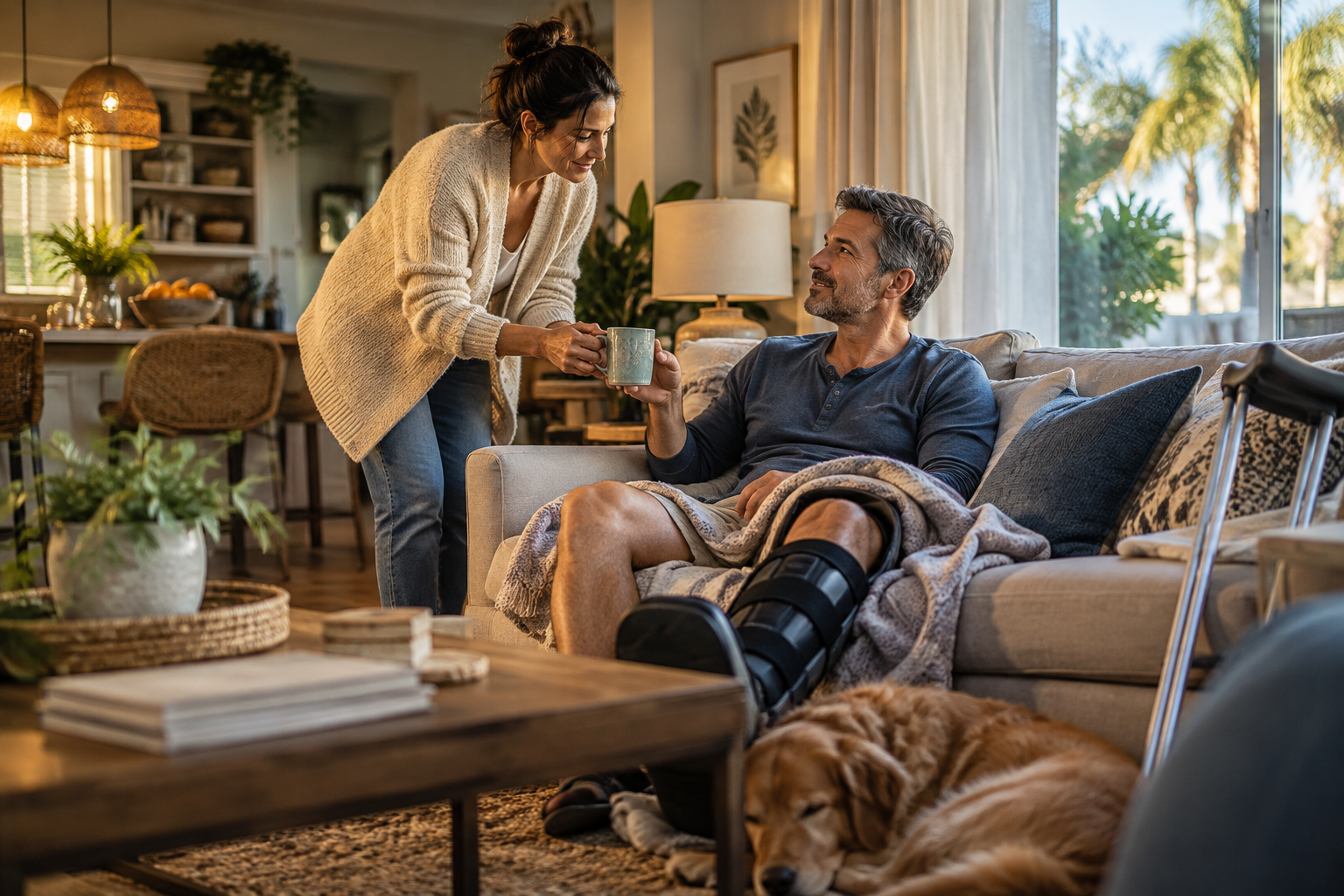
They appear when one person must handle every school pickup, carry every grocery bag, help the injured spouse shower, cancel the trip the couple planned, or sleep in another room because pain makes rest nearly impossible. Affection changes. Intimacy changes. The easy companionship that once defined ordinary life can be replaced by appointments, medication schedules, and uncertainty.
Florida law may treat that change as its own compensable injury. It is called a loss of consortium claim, and it belongs to the spouse who was not physically injured.
One accident can create two different claims
The injured person’s claim and the spouse’s consortium claim arise from the same incident, but they compensate different losses.
The injured person may seek damages such as medical expenses, lost earnings, physical pain, disability, disfigurement, and lost enjoyment of life. Tucker Law’s overview of damages after a Florida car crash explains those categories in more detail.
The spouse does not recover the injured person’s damages a second time. Instead, the spouse seeks compensation for what the injury took from the marriage: services, comfort, society, attention, affection, companionship, and other aspects of the marital relationship.
The Florida Supreme Court described the interest broadly in Gates v. Foley. Consortium is more than sexual relations. It includes the cooperation, aid, fellowship, solace, and companionship that spouses have a right to expect from one another.
The claim belongs to the spouse—but depends on the injured person’s case
A consortium claim has an unusual structure. It is the uninjured spouse’s own claim, yet it is derivative of the injured spouse’s claim.
“Derivative” means the consortium claim cannot stand if the underlying claim fails. The spouse still must establish that the defendant is legally responsible for the injury. A defense that defeats the injured person’s claim generally defeats the consortium claim as well. Fault attributed to the injured person can also affect the spouse’s recovery.
That connection is why the two claims are usually presented together. The same crash, fall, or other event establishes liability. The same medical evidence explains the severity and duration of the injury. Then the consortium evidence shows what those physical consequences did to the marriage.
The claims must nevertheless remain separate enough to avoid double recovery. Lost income belongs in the injured person’s claim. The spouse’s claim focuses on the lost marital benefits. Jurors should not award the same economic loss twice under different labels.
The marriage must exist when the injury occurs
Florida draws a firm line at the date of injury.
In Tremblay v. Carter, a couple had been dating seriously and discussing marriage before the accident. They married several months afterward. The court nevertheless rejected the later spouse’s consortium claim because the parties were not married when the injury occurred.
The reasoning was straightforward: until the marriage existed, the claimant did not possess the legal marital rights that the defendant’s conduct allegedly impaired. An engagement, long-term relationship, shared home, or later marriage does not ordinarily substitute for being married on the injury date.
For a legally married couple, the rule applies equally regardless of which spouse was injured or the spouses’ sex. The practical question is whether a valid marriage existed when the underlying tort occurred.
The best evidence is usually ordinary life
Loss of consortium is not proved by repeating that the injury was “hard on the marriage.” The strongest evidence is specific.
What did the couple do before the incident? Perhaps one spouse cooked, maintained the home, coached a child’s team, drove on family trips, managed finances, or cared for an aging parent. Perhaps the couple walked every evening, danced on weekends, traveled, attended religious services, gardened, or shared a physical relationship that pain or disability later changed.
Then comes the comparison. Who performs those tasks now? Which plans stopped? Did the healthy spouse become a caregiver? Has medication affected energy, mood, or intimacy? Do pain and sleep disruption leave the spouses functioning on opposite schedules? Can they still participate together in the activities that formed their shared life?
Small facts often communicate the loss more honestly than dramatic conclusions. The unused passenger bicycle, the chair placed inside the shower, the family photographs that stop after the accident, or the calendar crowded with medical appointments can show how an injury entered the marriage.
Friends and adult family members may also notice changes, but the spouses themselves are usually central witnesses. Their testimony should be candid and concrete. Exaggeration can damage both the consortium claim and the underlying injury case.
A spouse who brings the claim becomes part of the lawsuit
A consortium claim puts the marital relationship at issue. That has consequences.
The claimant spouse may be deposed. The defense may ask about household roles, vacations, hobbies, affection, physical intimacy, prior marital difficulties, caregiving, and changes that may have other causes. Some questions may be objectionable, but a spouse cannot seek compensation for a damaged relationship while placing every relevant part of that relationship beyond discovery.
This does not mean every private detail becomes fair game. Discovery must remain relevant and proportional, and legitimate privileges may apply. It does mean the couple should understand the tradeoff before the claim is filed.
Social-media posts can matter too. A carefully posed anniversary photo does not prove that no loss occurred, just as a difficult day does not define an entire marriage. But posts, travel records, messages, and photographs may be used to test whether the claimed before-and-after account is accurate. The safest approach is not to stage evidence or erase history. It is to preserve information and tell the truth.
Household services and marital companionship are related but not identical
Florida’s current standard civil jury instructions direct jurors to consider the spouse’s loss of services, comfort, society, and attentions. Those words encompass more than household labor, but the categories can overlap in daily life.
If an injured spouse can no longer cook, clean, drive, handle repairs, or care for children, the loss of those services may be part of the consortium claim. If the uninjured spouse hires outside help, receipts may document an expense. If no one is hired and the spouse simply absorbs the work, testimony and a detailed account of the changed responsibilities may still establish the loss.
Comfort, society, and attention concern the relationship itself: companionship, affection, shared activities, emotional support, and conjugal life. These losses do not arrive with invoices. A jury evaluates them from the nature of the marriage, the seriousness of the injury, and the effect shown by the evidence.
A major injury does not automatically produce a large consortium award. Some couples adapt remarkably well. Other injuries transform every part of a marriage even when the injured spouse remains employed. The claim is individualized, which is especially important in catastrophic injury cases.
Future consortium damages require evidence about duration
A temporary fracture may impose months of added work and lost companionship. A spinal cord injury, traumatic brain injury, amputation, or permanent pain condition may alter the marriage for decades. Future consortium damages depend on evidence that the loss will continue.
Medical testimony can establish the expected duration of the physical limitations. Evidence about life expectancy may become relevant when the injury is permanent. The spouse’s testimony connects those medical restrictions to the future of the relationship.
In automobile cases, Florida’s no-fault threshold can also matter. Section 627.737 limits recovery of noneconomic damages arising from many motor-vehicle injuries unless the statutory injury threshold is satisfied. Because consortium is derivative, barriers affecting the underlying noneconomic-damages claim can affect the spouse’s claim too.
The same concept applies outside car crashes: the consortium claim follows the strength, defenses, and legally recoverable scope of the underlying case. It may arise from a premises injury, defective product, medical negligence, or another tort—not only a roadway collision.
Consortium is not the same as wrongful-death compensation
A consortium claim discussed here assumes the injured spouse survived. If the injury later causes death, Florida’s Wrongful Death Act governs who may recover and which damages are available. The parties, deadlines, and damage categories differ.
A surviving spouse in a wrongful-death action may pursue losses such as the decedent’s companionship and protection and the survivor’s mental pain and suffering. That is not simply a continuation of a personal-injury consortium claim. Families facing a death should review the separate requirements for a Florida wrongful-death claim.
The claim should be identified before settlement papers are signed
A consortium claim is easy to overlook when everyone is focused on treatment and the injured person’s immediate needs. Waiting until settlement can create problems.
Insurers often request broad releases intended to resolve all claims arising from an incident, including derivative claims. The wording of a release and the identity of the people signing it matter. A spouse should not assume that a claim remains protected merely because the settlement check is issued in the injured person’s name.
Time limits matter as well. Florida Statutes section 95.11 currently provides a two-year limitations period for ordinary negligence actions. Different rules can apply to older incidents, medical malpractice, government defendants, intentional torts, maritime claims, and other special situations. The consortium issue should be evaluated when the underlying case begins, not when a deadline is about to expire.
The invisible part of an injury still needs proof
A spouse’s life can change even though the spouse never entered the ambulance and has no medical chart from the incident. Florida law recognizes that a marriage consists of services, comfort, society, attention, and companionship—and that another person’s negligence can damage those interests.
The claim is not automatic, and it is not merely an extra line on a demand. It requires a valid marriage at the time of injury, a viable underlying claim, and credible evidence showing how the relationship changed.
If a serious Florida injury has affected both spouses, Tucker Law can evaluate the personal-injury and consortium claims together before evidence disappears or settlement language is signed. Visit our Personal Injury Information Center or contact Tucker Law for a case evaluation.