Tucker Law Footer Image
Call 1-800-TUCKERWINS

Can a Pre-Existing Condition Affect a Florida Injury Claim?

A pre-existing condition injury claim can still be valid when a Florida accident makes an old injury, disease, or physical limitation worse. The important question is usually not whether you had a condition before the incident. It is whether the new event aggravated that condition or created additional symptoms, limitations, or medical needs. Insurance companies often examine earlier medical records closely. That makes clear documentation and honest communication especially important. The following points explain how a pre-existing condition may affect an injury claim and what you can do to preserve useful evidence. 1. A pre-existing condition does not automatically defeat your claim Many people have prior back pain, arthritis, old sports injuries, or degenerative changes before a crash or fall. An at-fault party generally does not get a free pass merely because the injured person was not in perfect health. Florida’s civil jury instructions recognize claims involving the aggravation of an existing disease or physical defect. The recoverable harm, however, must be connected to the aggravation caused by the new incident. That distinction is central to a pre-existing condition injury claim. You are not claiming that the accident created your entire medical history. You are identifying the meaningful difference between your condition before and after the event. 2. The “before and after” comparison matters A useful claim tells a clear, fact-based story. Before the accident, could you work a full shift, exercise, sleep through the night, drive comfortably, or care for your family? Afterward, did the same condition become more painful, frequent, or limiting? Did you need new medication, injections, therapy, imaging, or surgery? Medical records can help show that change, but ordinary life evidence matters too. Employment records, calendars, photographs, messages, and testimony from [...]

Can a Passenger File an Injury Claim After a Florida Car Accident?

A passenger injury claim can feel strangely complicated. You were not driving, you did not choose the route, and you may have had no control over the collision—yet you are the one dealing with pain, medical appointments, missed work, and insurance calls. In many Florida crashes, an injured passenger may pursue benefits and compensation from one or more available insurance policies. The exact path depends on who caused the crash, which vehicle you occupied, your household insurance, and the coverage carried by everyone involved. Passengers can have claims even when the drivers blame each other A passenger usually starts from a different position than either driver: the passenger generally was not controlling either vehicle. If two drivers disagree about fault, that disagreement does not necessarily prevent the passenger from making a claim. It may mean both drivers and their insurers need to be investigated. For example, one driver may have turned left without yielding while the other was speeding or looking at a phone. Responsibility can be divided among people whose negligence contributed to a crash. A passenger injury claim may therefore involve more than one bodily injury policy, plus the passenger’s own available benefits. Which insurance pays a passenger’s medical bills first? Florida’s Personal Injury Protection system can apply to passengers, but the order of coverage is fact-specific. Depending on the circumstances, PIP may come from the passenger’s own auto policy, a policy covering a resident relative, or the policy on the vehicle the passenger occupied. Florida’s current PIP statute expressly addresses passengers and generally requires initial medical services within 14 days of the crash. See Florida Statute section 627.736. PIP may pay a portion of covered medical expenses and certain lost wages, but [...]

What Happens If the Driver Who Hit You Has No Insurance in Florida?

An uninsured driver accident in Florida can turn an ordinary insurance claim into a confusing coverage problem. You expect the person who caused a crash to have insurance. Then the adjuster calls, the policy search comes back, and you hear the words nobody wants to hear: “The other driver has no coverage.” Suddenly, an already stressful accident feels like a financial dead end. It may not be. If an uninsured or underinsured driver hit you in Florida, several sources of coverage may still be available. The important thing is to identify them early, preserve the evidence, and avoid assumptions about what your own policy does or does not cover. Uninsured and underinsured are not the same An uninsured driver has no applicable bodily injury liability coverage for the crash. An underinsured driver has coverage, but the policy limit is not enough to pay for the full value of the injuries and losses they caused. Either situation can create a gap. For example, a driver may carry a small bodily injury limit while your emergency care, follow-up treatment, lost income, and continuing pain add up to much more. That is where other coverage—especially uninsured/underinsured motorist coverage—can become important. Your own PIP coverage may be the first layer Florida is a no-fault state for initial medical benefits. In many car-accident cases, Personal Injury Protection (PIP) coverage under your own policy pays a portion of reasonable, medically necessary accident-related treatment and certain lost wages, regardless of who caused the crash. Florida law generally requires initial medical care within 14 days to qualify for PIP medical benefits. You can read the current requirements in Florida Statute section 627.736. PIP is helpful, but it is rarely the whole answer in [...]

My Car Is Totaled but I Feel “Mostly Fine” Should I Even See a Doctor?

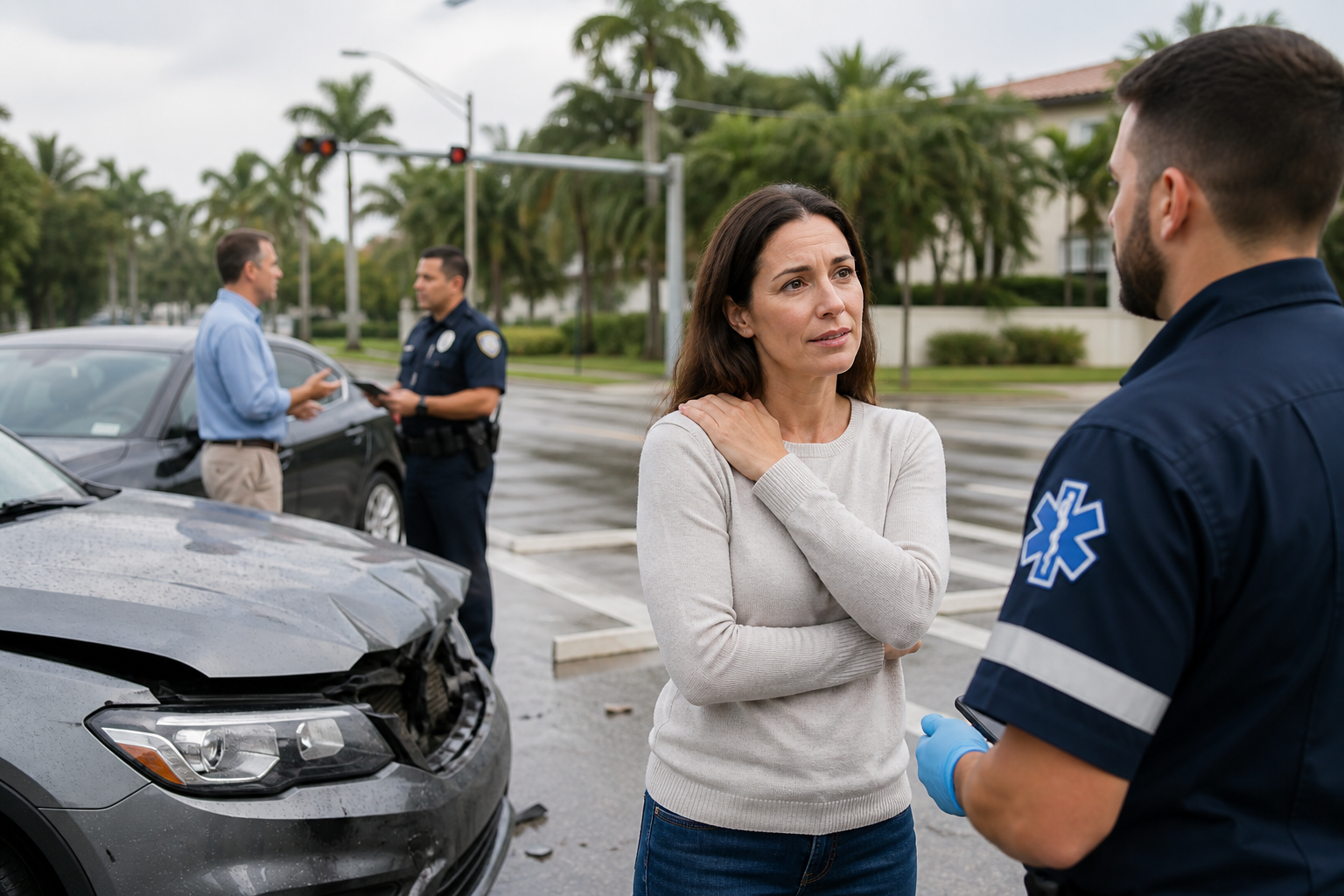
It’s a strange moment: you’re standing on the side of the road staring at what used to be your car, and it looks like a soda can someone stepped on. The airbags went off. The tow truck is on the way. Everyone keeps asking if you’re okay. And you say the same thing most people say: “Yeah… I think I’m fine.” But then you start thinking, "My car is totaled, but I Feel Mostly Fine. ' Should I Even See a Doctor?" Here's the thing: if your car is totaled, your body took a meaningful hit, even if you don’t feel it yet. The better question isn’t “Do I feel pain right now?” It’s “Could I be hurt without realizing it?” Because after a serious wreck, that’s common. Why you can feel “fine” after a major crash (and still be injured): After a collision, your body dumps adrenaline and stress hormones into your system. It’s like your brain hits the “emergency override” button. You may feel unusually calm. You may feel shaky. You may feel sore, but not “hurt.” That’s not toughness, that’s biology. The problem is that adrenaline wears off. Pain often doesn’t show up until later that day, the next morning, or a few days after the crash. We see this all the time with: Neck and back injuries (whiplash-type strains, disc flare-ups) Shoulder and knee injuries from bracing on the wheel or dashboard Concussions and mild traumatic brain injuries (headaches, dizziness, brain fog) Rib and chest injuries from the seatbelt or airbag Soft tissue injuries that don’t scream on day one but get louder over time Think of it like dropping your phone. Sometimes the screen looks fine… until you try to [...]

The Crash Was Partly My Fault. Do I Still Have a Case?

If you’ve ever walked out of a car after a crash and thought, “I shouldn’t have been there,” or “I probably could’ve done something different,” you’re not alone. A lot of good people blame themselves immediately, especially when the other driver (or their insurance company) starts pointing fingers. It gets you wondering, "The Crash Was Partly My Fault. Do I Still Have a Case?" Here’s the short version: being partly at fault does not automatically wipe out your right to recover. In many states, the law recognizes something simple and fair: sometimes more than one person contributes to a wreck. When that happens, responsibility can be split. What that means in real life, and why it matters to your case: Crashes rarely happen in a perfect vacuum. Maybe you were going a little too fast, but the other driver ran a red light. Maybe you changed lanes, but they were texting and never hit the brakes. Maybe you hesitated at a left turn, but they were tailgating so close you couldn’t see their headlights. Shared fault laws exist because real life is messy. The legal system tries to account for that by asking: who contributed to the crash, and by how much? That’s where negligence and fault percentages come in. How negligence is split in many states Most states use some version of “comparative negligence” or “contributory negligence.” The names sound technical, but the idea is straightforward. Comparative negligence (the most common approach) In many states, you can still recover money even if you were partially at fault. The catch is that your recovery may be reduced by your percentage of fault. Here’s a simple example: Your total damages (medical bills, lost wages, pain and [...]

Go to Top