Tucker Law Footer Image
Call 1-800-TUCKERWINS

Who May Be Liable After a Delivery Driver Accident in Florida?

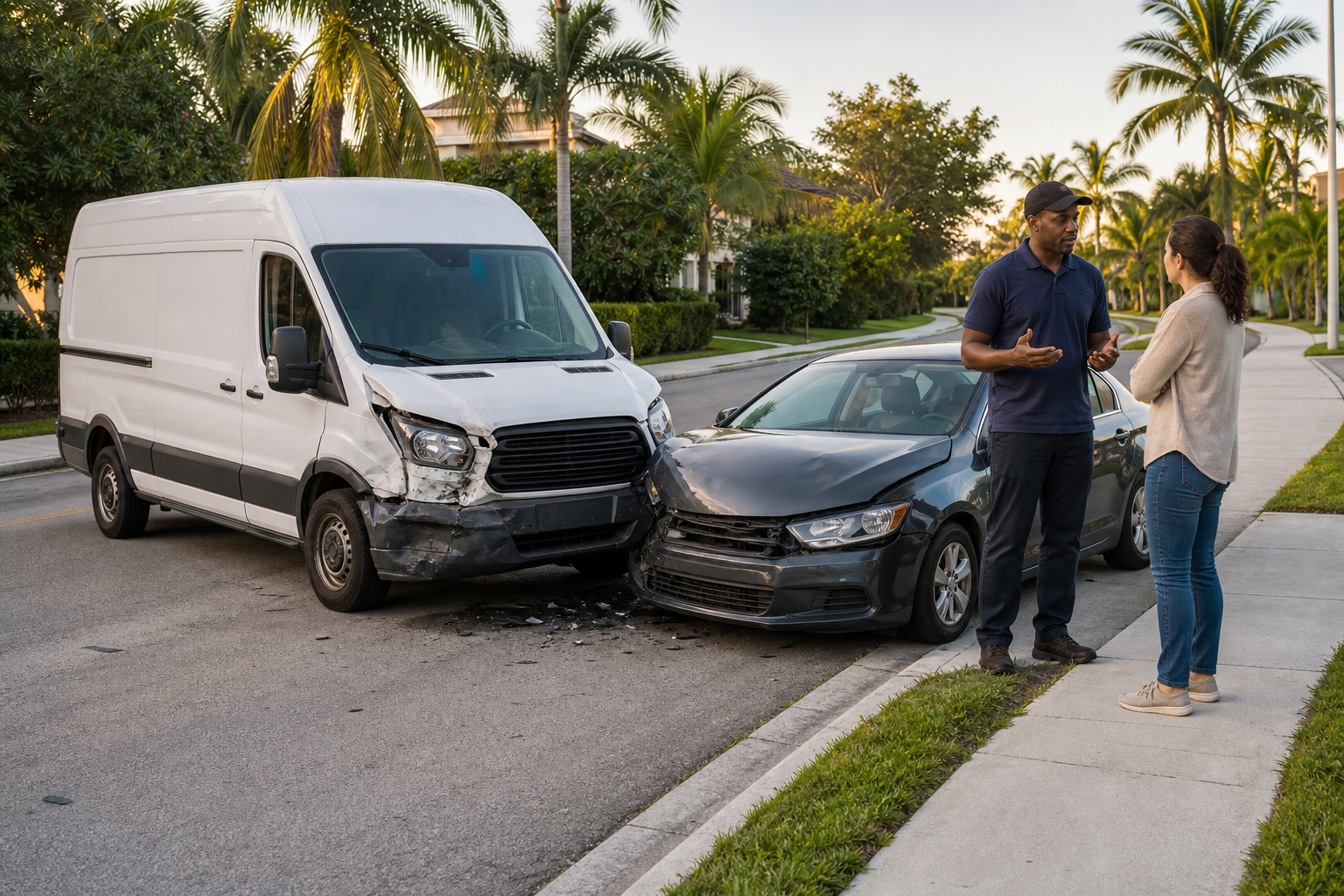
A delivery driver accident claim can involve more than the person behind the wheel. Depending on the work arrangement and what the driver was doing, responsibility may extend to an employer, a contractor, a vehicle owner, or another business. Different insurance policies may also apply. Delivery work has expanded beyond traditional company fleets. Drivers may use branded vans, rented trucks, personal cars, or vehicles owned by a subcontractor. The following questions help identify the evidence and coverage that may matter after a Florida collision. 1. Was the driver working at the time? Start with the driver’s purpose. Was the person making a delivery, traveling between stops, picking up an order, returning to a facility, or using the vehicle for a personal errand? A business may be responsible for negligent conduct by an employee acting within the course and scope of employment. The analysis becomes more complicated when work and personal activity overlap. Time, route, dispatch, and delivery records can help answer this question. Do not rely only on what the driver says at the scene. 2. Was the driver an employee or an independent contractor? A uniform, app, or vehicle sign does not conclusively establish the legal relationship. Companies may classify drivers as employees, contractors, franchise workers, or workers for a separate delivery service. Courts and insurers may look beyond the label to facts such as control over routes, schedules, training, equipment, and work methods. This distinction can be central to a delivery driver accident claim. Preserve the company name, vehicle markings, order information, and any statements about the driver’s work status. 3. Who owned and insured the vehicle? The driver may own the car, while a company may own or lease a van. Another [...]


A Child Is Hit Near a Florida School Bus: What Evidence and Laws Matter?

A school-bus-stop collision can involve Florida’s stop-arm law, pedestrian rules, school-zone distraction restrictions, camera evidence, and multiple insurance questions. Learn what families should preserve and why early investigation matters.

Florida Named-Driver Exclusions: What Happens to Insurance Coverage After a Crash?

Florida law permits certain named-driver exclusions that can affect PIP, liability, UM, and optional auto coverages. Learn what section 627.747 requires, what it does not allow, and why the actual policy and endorsements matter after a crash.

No Police Report After a Florida Car Accident? What to Do Next

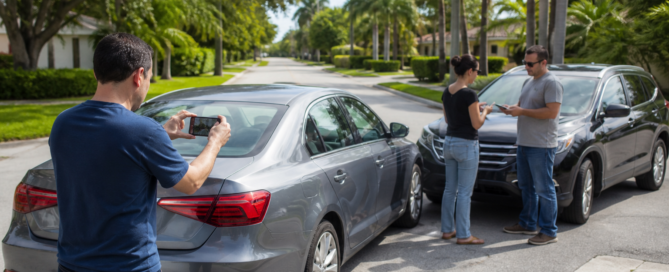
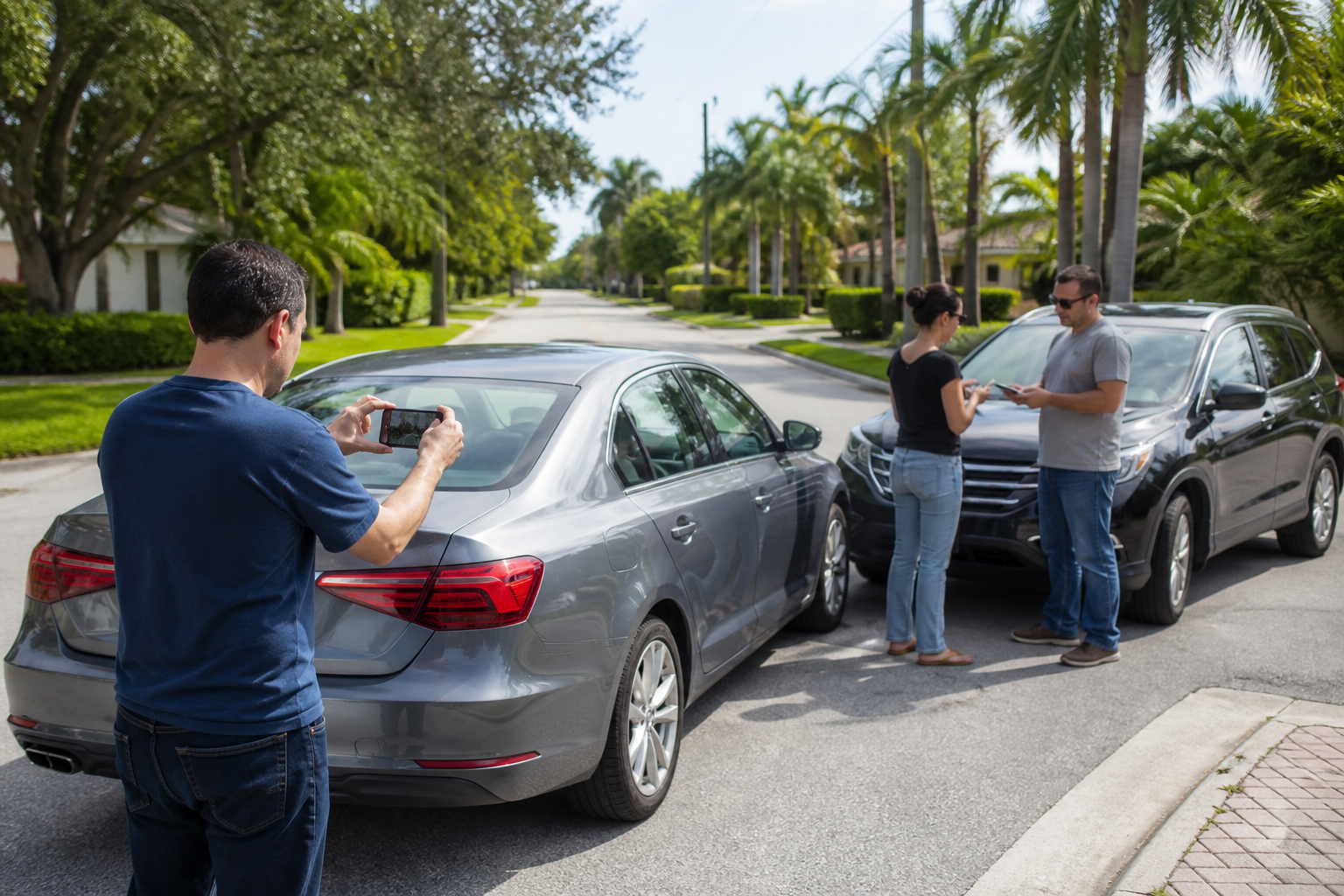
A no police report car accident can leave you wondering whether an insurance or injury claim is still possible. A report can be useful, but it is not the only evidence that proves how a crash happened. Photos, witness information, medical records, vehicle damage, electronic data, and the parties’ statements may all help establish the facts. The best response is to create a reliable record as soon as possible. These eight steps can help after a Florida collision when an officer did not prepare a report. 1. Make sure everyone is safe Move to a safe location if the vehicles can be moved and it is safe to do so. Call 911 when someone is hurt, complains of pain, appears disoriented, or when a vehicle creates a road hazard. Emergency care comes before claim documentation. Some injuries are not obvious at the scene. Adrenaline can mask pain, and neck, back, or head symptoms may become clearer later. If symptoms appear or worsen, seek appropriate medical attention. 2. Understand that Florida has reporting rules Whether law enforcement must investigate depends on the circumstances. Florida law calls for a long-form report for crashes involving death, personal injury, complaints of pain, certain serious violations, a vehicle that must be removed by a wrecker, or a commercial motor vehicle. The statute also addresses written reports for crashes that do not require a law-enforcement report. Read the current requirements in Florida Statute § 316.066. If you are unsure whether a report is required, contact the appropriate law-enforcement agency or obtain legal advice promptly. Do not assume that a no police report car accident means no reporting duty exists. 3. Photograph the entire scene Take wide and close photographs before vehicles [...]

Can a Pre-Existing Condition Affect a Florida Injury Claim?

A pre-existing condition injury claim can still be valid when a Florida accident makes an old injury, disease, or physical limitation worse. The important question is usually not whether you had a condition before the incident. It is whether the new event aggravated that condition or created additional symptoms, limitations, or medical needs. Insurance companies often examine earlier medical records closely. That makes clear documentation and honest communication especially important. The following points explain how a pre-existing condition may affect an injury claim and what you can do to preserve useful evidence. 1. A pre-existing condition does not automatically defeat your claim Many people have prior back pain, arthritis, old sports injuries, or degenerative changes before a crash or fall. An at-fault party generally does not get a free pass merely because the injured person was not in perfect health. Florida’s civil jury instructions recognize claims involving the aggravation of an existing disease or physical defect. The recoverable harm, however, must be connected to the aggravation caused by the new incident. That distinction is central to a pre-existing condition injury claim. You are not claiming that the accident created your entire medical history. You are identifying the meaningful difference between your condition before and after the event. 2. The “before and after” comparison matters A useful claim tells a clear, fact-based story. Before the accident, could you work a full shift, exercise, sleep through the night, drive comfortably, or care for your family? Afterward, did the same condition become more painful, frequent, or limiting? Did you need new medication, injections, therapy, imaging, or surgery? Medical records can help show that change, but ordinary life evidence matters too. Employment records, calendars, photographs, messages, and testimony from [...]

Go to Top