Tucker Law Footer Image
Call 1-800-TUCKERWINS

Florida Farm-Equipment Collisions: Answers to the Questions the Scene Leaves Behind

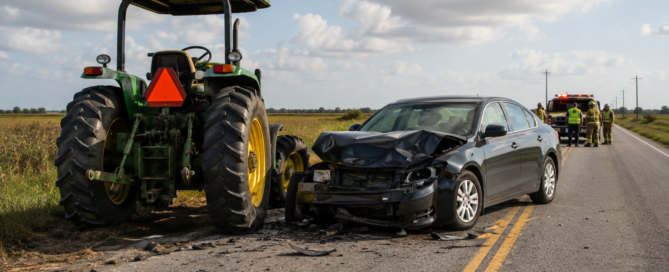
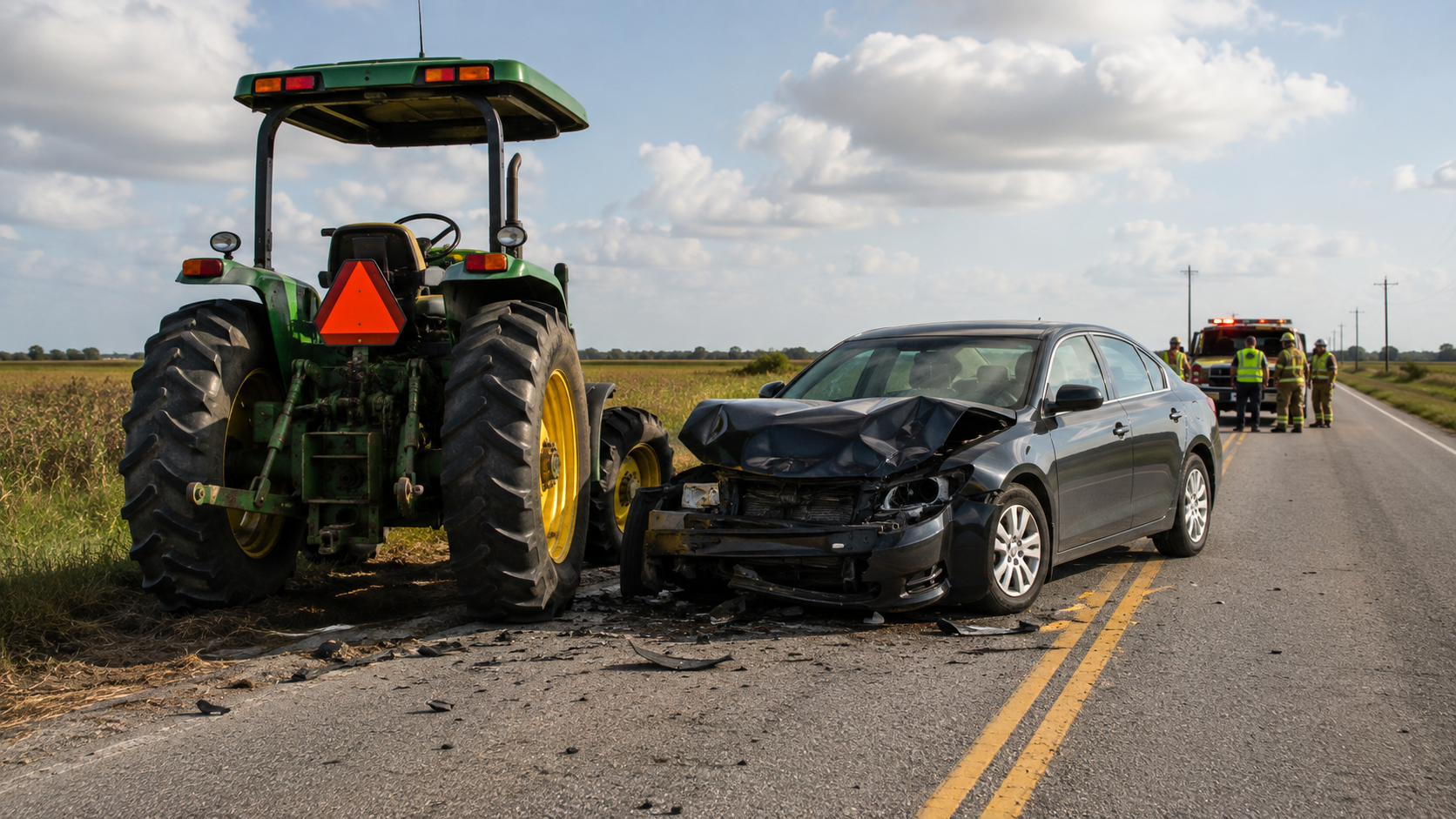
A farm equipment accident claim can involve a large speed difference, unfamiliar vehicle shape, limited shoulders, and evidence that disappears when equipment returns to work. These answers explain the practical questions that commonly arise after a tractor, implement, or other agricultural vehicle is involved in a Florida roadway collision. Can farm equipment lawfully use a public road? Agricultural equipment may use roads in appropriate circumstances, but lawful presence does not eliminate duties concerning operation, visibility, lighting, and traffic. The precise rules can depend on the equipment, time, location, and use. Avoid assuming that either the tractor or passenger-car driver is automatically responsible. Florida Statute section 316.2295 addresses lamps and warning devices on certain farm tractors and implements. Investigators should document what equipment and warnings were actually present rather than relying on a generic description. Which scene details matter most? Photograph vehicle positions, attached implements, debris, tire marks, road width, shoulder condition, hills, curves, vegetation, driveways, signs, lane markings, and lighting. Capture both drivers’ approaches. Measure or reliably document the equipment’s overall width and whether any part extended beyond the tractor. Record sunrise or sunset conditions, weather, and artificial lighting. A wide photograph showing the horizon can explain visibility better than close damage images alone. What should be preserved from the equipment? Preserve lamps, reflectors, warning triangles, turn signals, mirrors, brakes, tires, hitch points, and any attached implement. Obtain maintenance, inspection, ownership, operating, and work records. If the farm equipment is repaired quickly, photographs and written preservation notice may be critical. The same principle applies to the passenger vehicle. TuckerUp’s brake-failure evidence guide explains how physical components and maintenance records can test competing accounts. Does a rear-end impact decide fault? No single impact pattern answers every [...]

Pedal Misapplication in Florida: 5 Questions That Can Explain a Sudden-Acceleration Crash

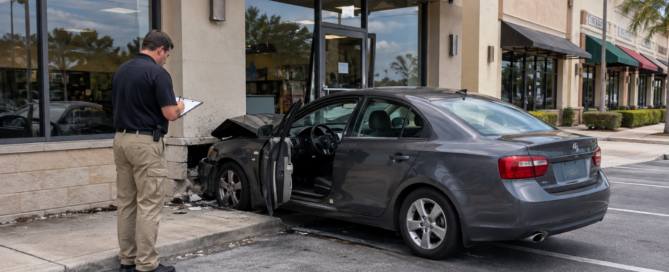
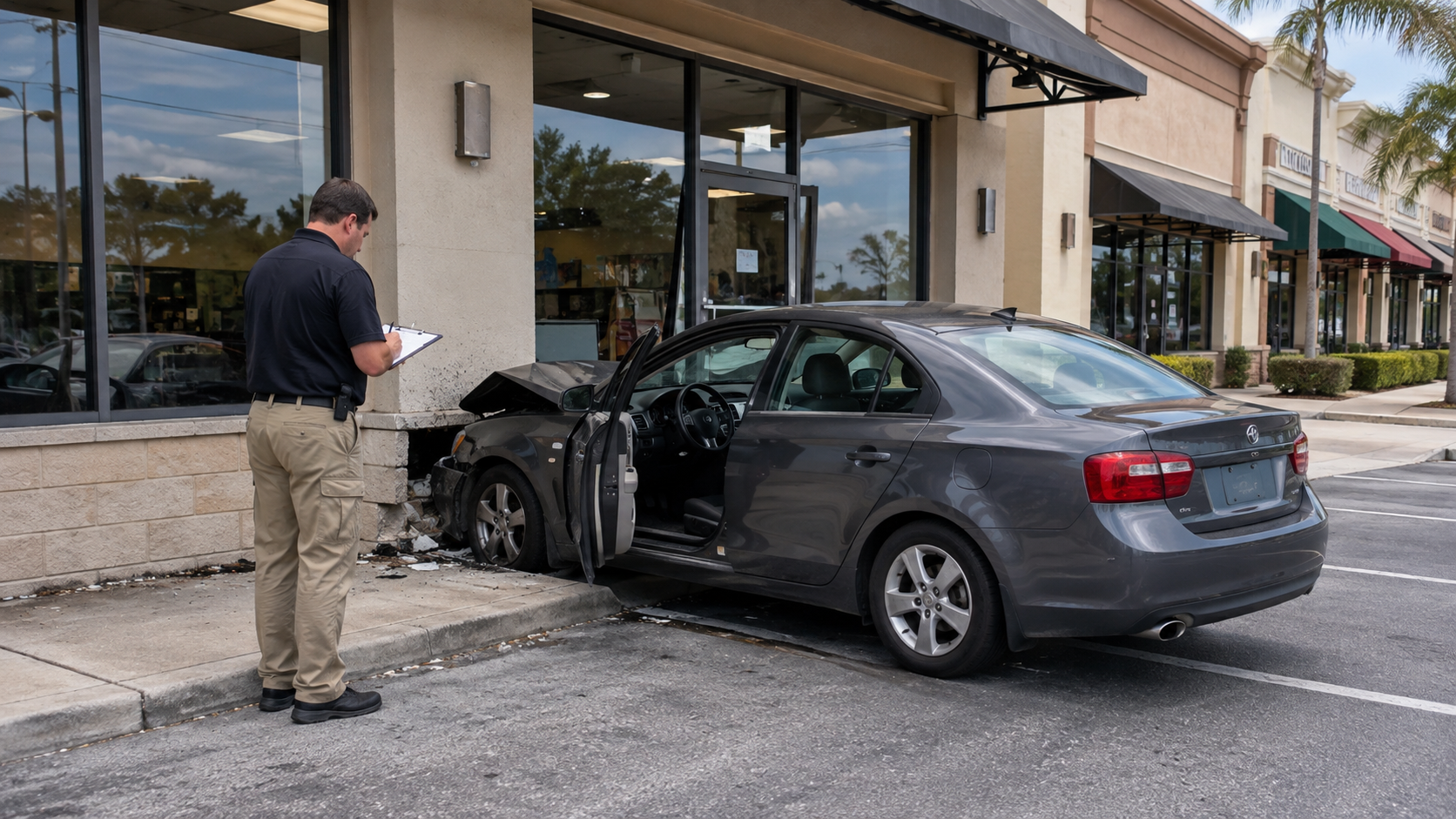
A pedal misapplication accident claim may follow a car’s sudden movement through a parking space, curb, storefront, garage, or crowd area. People often assume the driver pressed the accelerator instead of the brake. That may be correct, but a responsible investigation tests the driver’s inputs, vehicle condition, site design, and recorded evidence before reaching a conclusion. 1. What did the vehicle do before impact? Build a second-by-second sequence: direction of travel, steering, pause or stop, engine sound, wheel spin, brake lights, curb contact, and final position. Identify every witness and the exact viewing angle. Storefront, parking, doorbell, dash-camera, and phone video may show whether the car accelerated continuously or moved in stages. Preserve 911 calls and early statements, but consider stress and confusion. A witness who heard an engine may not know which pedal was pressed. Physical evidence and vehicle data should be compared with the account. 2. What can the vehicle record? Depending on the model and event, data may include accelerator position, braking, speed, steering, gear selection, and restraint information. A qualified download should occur before repair, battery loss, software changes, or disposal. Photograph the dashboard, warning lights, gear selector, floor mat, pedal area, seat position, adaptive controls, and aftermarket equipment. Do not assume a lack of skid marks proves no braking. Modern braking systems, surface material, low speed, and short distance can affect visible evidence. 3. Could a mechanical or layout issue have contributed? Inspect for a trapped or displaced floor mat, damaged pedal, electronic fault, unintended obstruction, improper repair, or control modification. Collect service invoices, complaints, recall information, diagnostic codes, and prior photographs. Preserve the car and disputed parts with notice to interested parties before destructive testing. A mechanical explanation should [...]

When a Car Catches Fire After a Florida Collision: From Emergency Response to Injury Claim

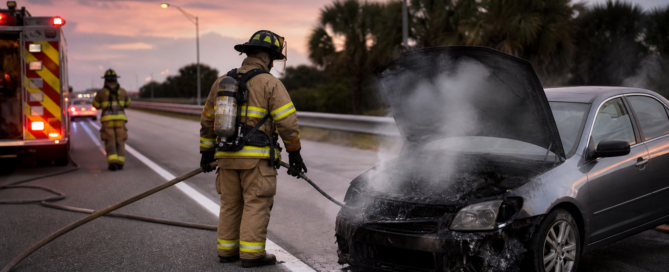
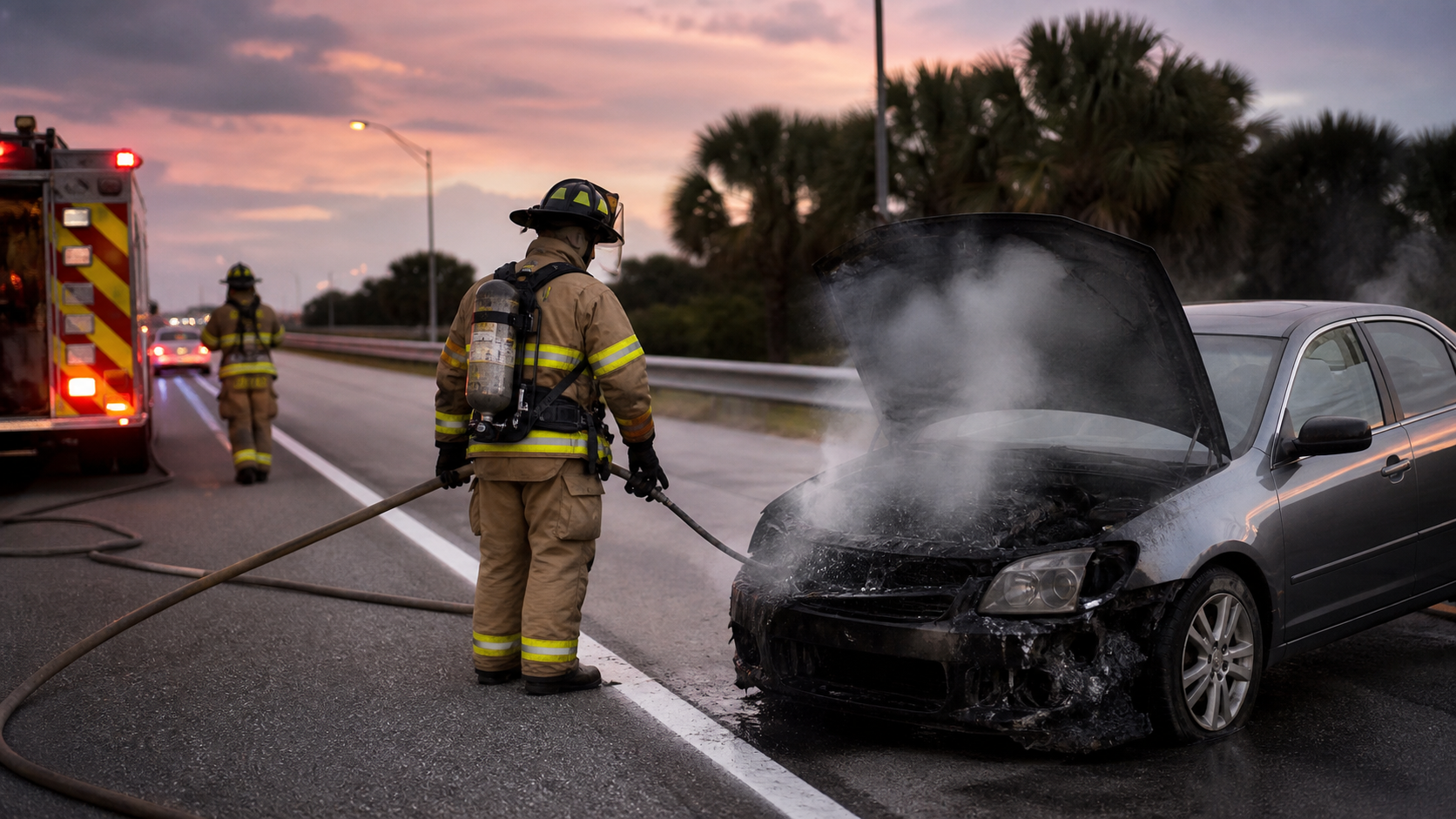
A post-collision vehicle fire claim requires two investigations at once: why the vehicles collided and why fire, smoke, or extreme heat followed. The first minutes are about survival. The later work is about preserving evidence before cleanup, towing, insurance handling, or salvage changes the scene.At the scene: distance and emergency care come firstMove away from traffic, smoke, leaking fluids, and the vehicle if it is safe to do so. Call 911 and follow firefighters’ instructions. Do not return for property. Smoke inhalation, burns, cuts, and impact injuries may not be fully apparent during an emergency, so report symptoms accurately and accept appropriate evaluation.Photographs should be taken only from a safe location. Wide images can show vehicle positions, debris, burn patterns, lane markings, guardrails, and nearby cameras. Record which doors opened, whether occupants escaped on their own, and when smoke or flames were first noticed, but do not disturb the vehicle.During the response: official records begin the timelineObtain the crash report and identify the fire department, emergency medical agency, tow company, and storage location. Dispatch logs, 911 recordings, fire reports, body-camera video, and ambulance records may preserve observations that later photographs cannot.Names and contact information for rescuers and civilian witnesses matter. A witness may have seen the first smoke location, heard a sound, noticed leaking fluid, or recorded the event. Request nearby business, traffic, and dash-camera footage promptly because retention periods can be short.Before the vehicle is moved again: preservation decisions matterA burned vehicle can contain evidence about batteries, wiring, fuel delivery, crash deformation, aftermarket equipment, airbags, seat belts, and escape routes. Give written preservation notice before destructive testing, repair, auction, or disposal when a component issue is reasonably suspected. Photograph all sides, the interior when [...]

Sudden Medical Emergency Behind the Wheel: How a Florida Crash Claim Is Evaluated

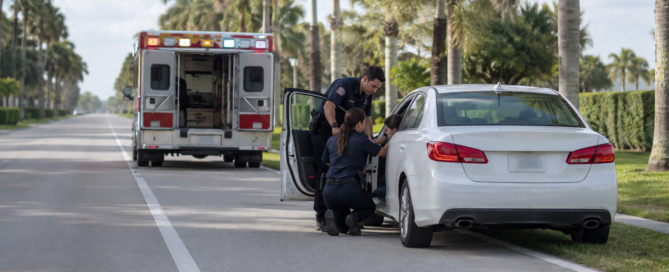
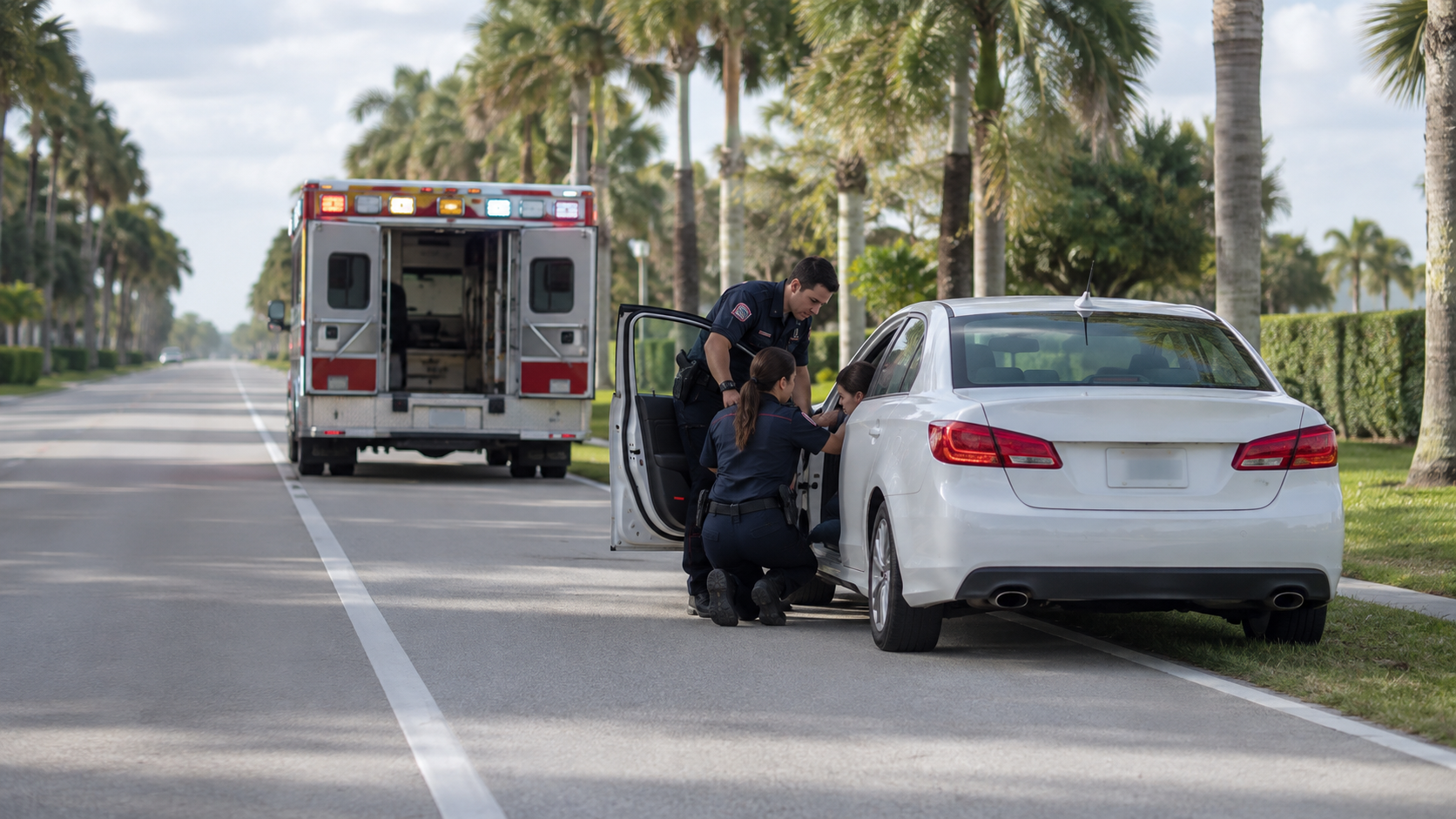
A sudden medical emergency crash claim can be unusually difficult because the collision may look like ordinary driver error while the driver says an unexpected health event made control impossible. Florida claims are decided from evidence, not from the label used by either side. The central questions are what happened medically, whether warning signs existed, and whether the event truly caused the loss of control.Myth: Saying “medical emergency” ends the inquiryFact: The statement begins the inquiry. Investigators compare the driver’s account with medical records, witness observations, 911 calls, vehicle data, and the path of the car. A diagnosis after the crash does not necessarily prove that the condition caused the crash. Likewise, a real medical event does not answer whether it was reasonably foreseeable.Witnesses may describe slumping, stiffness, confusion, unusual speech, or an absence of braking. Paramedic notes can preserve blood pressure, glucose, heart rhythm, consciousness, medication information, and statements made close in time. Those details often matter more than a later summary.Myth: A prior condition automatically proves faultFact: A medical history is relevant only in context. A stable condition with no prior loss of consciousness is different from recent episodes, instructions not to drive, missed medication, or symptoms that began before the trip. The evidence should show dates, advice, treatment, and what the driver actually knew rather than invite speculation based on a diagnosis.Privacy rules mean medical information must be requested through lawful claim procedures. A focused request can address the condition at issue without treating every lifetime medical record as fair game.What the roadway evidence can revealThe vehicle’s route may show whether the driver braked, steered, accelerated, or drifted. Photograph tire marks, lane departures, impact points, traffic controls, sight lines, and final positions. [...]

Go to Top