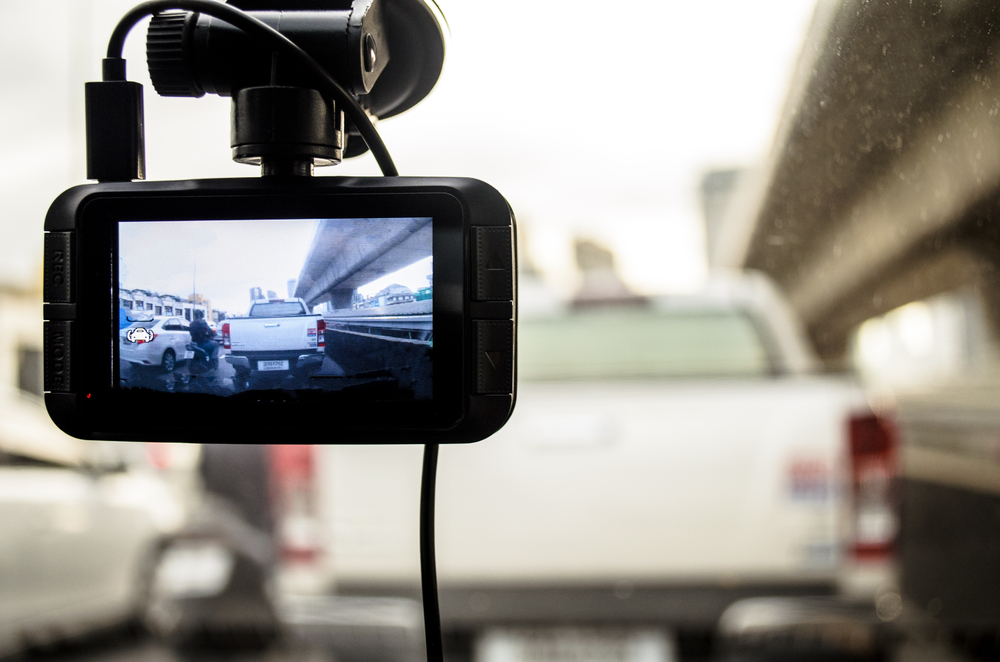
To Dash Cam or Not: Unveiling the Benefits of Dashboard Cameras for Motorists

Safety should always be a top priority when driving. As technology becomes more integrated into our daily lives, the use of dashboard cameras, or dash cams, has increased significantly in recent years. But what are the advantages of these devices, and should you install one in your vehicle? Tucker Law, your trusted accident attorneys, is here to throw some light on this subject. A dash cam is a small digital video camera that attaches to the dashboard and records the driver's journey whenever the vehicle is turned on. This real-time recording can be used as evidence in a variety of situations. Here are some of the benefits of purchasing a dash cam: Accident Evidence: In the unfortunate event of a car accident, having objective footage of the incident can provide crucial evidence for establishing fault. This can expedite insurance claims and provide your attorney with concrete proof to defend your case. Fraud Prevention: Dash cams can help deter insurance fraud, a widespread problem where individuals deliberately cause accidents to blame others and claim insurance money. Capture Crime: Dash cams can capture footage of crimes or vandalism involving your vehicle, which could aid in police investigations. Record Road Trips: On a lighter note, they are great tools for recording scenic drives or memorable trips. While the advantages are obvious, some drawbacks must be considered. Depending on your state's laws, recording people without their knowledge may be prohibited, which could apply to dash cam use. Furthermore, having a dash cam may give drivers a false sense of security, causing them to pay less attention to the road. Consider the following steps before purchasing a dash cam to ensure you make an informed decision: Research State Laws: Familiarize [...]


Tread Carefully: The Impact of Social Media on Your Car Accident Claims

Social media is more than simply a platform for sharing life's milestones, from great celebrations to the seemingly everyday, in the present digital age. It has become an important part of our daily lives, like a digital diary. However, in some cases, such as after a car accident, what you share on these platforms can have unanticipated consequences for your legal rights and claims. Tucker Law prioritizes your safety and your rights, and it is our responsibility as your trusted accident attorneys to help you through these possible traps. Following a car accident, your actions are critical to the outcome of any subsequent claims. You may feel compelled to post your experience on social media when under the influence of stress and adrenaline. You must know how these posts can damage your case, whether it's a photo of the wreck, a status update, or simply a simple comment. Insurance firms are constantly seeking methods to reduce their financial obligations. They might comb through your social media sites for proof that contradicts your allegations. An apparently innocuous post, such as saying that you went for a run or attended a social function, could be misunderstood as a hint that your ailments are less severe than previously stated. It's important to remember that even the most harmless post might be taken out of context and used against you. Here are some crucial recommendations to help defend your claim as we traverse the legal maze together: Think Before You Post: Before you hit the 'share' button, consider how others might interpret your post. It's advised not to post anything that could be used against your claim. Privacy Settings: Make sure your privacy settings are up to date and [...]

The Vanishing Evidence: Why Time is Crucial After a Florida Car-Truck Collision

Time is of the essence in the aftermath of a car-truck collision. The first shock and trauma may cause you to feel disoriented, but it is critical to remember that every second counts. Especially in Florida, where the subtropical temperature hastens the physical degradation of evidence at the scene and digital evidence, such as body cam video, can vanish quickly. Tucker Law's experienced accident attorneys are here to walk you through the significance of acting quickly to defend your rights and secure critical evidence. 1. The Transient Characteristics of Body Cam Video Body cam films offer an objective, first-person view of the accident scene, frequently catching details that can have a substantial impact on your claim. However, keeping this type of digital evidence can be difficult. Florida law enforcement agencies have various retention regulations for body camera footage. Some agencies may store the footage for only a few weeks, while others may keep them for several months. If a formal request to save the tape is not submitted within the term specified by the agency, the video may be permanently erased. 2. Obtaining Body Camera Video Evidence Once you've retained legal counsel, one of the first things your lawyer should do is request the body cam footage from the responding officer(s). This request must be made in writing and should include the date, time, and location of the accident, as well as the name(s) of the officers involved, if known. 3. The Importance of Body Cam Footage Body cam recordings can be crucial evidence in car-truck crash cases, capturing the physical layout of the site, witness accounts, admissions by the parties involved, and the initial injury assessment. All of these elements can help to strengthen [...]

Debunking Myths: Unveiling the Truth About Car Accident Cases in Florida

In the aftermath of a car accident, victims often find themselves swimming in a sea of information and advice. While some of this information can be helpful, there's a significant amount that falls into the category of myths and misinformation. As experienced an accident attorney law firm, at Tucker Law, we're here to help you navigate these murky waters and separate fact from fiction. Here are some common myths about car accident cases in Florida, and the truth behind them: 1. Myth: You can't claim compensation if the accident was partly your fault. Truth: Florida operates under a "pure comparative negligence" system. This means that even if you were partially at fault for the accident, you could still be entitled to compensation. However, your compensation may be reduced by the percentage of your fault. 2. Myth: The at-fault driver's insurance will cover all your expenses. Truth: In reality, insurance companies often try to minimize the amount they pay out. They might dispute the severity of your injuries or argue that some of your medical treatments aren't necessary. That's why it's essential to have a skilled attorney advocating for your rights. 3. Myth: You have to go to court to get compensation. Truth: Many car accident cases are settled out of court. In fact, a fair settlement can often be negotiated without ever needing to step foot in a courtroom. However, if a fair settlement can't be reached, we at Tucker Law are prepared to fight for your rights in court. 4. Myth: You have plenty of time to file a lawsuit after a car accident. Truth: Florida law imposes a statute of limitations on car accident cases. You typically have four years from the date [...]

Unmasking Liability: Who Can Be Held Responsible in a Driverless Car Accident?

In the realm of technology, driverless cars, or autonomous vehicles, have brought about a revolution, ushering in what many believe to be the future of transportation. However, with this exciting advancement comes a new set of legal complexities, particularly when it comes to car accidents involving these vehicles. At Tucker Law, our wealth of experience as accident attorneys allows us to shed light on these complexities. Today, we'll be answering a question that is becoming increasingly relevant: Who can be sued when a driverless car causes an accident? 1. The Vehicle Manufacturer As it relates to autonomous vehicles, the line between a car manufacturer and a tech company is blurry.  If a defect in the vehicle's design or manufacturing process led to the accident, the vehicle manufacturer could potentially be held responsible. 2. The Software Provider Driverless cars operate using advanced software and AI systems. If it can be proven that a software error or malfunction caused the accident, then the software provider or developer might be held liable. 3. The Human Operator or Vehicle Owner While the car may be 'driverless', human oversight is often still necessary for these vehicles. If the accident occurred because the human operator failed to intervene when they should have, they could be held liable. Similarly, the vehicle owner can be held responsible if they failed to maintain the vehicle properly or ignored necessary software updates. 4. Other Parties In some situations, other parties, such as rideshares could also be held liable. For example, a city or state might be sued if poor road conditions or ill-kept traffic signals contributed to the accident. Navigating the legal landscape after a driverless car accident can be confusing due to the multiple [...]

Go to Top