The Car Had No Driver. Who Pays After a Florida Robotaxi Crash?
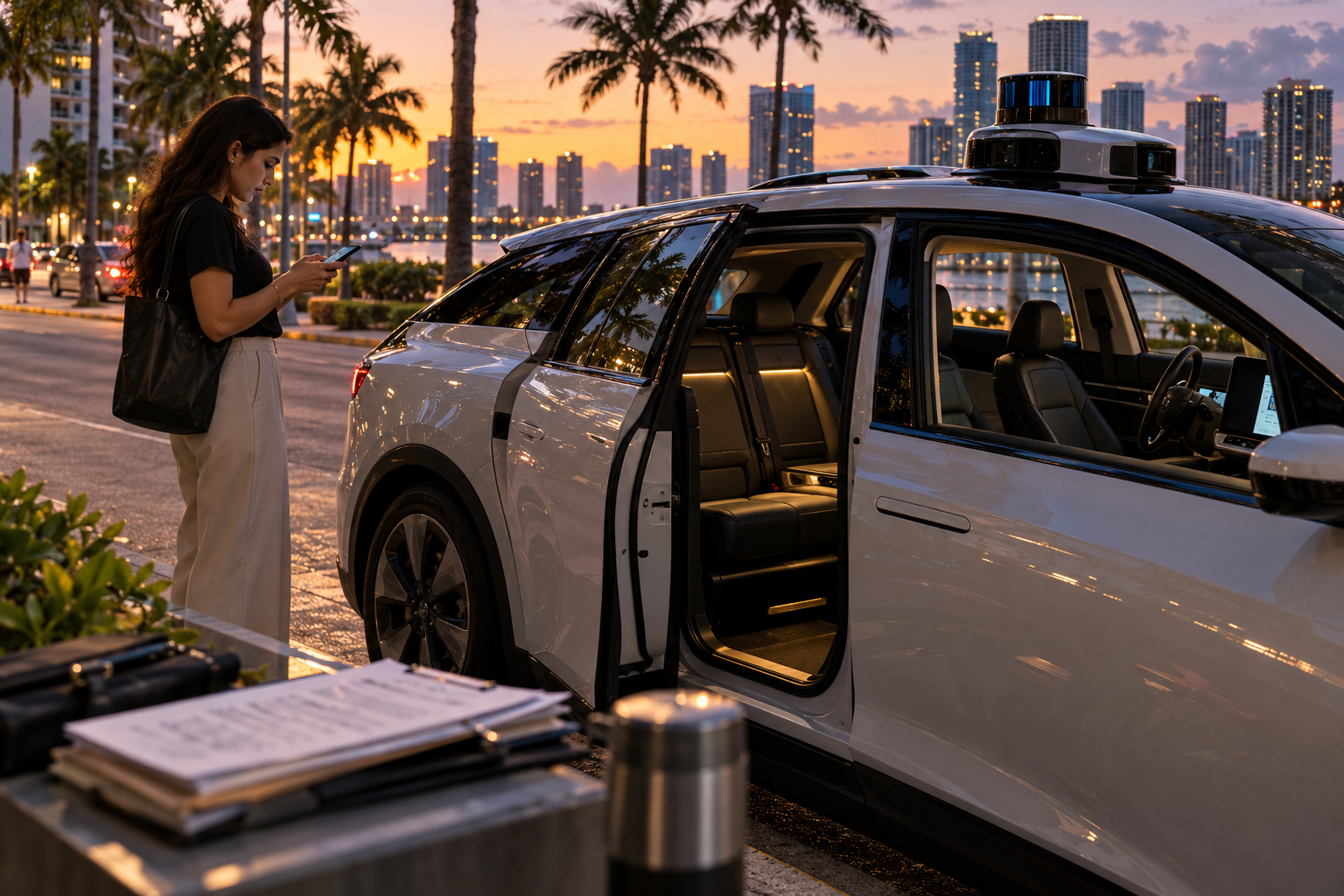
The crash happens at an intersection. One vehicle has no one behind the wheel. The injured person can photograph the damage, exchange information with the other motorists, and call 911—but cannot ask the empty driver’s seat what it saw.
That scene is no longer just a thought experiment. On September 4, 2026, the National Highway Traffic Safety Administration announced an Audit Query into Tesla’s certification of its Cybercab after commercial deployment in Austin, Texas. The federal inquiry does not establish that any vehicle is defective, and it is not a Florida crash case. It does show how quickly purpose-built driverless vehicles are moving from design questions to real roads.
Florida law already anticipates vehicles that can operate without a human driver. But it does not reduce a Florida car accident involving a robotaxi to one automatic answer. The absence of a driver changes the investigation: the “who” may be a network, vehicle owner, manufacturer, software developer, converter, maintenance provider, remote-assistance operation, another road user, or some combination supported by the evidence.
First, separate a robotaxi from a car with driver assistance
“Self-driving” is often used loosely. Adaptive cruise control, lane centering, automatic emergency braking, and similar features can assist a human driver without replacing that driver. NHTSA’s current automated-vehicle guidance stresses that consumer vehicles available today still require a driver’s full attention, even when they offer advanced assistance.
Florida’s statutory definition is more exact. Under section 316.003, an automated driving system is the hardware and software collectively capable of performing the entire dynamic driving task on a sustained basis. A “fully autonomous vehicle” is designed to function without a human operator. The statute also recognizes an operational design domain: the roads, speed ranges, weather, time of day, and other conditions within which the system is designed to work.
That distinction matters after a collision. If a conventional driver-assistance system was active, investigators may still examine whether a human driver remained responsible for monitoring and controlling the vehicle. If the automated driving system was performing the entire driving task, the inquiry shifts toward the system’s decisions, its operating limits, the fleet’s supervision, and the entities responsible for placing and maintaining it in service.
Florida calls the automated system the “operator”—but that is not the end of civil liability
Florida Statute section 316.85 allows a fully autonomous vehicle to operate without a licensed human operator physically present. When the automated driving system is engaged, the statute deems that system the operator for purposes of Florida’s traffic-control chapter.
That rule answers an important regulatory question: traffic laws do not become meaningless merely because no person is holding a steering wheel. It does not, by itself, turn software into a person who can pay a judgment, identify the party that breached a civil duty, or decide which insurance policy responds.
In an injury claim, “the automated system was the operator” is therefore a starting point. The next questions are factual. Who owned the vehicle? Who operated the on-demand network? Who designed and updated the driving system? Was the vehicle within its operational design domain? Did a remote assistant intervene? Was a sensor blocked, damaged, or miscalibrated? Did another driver, cyclist, or pedestrian create part of the danger? The legal theory follows the supported answers rather than the marketing label on the vehicle.
The $1 million rule applies to a specific kind of autonomous trip
Florida has a dedicated insurance statute for a fully autonomous vehicle operating on an on-demand autonomous vehicle network. Under section 627.749, when the automated driving system is engaged and the vehicle is logged on to such a network or engaged in a prearranged ride, the vehicle must be covered by automobile insurance providing at least $1 million in primary liability coverage for death, bodily injury, and property damage. The required policy also includes PIP benefits meeting Florida’s minimum requirements and uninsured/underinsured motorist coverage as required by section 627.727.
The statute permits that coverage to be maintained by the autonomous vehicle’s owner, the on-demand network, or a combination of the two. That makes the policy investigation concrete: identify the vehicle, identify the network status at the moment of impact, and obtain the operative coverage documents.
The $1 million requirement should not be described as a guaranteed payment to every injured person. Coverage limits are not admissions of fault, and several people may assert claims after the same event. Exclusions, policy terms, causation, damages, and competing claims can still matter. The statute also addresses a defined network setting; it should not be casually applied to every vehicle that has automated features.
PIP and UM questions can be equally important for a passenger, pedestrian, cyclist, or occupant of another vehicle. The source and priority of benefits depend on the injured person’s role, household policies, vehicle ownership, and the facts of the trip. Tucker Law’s Personal Injury Information Center provides broader context for Florida insurance and injury claims.
A driverless crash may involve several different liability paths
Consider a robotaxi that enters an intersection against a red signal. If the vehicle’s own records show that the automated system perceived the light incorrectly, the case may involve the system’s design, validation, software, or sensor performance. If a recent repair left a camera misaligned, maintenance and calibration may become central. If the vehicle was operating outside weather or roadway conditions the system was designed to handle, the deployment decision may matter. If a human-driven truck blocked the signal and struck the robotaxi, ordinary driver negligence may remain the principal cause.
These possibilities are not interchangeable. A negligence claim asks whether a person or entity failed to use reasonable care. A product-liability theory may examine a defect in design, manufacture, warnings, or another aspect of a product. A claim involving fleet maintenance asks different questions from one involving a software update. An on-demand network’s responsibilities may differ from those of the vehicle owner or a component supplier.
Florida also has a narrow protection for an original vehicle manufacturer when someone else performs the autonomous conversion. Under section 316.86, the original manufacturer is not liable for an alleged defect caused by a third-party conversion or equipment installed by the converter, unless the alleged defect was present in the vehicle as originally manufactured. That is not blanket immunity for every manufacturer in every autonomous-vehicle case. It makes the source of the alleged defect—and the vehicle’s history—especially important.
The most important witness may be a collection of machines
A traditional crash investigation often begins with drivers, witnesses, tire marks, vehicle damage, and surveillance video. Those sources still matter. A robotaxi adds electronic records that may explain what the system detected and why it acted.
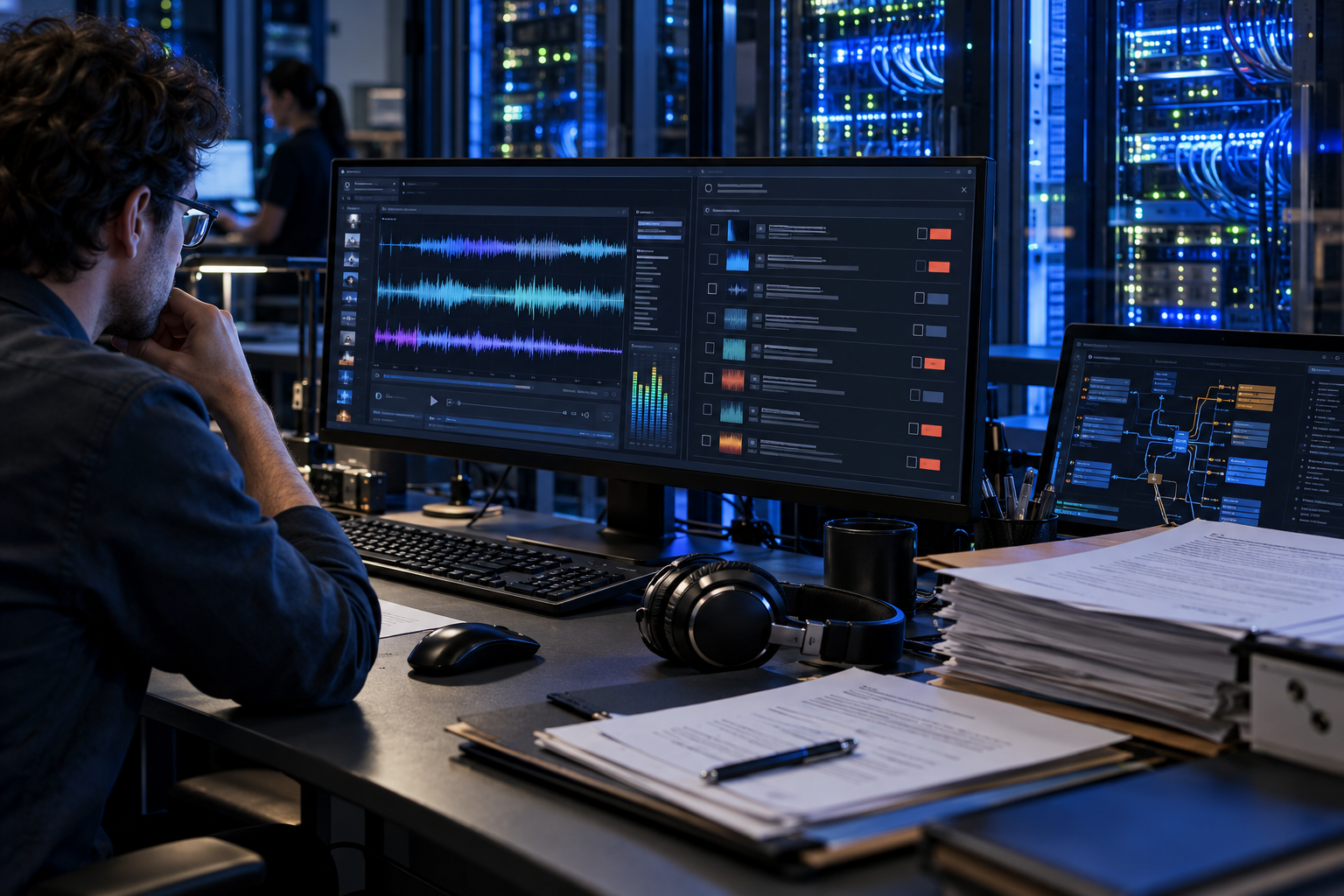
Potentially relevant material can include the vehicle identification and fleet numbers; trip request and receipt; precise network status; automated-system engagement history; route and timestamp data; sensor recordings; object classifications; speed, braking, and steering data; system alerts; software and map versions; update history; remote-assistance communications; dispatch records; diagnostic trouble codes; maintenance and calibration records; and the vehicle’s stated operational design domain. The vehicle may also contain an event data recorder, although that device should not be assumed to capture every automated-driving decision.
Outside evidence supplies a necessary check on the machine’s account. Traffic cameras, nearby business video, dashboard cameras, 911 recordings, witness phones, signal timing, road construction records, weather data, and physical marks can confirm or contradict the electronic timeline. If a pedestrian or cyclist was struck, location and visibility evidence may be especially important because the injured person had no vehicle data of their own.
NHTSA’s September 2026 report to Congress describes continuing federal work on automated-vehicle safety, including real-world safety performance, crash-risk assessment, and remote assistance. Those are not abstract technical topics after an injury. They identify the kinds of systems and human-machine interactions that may need to be reconstructed.
Preservation must begin before the vehicle is repaired or the software changes
Electronic evidence can be altered without anyone deliberately destroying it. A fleet vehicle may return to service. Logs may be overwritten under ordinary retention policies. A software update may change the system’s version. Damaged sensors may be replaced, and calibration may erase the condition that existed at the time of the crash.
The vehicle should not be destructively tested or dismantled before the interested parties have a fair opportunity to document it. Preservation requests may need to reach more than the registered owner. The network, fleet operator, manufacturer, software provider, maintenance contractor, remote-assistance vendor, and tow or storage facility may each hold different records.
Tucker Law’s analysis of a software-related rearview-camera recall illustrates a related point: the data that explains a display or software problem may live in a different module from the data that records speed or braking. Asking only for “the black box” may miss the evidence that matters.
An empty driver’s seat changes the questions, not the need for proof
A Florida robotaxi accident is still an injury case built from duty, fault, causation, damages, and available insurance. The technology adds parties and data; it does not eliminate those elements.
The clearest early investigation establishes four things: what level of automation was actually controlling the vehicle, whether the system was within its designed operating conditions, which people and companies controlled the vehicle and network, and which physical and electronic records can preserve the event. Those answers help distinguish a human-driver crash involving assistance features from a true driverless-system failure.
If you were injured as a robotaxi passenger, an occupant of another vehicle, a pedestrian, or a cyclist, contact Tucker Law before fleet data, video, or vehicle condition changes. Tucker Law can review the crash, identify potential defendants and insurance, and coordinate preservation of the evidence needed to understand what the automated system did.
This article provides general information, not legal advice. Autonomous-vehicle technology, insurance, potential defendants, deadlines, and preservation duties depend on the specific facts and current law.