When a Theme-Park Guest Stops Being an Invitee: Florida’s New Busch Gardens Ruling
A ticket can make someone a welcome guest at a Florida theme park. It does not necessarily make every stage, backstage area, prop, maintenance corridor, or piece of performance equipment part of that invitation.
That boundary decided SeaWorld Parks & Entertainment LLC v. Abougamal, a September 9, 2026 decision from Florida’s Second District Court of Appeal. A 12-year-old entered an unlocked theater at Busch Gardens Tampa Bay after the evening’s circus show had ended, climbed onto a professional trampoline on the stage, and was seriously injured when he jumped off. A jury found Busch Gardens negligent and assessed more than $8.15 million in damages. After comparative-fault reductions, the trial court entered a judgment of approximately $5.3 million.
The appellate court reversed the judgment entirely and directed the trial court to enter judgment for Busch Gardens. Its reason was not that amusement parks owe no duty to children. The court held that the child’s status changed when he crossed from an area guests could use into an area outside the scope of the park’s invitation. That change dramatically reduced the duty the park owed him.
For families evaluating a Florida theme park injury claim, the decision puts one factual question near the center of the case: What exactly was the injured person invited to do, and where?
The theater was open. The trampoline was not.
The accident happened during Busch Gardens’ Howl-O-Scream event. The child and a friend entered the Stanleyville Theater at about midnight. One set of doors was closed but unlocked because the theater could be used by guests and employees during emergencies or rest breaks. The lights were on, but no show was underway, no actors were present, and no music was playing.
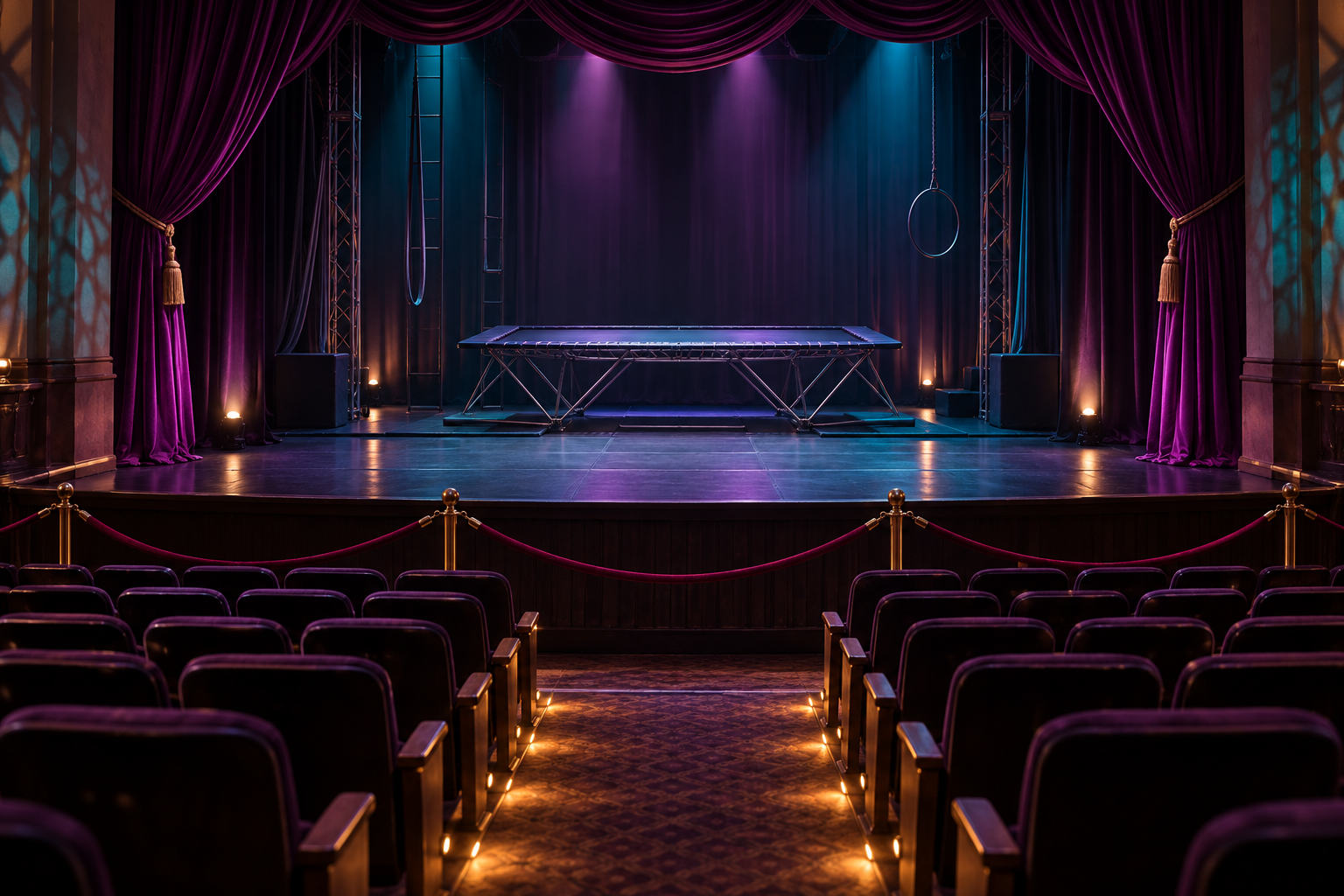
Inside, 22 steps descended between the seats toward an elevated stage. At the rear of that stage sat a four-foot-high professional circus trampoline designed to launch trained acrobats as high as 30 feet. It had no attached ladder or steps. The child climbed onto the stage, climbed onto the trampoline, bounced several times, and tried to dismount by leaping high into the air. He landed face-first below the stage.
He initially told his mother that he had fallen on the theater steps. A few days later, after continuing abdominal pain led to additional medical care, he disclosed what had happened. At trial, he acknowledged that he knew he should not have been on the stage, felt as though he was sneaking onto it, and knew he should not have been on the trampoline.
Those details made the unlocked door much less important than it first appeared. The park allowed guests into the theater. The court concluded that it did not invite them onto a performance stage or professional trampoline.
Premises liability follows the visitor’s status at the moment of injury
Florida premises law generally recognizes three categories of people entering land: invitees, uninvited licensees, and trespassers. The category matters because it defines the landowner’s duty.
A business invitee is present by an express or reasonably implied invitation connected to the owner’s business. The owner ordinarily must use reasonable care to maintain the invited premises in a reasonably safe condition and warn about concealed dangers the owner knows or should know about.
The duty to an uninvited licensee or trespasser is narrower. As described by the Second District, the landowner must avoid willful or wanton harm and, after discovering the person’s presence, warn about known dangers that are not open to ordinary observation. In Abougamal, it did not matter whether the child became an uninvited licensee or a trespasser because the relevant duty was the same under either classification.
The critical point is that status is not fixed at the entrance gate. A customer can begin as an invitee and later move beyond the geographic or functional limits of the invitation. The court evaluates the person’s status where the injury happened and in light of the use being made of that area.
This is broader than a theme-park rule. Similar questions can arise when a hotel guest enters a service room, a shopper walks into an employee-only space, or a restaurant customer takes a shortcut through a loading area. Tucker Law’s Florida premises-injury guidance explains the ordinary duties owed in areas customers are expected to use. Abougamal shows why the expected-use question must come first.
No “Do Not Enter” sign does not automatically create an invitation
There was no sign attached to the stage or trampoline expressly prohibiting access. The appellate court held that this absence did not extend the park’s invitation. Florida law does not require owners to place a warning signal everywhere the public is not expected to go, and the absence of a “No Trespassing” sign does not itself amount to an implied invitation.
The court instead looked at the total setting. The professional trampoline was elevated, had no ladder or steps, sat at the back of a performance stage, and was not being used for a show. Twenty-one illuminated signs around the park prohibited touching sets or props and prohibited horseplay. A friend had warned the child not to jump on the trampoline. The child himself admitted that he knew he was not supposed to be there.
This does not mean signs and barriers are irrelevant. In a closer case, ropes, gates, floor markings, employee directions, maps, lighting, and customary guest traffic may help define what the operator invited or reasonably anticipated. But an injury claim cannot assume that an unlocked door or missing warning sign automatically converts every space beyond it into a customer area.
Foreseeability must match the time, place, and activity
Evidence showed that theater procedures called for employees to watch for children who might try to climb onto the stage while the theater was filling for a show. The plaintiff argued that this supported foreseeability. The park’s representative explained, however, that the concern arose during shows because children could become excited by the entertainment. The only circus show that evening had begun at 7:30 p.m.; the injury occurred around midnight, when the theater was empty.
Busch Gardens also had no known prior instance of a guest climbing onto and jumping from the trampoline. The court declined to convert a showtime precaution into proof that the park should reasonably anticipate the same conduct hours later when no performance was underway.
This distinction is useful in any premises case. “Someone could enter” is different from “this owner should reasonably have anticipated this person, in this area, using this object in this way.” Prior incidents, employee practices, access patterns, surveillance, and the operator’s own risk assessments are most persuasive when they correspond to the specific conduct that caused the injury.
Being a child did not keep the invitee duty in place
The injured guest was 12, but age did not prevent the court from deciding that he had crossed the boundary of the invitation. His testimony about what he understood was especially important. The court treated his admissions—that he knew he should not be on the stage or trampoline—as evidence it could not disregard.
The attractive-nuisance doctrine did not rescue the verdict. The plaintiff had not pleaded an attractive-nuisance claim, and the jury had not been instructed on one. The court noted that such a claim must allege the required elements, including allurement, and that the doctrine does not apply simply because an object looks interesting to a child. A child’s ability to understand or avoid the danger can also be decisive.
That does not make age irrelevant in other cases. A very young child’s understanding, repeated child access known to an owner, an easily accessible artificial condition, or proof that a property was designed to attract children can produce a different analysis. The lesson is narrower: courts will not automatically convert every injury involving a minor into an attractive-nuisance claim, particularly when the theory was never pleaded and the evidence shows the child understood the restriction.
The verdict disappeared because the wrong duty reached the jury
The trial court instructed the jury only on the duty owed to a business invitee. The jury found Busch Gardens 65% at fault, the child 25% at fault, and his mother 10% at fault. Those allocations reduced the damages judgment to approximately $5.3 million. The court later awarded another $375,000 in attorney’s fees and costs based on an unaccepted proposal for settlement.
On appeal, the Second District held that the undisputed facts established, as a matter of law, that the child had ceased to be an invitee before the injury. Because there was no evidence of willful or wanton conduct and no evidence that the park discovered him on the stage or trampoline in time to warn him, the lesser duty was not breached. The appellate court therefore ordered judgment for Busch Gardens rather than a new trial. The dependent fee judgment fell with the damages judgment.
That outcome is more severe than a comparative-fault reduction. Comparative fault allocates responsibility after a duty and breach have been established. The entrant-status issue determines what duty existed in the first place. Florida’s current comparative-negligence framework is set out in section 768.81, but percentage fault cannot supply a duty that the law did not impose.
What evidence matters after an injury in a restricted or unclear area?
Cases near the boundary of an invitation are intensely factual. The ticket and its terms may matter, but so can the park map, mobile-app instructions, posted rules, nearby signs, barriers, doors, employee statements, and the path other guests routinely take. Photographs should capture not only the injury location but also the route from the public area to it. Surveillance can reveal whether guests commonly entered the space, whether employees redirected them, and whether the operator tolerated the same use before the incident.
Statements made immediately after an injury matter as well. In Abougamal, the difference between falling on theater steps and jumping from a professional trampoline changed the entire liability analysis. A frightened or injured child may not provide a complete account immediately, but medical records, incident reports, texts, witness accounts, and later explanations should be preserved rather than “corrected” informally. Inconsistencies will be examined, and the surrounding evidence can explain why an early account was incomplete.
The operator’s documents may be equally important: access policies, training materials, prior incident reports, inspection records, staffing schedules, and internal communications. Prompt preservation requests can be critical because surveillance and electronic records may be overwritten. The Tucker Law Personal Injury Information Center provides additional guidance about evidence and the litigation process.
This ruling does not immunize Florida attractions
Abougamal does not say that theme parks are never liable when a guest disregards a rule, nor does it decide cases involving negligent ride operation, defective equipment offered for guest use, unsafe walkways, inadequate crowd control, or an employee who directs someone into danger. In an invited area, a paying guest ordinarily remains entitled to the higher duty of reasonable care. A disputed boundary or evidence that an operator regularly tolerated the activity may also require a jury to decide status rather than a judge resolving it as a matter of law.
The decision also addresses a different issue from a signed release. Tucker Law’s article on waivers at Florida jump zones and theme parks explains how contract language may affect a claim. Here, the decisive question arose before any waiver analysis: what duty did the park owe at the exact location and moment of injury?
Families confronting a child’s serious injury may also face future-care, guardianship, settlement-approval, and insurance questions that do not fit neatly into the initial liability analysis. Our discussion of protecting a child’s legal rights after an injury addresses why investigating available coverage is about the child’s long-term needs, not blame for its own sake.
The boundary must be investigated, not assumed
A theme-park ticket establishes an invitation, but the invitation has limits. The strongest claim analysis maps those limits from the guest’s perspective and the operator’s actual practices: where visitors were expected to go, what uses were encouraged, what restrictions were communicated, what conduct was foreseeable, and what the injured person understood.
The Second District’s opinion is not final until disposition of any timely rehearing motion and remains subject to revision before official publication. Its immediate lesson is nonetheless clear. The label “paying customer” does not resolve a Florida premises case. Location, activity, knowledge, and the scope of the invitation can decide whether the owner owed ordinary reasonable care or a far narrower duty.
If you or your child suffered a serious injury at a Florida attraction, preserve the admission records, app screens, photographs, witness names, and communications with the operator. Tucker Law can investigate the boundary evidence and determine which duty applies. Contact Tucker Law before temporary signs, surveillance footage, or staffing records disappear.