Who Is at Fault in a Left-Turn Accident in Florida?
A left-turn accident claim often begins with a dispute about right of way. The turning driver may say the oncoming car was speeding or entered on a red light, while the oncoming driver may say the turn began without enough space. Signals, vehicle positions, video, and damage patterns can be more reliable than assumptions.
Florida law places an important duty on drivers turning left, but fault is not automatically decided by the type of maneuver alone. These eight evidence steps can help clarify what happened.
1. Understand the basic left-turn rule
Current Florida Statute § 316.122 says a driver intending to turn left within an intersection or into an alley, private road, or driveway must yield to approaching vehicles that are in the intersection or close enough to present an immediate hazard.
The rule is central, but the facts still matter. An oncoming driver’s speed, signal, lane use, or other conduct may affect the analysis.
2. Photograph the complete intersection
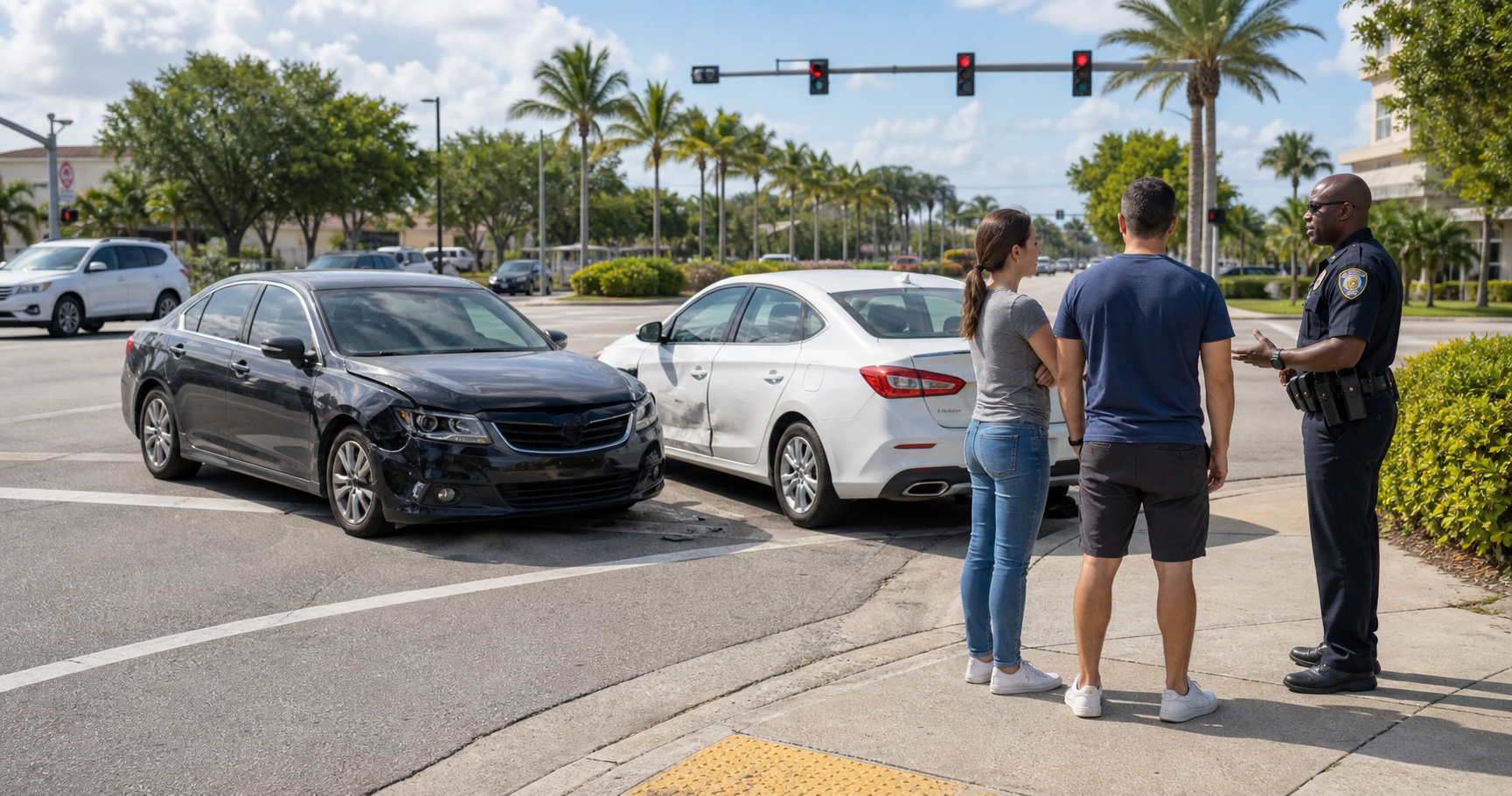
Take wide photographs of every approach, traffic signal, turn lane, stop line, sign, roadway grade, and sight obstruction. Capture vehicle resting positions, debris, fluid, skid or tire marks, and damage to all sides of each car.
A close image of a dent cannot show whether a signal was visible or how far the vehicles traveled after impact. The full layout gives context to a left-turn accident claim.
3. Record the signal sequence
Note whether the intersection had a protected green arrow, flashing yellow arrow, standard green light, stop sign, or no signal. Write down what you remember about the light at the moment the turn began and at impact. Do not claim certainty if you did not see a signal change.
Signal timing records or traffic-camera information may sometimes be available. Prompt requests are important because retention periods can be short.
4. Identify video and independent witnesses
Look for dashboard cameras, traffic cameras, storefront systems, buses, homes, and nearby vehicles that may have recorded the collision. Ask witnesses for names, phone numbers, and a short description of where they were positioned.
A witness facing a different direction may have seen the signal that one driver could not. Preserve original video files without editing or posting them publicly.
5. Consider the oncoming driver’s conduct
Possible issues include excessive speed, entering after a red light, distraction, unsafe passing, lack of headlights, or changing lanes within the intersection. Those facts require proof. Avoid assuming speeding merely because the collision was severe.
Florida’s current comparative-fault statute may affect recovery when more than one person contributed. Its application depends on the specific negligence claim and evidence.
6. Preserve vehicle evidence
Damage location may help show the angle of impact and how far the turning vehicle had progressed. Event data, onboard cameras, airbag information, and electronic systems may also contain useful information, depending on the vehicles.
Do not repair, sell, or dispose of a vehicle before important damage and data are documented. Keep repair estimates, tow records, photographs, and storage information.
7. Report the crash and document injuries
Call 911 when anyone is injured, complains of pain, a vehicle must be towed, or another reportable circumstance exists. Notify the appropriate insurers according to policy terms. If no officer prepares a report, see our guide to a Florida car accident with no police report.
Seek appropriate medical attention and tell providers how the impact occurred. Current Florida Statute § 627.736 generally requires initial services and care within 14 days for PIP medical benefits.
8. Avoid premature conclusions
- Do not admit fault simply because you were turning left.
- Do not accuse the other driver of speeding without evidence.
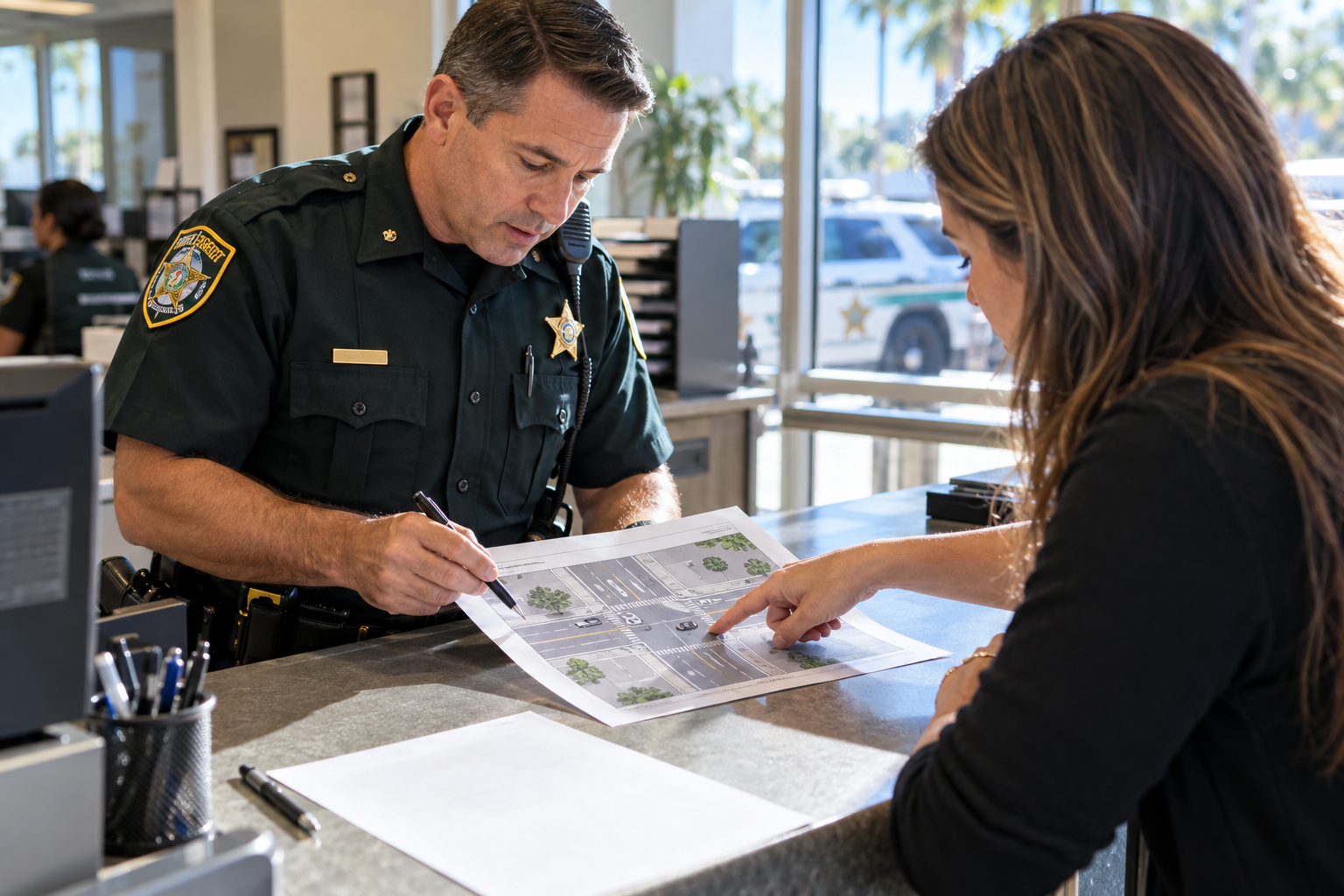
- Do not rely only on a citation or crash-report diagram.
- Do not post the collision or injuries on social media.
- Do not sign a release before the injuries and coverage are evaluated.
What if several vehicles were involved?
An evasive maneuver can lead to secondary impacts. If more than two vehicles were involved, our article on a chain-reaction accident claim explains how to document each impact and potential source of fault.
Passengers and left-turn crashes
Passengers are usually not making the driving decisions at issue, but they should still preserve their own observations, symptoms, treatment, and insurance information. Read how a passenger may file an injury claim after a Florida accident.
Talk with Tucker Law
A left-turn accident claim may require signal records, video, witness statements, vehicle evidence, and a careful timeline. Tucker Law can review those materials, insurance coverage, and the effect of the injuries. Visit our personal injury practice areas or contact Tucker Law.
This article provides general information, not legal advice. Right of way, fault, coverage, damages, and deadlines depend on the facts and current law.