A Florida Rental Car Crash: What Happens From Scene to Claim
A rental car accident claim can involve the renter, an authorized driver, another motorist, the rental company, a credit-card benefit, and several insurance policies. The safest way to manage that complexity is chronologically. What you document at the scene affects the coverage review, vehicle-damage process, and injury claim that follow.
At the scene: treat it like any serious crash
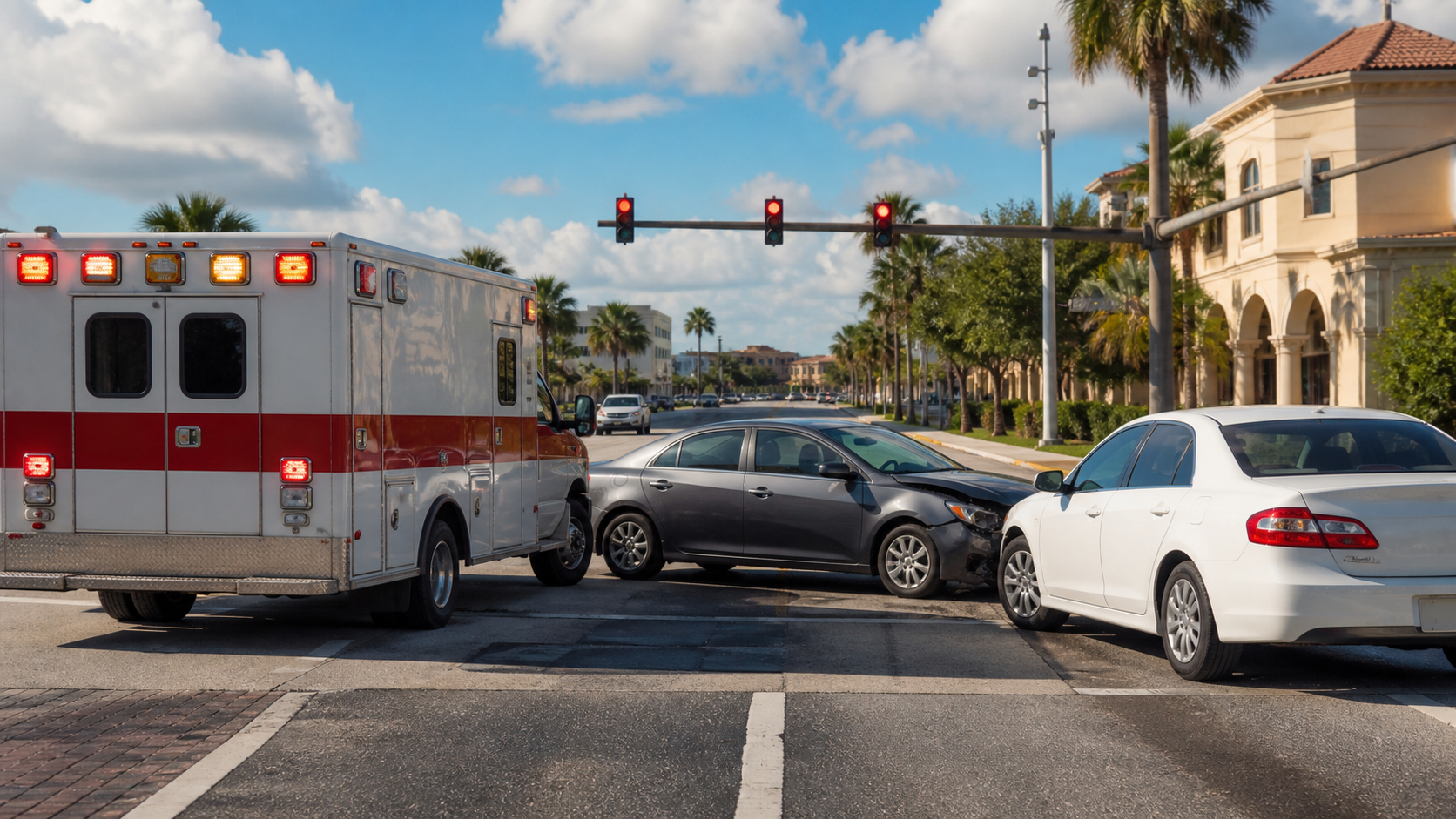
Move to safety if possible, call for appropriate emergency help, and exchange driver, vehicle, and insurance information. Photograph vehicle positions before they move when it is safe, then capture damage, license plates, road markings, signals, debris, and the surrounding area. Ask witnesses for direct contact information. Do not rely on the rental company or police report to locate them later.
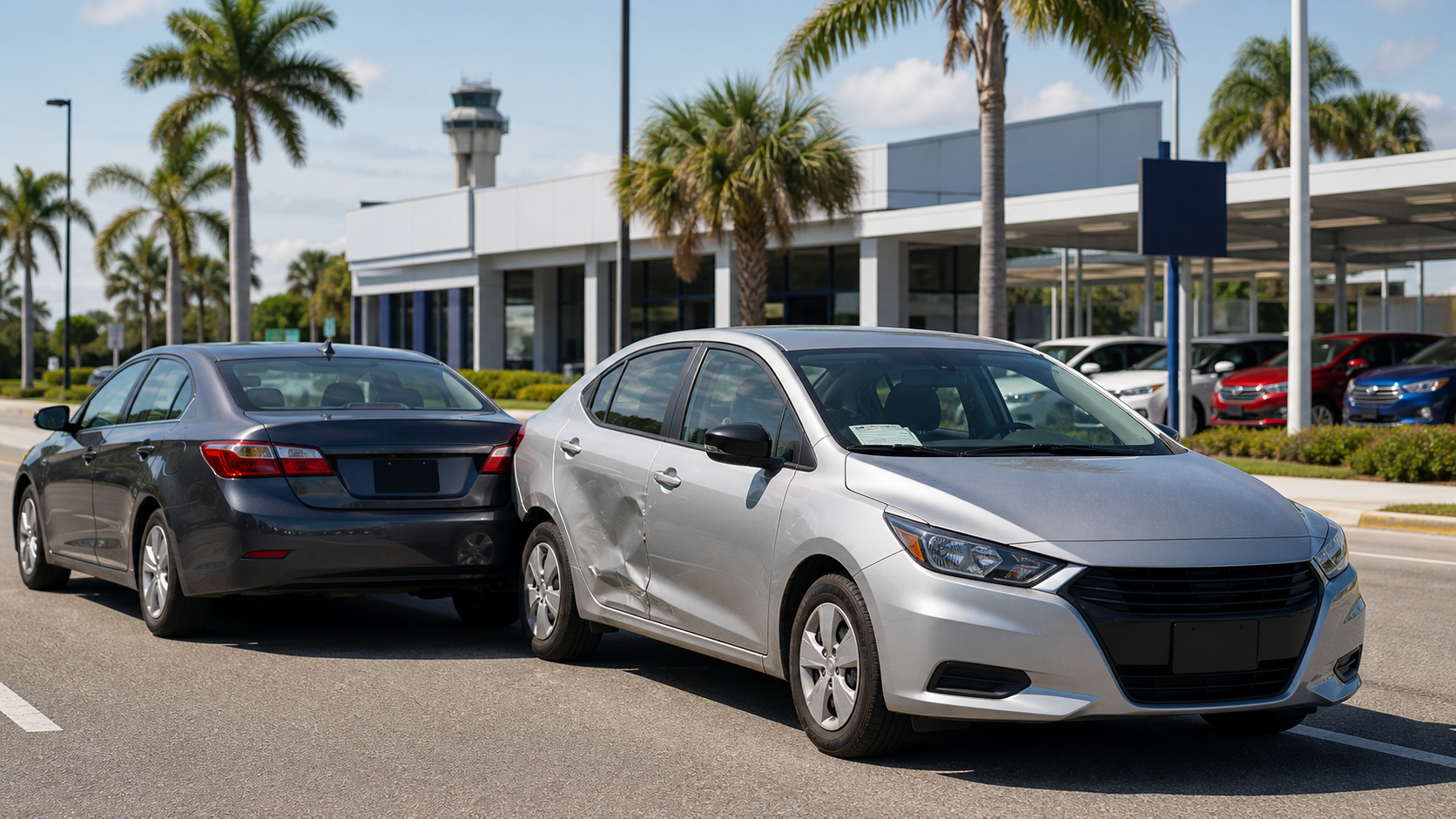
Identify which vehicle is rented and who was driving it. Keep the rental agreement available, but avoid roadside arguments about coverage or fault. A driver can be authorized under one agreement and still face a separate negligence investigation. If several vehicles are involved, the proof issues described in a chain-reaction accident may also apply.
Before leaving: protect the human and physical evidence
Seek appropriate medical evaluation for concerning symptoms. Adrenaline can mask pain, but an injury claim should be based on truthful, documented symptoms rather than assumptions. Note whether airbags deployed, seat belts locked, luggage moved, or any occupant struck the interior. Obtain the report or event number.
Do not discard trip records. Flight confirmations, hotel reservations, toll receipts, parking records, and phone location data can help establish who was using the car and when. Preserve dash-camera files before they loop over. If a passenger was hurt, our passenger injury claim guide explains why passengers may need information from multiple drivers.
Within the first day: follow the rental agreement
Report the collision using the rental company’s designated process and record the claim or incident number. Ask where the vehicle should go and whether it is safe to drive. Take screenshots or save email confirmations. If the company requests a written incident report, provide accurate facts without guessing about speed, distance, or injuries.
Review the agreement for authorized drivers, prohibited use, geographic restrictions, reporting duties, and optional products accepted or declined. Names such as collision damage waiver, loss damage waiver, supplemental liability, and personal accident coverage can sound alike while addressing different risks. The agreement and product descriptions—not the counter agent’s remembered summary—control the analysis.
During the first coverage review: map every possible policy
Notify appropriate personal auto insurers promptly. Ask for the full policy and endorsements in effect on the crash date. A renter’s policy may address liability, physical damage, medical benefits, or uninsured motorist issues differently. The rental vehicle’s occupants and another injured driver may also have their own coverages.
A credit card may offer rental-vehicle damage benefits if its conditions were met, but such a benefit is not necessarily liability or bodily-injury coverage. Save the card’s benefit guide and proof that the rental was paid with the eligible account. Employer-provided rentals and travel platforms can add another contractual layer.
When the rental owner’s role is raised
Federal law limits claims that seek to hold a rental or leasing company liable solely because it owns the vehicle when statutory conditions are met. The Graves Amendment, 49 U.S.C. section 30106, generally protects an owner engaged in renting vehicles if there is no negligence or criminal wrongdoing by the owner or an affiliate. It does not answer whether the driver was negligent, what insurance applies, or whether independent wrongdoing by the rental company can be proven.
That distinction prevents a common mistake: assuming the rental company automatically pays simply because its name appears on the car. Liability and coverage are separate questions. Vehicle title, driver conduct, contracts, policy language, and any claim of negligent maintenance must be evaluated on their own evidence.
As damage charges arrive: keep them separate from the injury claim
The rental company may present charges for repairs, loss of use, towing, storage, administrative fees, or diminished value. Forward demands to relevant insurers and benefit administrators, preserve all correspondence, and request supporting documentation. Do not assume that resolving vehicle damage also releases a bodily-injury claim.
Likewise, do not sign a broad release merely to close a small property-damage issue without understanding its language. The timeline for medical recovery may be much longer than the repair timeline. Similar caution is useful when dealing with a borrowed vehicle, where ownership and insurance can also point in different directions.
Before settlement: build one consistent record
Organize the police report, photographs, rental contract, policies, benefit guides, medical records, wage-loss support, receipts, and insurer letters. Compare the names, dates, and descriptions across documents. Correct factual errors promptly and in writing. Avoid public posts that can be taken out of context.
A Florida rental car accident claim becomes manageable when each issue has its own lane: crash fault, bodily injury, vehicle damage, contractual charges, and insurance priority. Tucker Law Group describes its injury services on the practice-area page. Travelers and Florida residents can contact the firm to discuss a specific collision.
This article provides general information and is not legal advice. Every case is different, and reading this page does not create an attorney-client relationship.