A Car Passes a Stopped School Bus in Florida: What Happens Next?
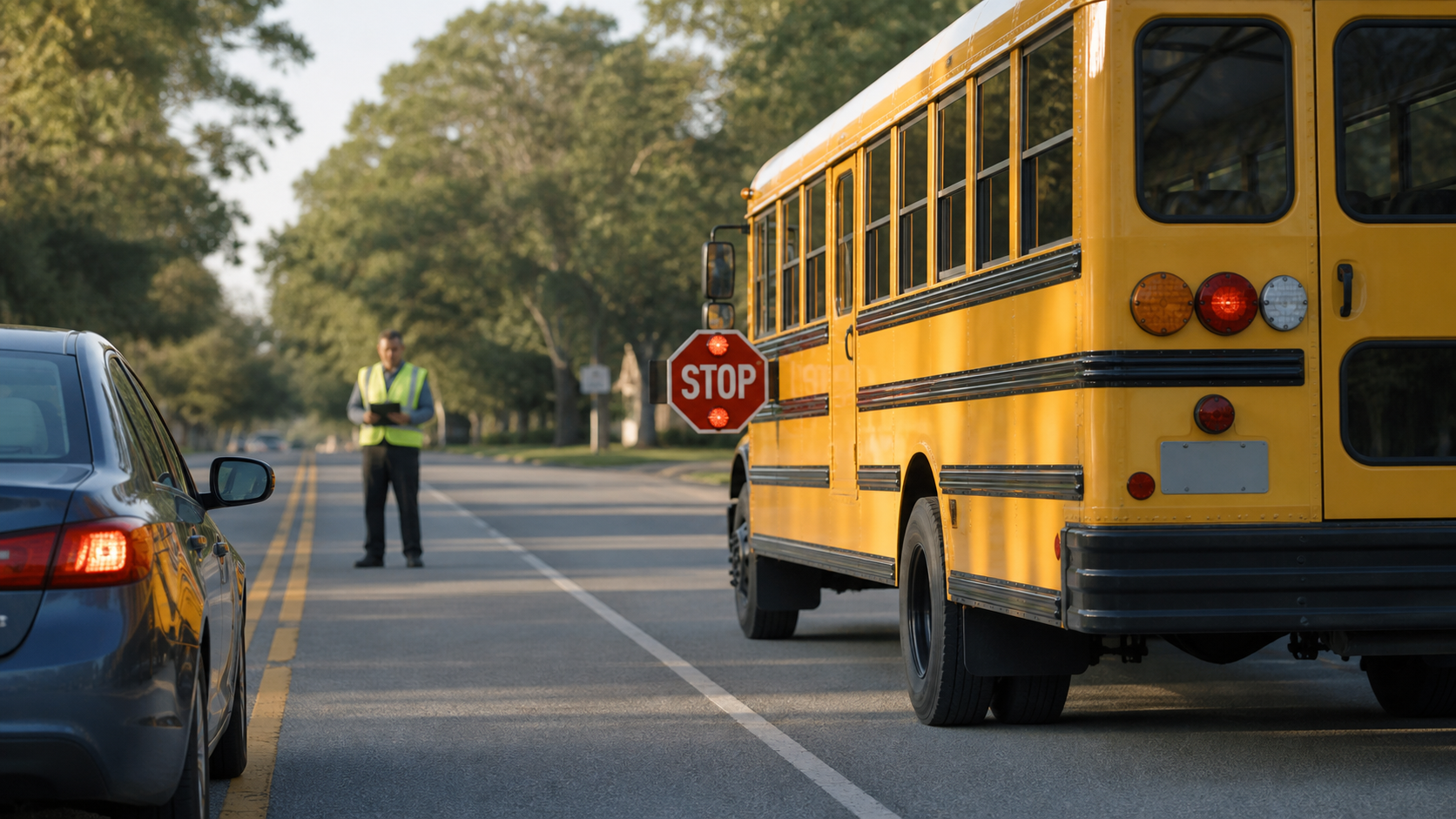
A school bus accident claim can begin in seconds: warning lights activate, a stop arm extends, and a vehicle passes while a student enters or leaves the bus. Safety and medical care come first. What follows is a time-sensitive investigation involving the bus, roadway, video, witnesses, driver conduct, and insurance.
The stop itself is documented
Florida Statute section 316.172 generally requires drivers approaching a school bus displaying a stop signal to stop and remain stopped until the signal is withdrawn. An exception applies to opposite-direction traffic on certain divided highways with an unpaved space, raised median, or physical barrier.
Road design is therefore essential. Investigators photograph the bus location, lanes, median material, barriers, stop arm, warning lights, signs, curb, shoulder, and student path. A painted center lane is not necessarily the same as a physical divider.
The warning sequence is reconstructed
Bus cameras may show when amber lights, red lights, and the stop arm activated. Nearby homes, businesses, and vehicles may capture the approaching car. Preserve footage promptly because retention periods can be short. Route data and maintenance records may clarify timing and equipment function.
Witnesses should describe where the car was when lights activated, whether it slowed, which side it passed, and where the student stood. A timed sequence is more useful than a general conclusion.
The passing driver is identified
Plate information, bus-camera images, police work, and independent video may identify a driver who leaves. Ownership and driving are separate facts. A household member, employee, rideshare driver, or borrower may introduce additional responsibility and coverage questions.
If the vehicle leaves, preserve the issues discussed in TuckerUp’s no-contact accident guide. Do not publicly accuse someone based on an unclear image.
Medical needs are addressed
A student can be struck directly, fall while evading a vehicle, or be injured aboard the bus during sudden braking. Evaluation should follow actual symptoms and medical judgment. Parents can keep a factual record of pain, sleep changes, school absences, activity limits, appointments, and expenses without coaching.
Preserve clothing, backpack, shoes, phone, bicycle, or other damaged items. Photograph visible injuries over time. Medical records should accurately describe the event and functional changes.
Transportation records are preserved
Possible records include route assignments, driver logs, loading procedures, incident reports, camera files, inspections, maintenance logs, dispatch communications, and prior reports about the stop. Public-records rules may apply to some materials, while student privacy rules may limit others. Targeted requests can protect evidence without seeking unrelated student information.
The bus driver’s position, mirrors, traffic conditions, activation timing, passenger movement, and evasive action may matter. A driver concentrating on students may perceive details differently from a roadside witness, so perspectives should be compared rather than forced into one narrative.
Insurance is separated from fault
The passing vehicle’s liability coverage may be one source. Depending on the event, household policies, personal injury protection, uninsured motorist coverage, school-related coverage, or another policy may need review. Coverage turns on facts and policy language, not whose logo appears on the bus.
Keep policies, endorsements, claim numbers, letters, and recorded-statement requests. Understand any release before signing it, especially while recovery is developing.
Citations and civil claims follow different paths
A citation can be important, but it does not replace a civil investigation. The injury claim focuses on responsibility, causation, damages, insurance, and admissible proof. A camera-based enforcement process may have separate procedures. Evidence preservation should not wait for traffic issues to finish.
Where several vehicles stop suddenly, principles from a chain-reaction crash may organize the timing.
What happens before resolution
Roadway conditions can change. Photograph sight lines, parked vehicles, landscaping, construction, weather, and sun position. If the stop is later moved or restriped, preserve earlier images and official records. Separate physical injury, emotional symptoms, property damage, and costs; each needs truthful support.
Save messages from the school, transportation provider, police, medical offices, and insurers. A contact log helps identify conflicts while memories remain fresh. Tucker Law Group’s practice areas describe its work. Families may contact the firm for a fact-specific review.
Practical questions for the early review
Investigators should confirm whether the bus was on its assigned route, whether the stop was temporary or established, how long the warning sequence operated, and where each student was located. They should also identify every camera before footage is overwritten. These questions do not assume that a driver, school, or transportation provider was negligent; they create a factual record that allows each person’s conduct to be evaluated fairly.
A family can help by keeping original documents rather than edited screenshots. Save appointment notes, expense receipts, attendance records, insurer letters, and photographs with their dates. Avoid discussing blame on social media or asking witnesses to adopt a preferred account. Accurate, independent evidence is more persuasive than a coordinated story and is easier to defend if the claim later becomes disputed.
This article provides general information and is not legal advice. Every matter is different, and reading this page does not create an attorney-client relationship.