Child Car Seats After a Florida Crash: Evidence Parents Should Preserve
A child car seat accident claim requires careful attention to both the crash and the restraint system. Parents often focus understandably on medical care, while the seat, installation, harness position, vehicle anchors, and replacement history may be changed or discarded. Preserving those facts can help explain how an injury occurred without blaming a family based on assumptions.
Does Florida require a child restraint?
Florida Statute section 316.613 requires a properly used, crash-tested, federally approved child restraint for children age five or younger, with specific options depending on age. The statute is a starting point. Manufacturer instructions, the child’s size, the seat’s limits, and the vehicle manual provide additional factual context.
A citation does not decide the entire civil claim. Investigators still examine collision forces, injury causation, driver conduct, product condition, installation, and insurance.
Should the car seat be thrown away after the crash?
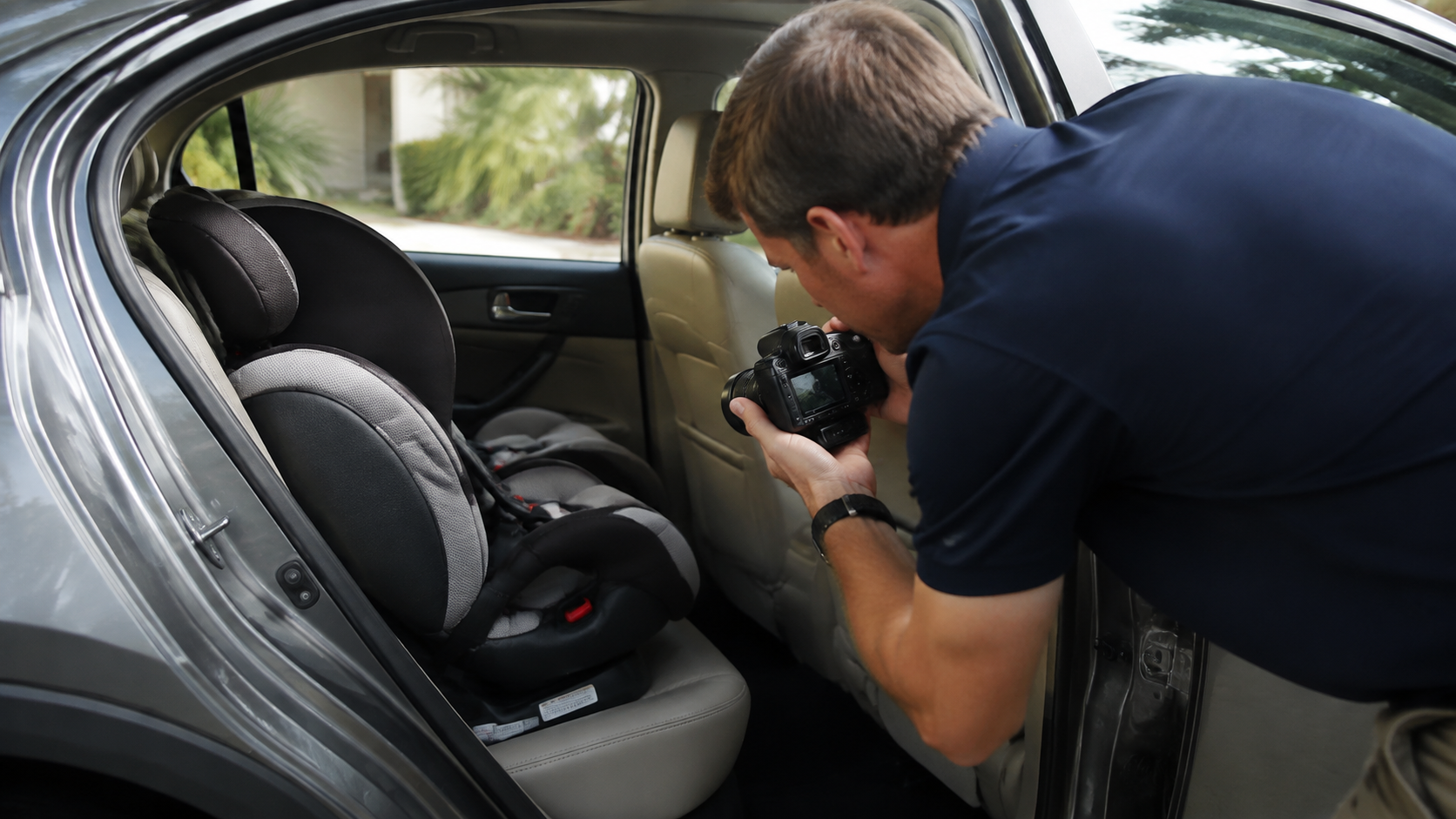
Replacement may be appropriate for safety, but a disputed seat should be documented before disposal. Photograph it from every side, the harness and chest clip, recline angle, belt path, lower anchors, tether, vehicle seat, and surrounding interior. Preserve labels, serial and model numbers, manufacture date, instructions, receipt, registration, and replacement notice.
Do not conduct repeated experiments or remove parts if a product or installation issue may be investigated. Store the seat securely, note who possesses it, and obtain a safe replacement for continued travel.
What if the seat was installed by someone else?
Parents, relatives, childcare providers, stores, hospitals, technicians, or vehicle owners may have participated. That does not automatically make any person legally responsible. Record who installed or adjusted the seat, when, what instructions were followed, and whether the seat was moved between vehicles.
Messages, appointment records, photographs taken before the crash, and inspection forms may be more reliable than memory months later. Avoid encouraging anyone to revise an account to match a preferred theory.
Can the seat or vehicle be defective?
A manufacturing, design, warning, anchor, buckle, harness, or structural issue is possible, but severity alone does not prove a defect. Preserve the vehicle and restraint when feasible, check recall information using official sources, and obtain qualified inspection before alleging a product failure.
Crash damage to the door, pillar, floor, seat frame, or anchor location may affect restraint performance. Repair and salvage activity can destroy this evidence. The preservation lessons in TuckerUp’s defective-tire discussion apply to other physical components too.
What medical records are especially useful?
Medical providers should receive an accurate description of seating position, restraint, impact direction, symptoms, and changes in behavior or function. Keep emergency, pediatric, specialist, therapy, pharmacy, and diagnostic records. Parents can maintain a factual log of sleep, appetite, mobility, school or daycare attendance, activities, and medication without turning it into advocacy.
Photograph visible injuries over time. Preserve damaged clothing and personal items. A child’s account should be recorded gently and naturally, without repeated leading questions.
Does improper use eliminate a claim?
Not automatically. The facts may involve the negligent driver, vehicle owner, product manufacturer, installer, or several contributing conditions. Florida comparative-fault principles can affect allocation, but an insurer still must connect an alleged misuse to the particular injury. The focus should remain on reliable evidence rather than moral judgment.
A child passenger is not the person who chose the route or caused the collision. TuckerUp’s passenger injury guide explains why occupants may need information from multiple drivers and policies.
Which insurance policies should be reviewed?
Possible sources include personal injury protection, bodily injury liability, uninsured or underinsured motorist coverage, medical payments, household policies, and product or business insurance when supported by facts. Coverage depends on policy language, vehicle use, household relationships, and the involved parties.
Save complete policies, endorsements, claim letters, medical bills, wage or caregiving records, replacement-seat receipts, and transportation costs. Do not sign a broad release merely to resolve property damage without understanding its scope.
What should families do in the first days?
Secure appropriate medical care, request the crash report, identify witnesses and video, photograph the vehicle and seat, preserve the restraint, notify insurers, and organize records by date. Do not post injury details or blame online. If another person borrowed the vehicle, TuckerUp’s borrowed-car article may help identify additional questions.
Putting the child car seat accident claim together
A careful review connects the collision mechanics, restraint evidence, medical findings, and coverage without speculation. Tucker Law Group’s practice-area overview describes its injury work. Families may contact the firm for a fact-specific discussion.
Parents should also preserve the child restraint after any insurer inspection and request a copy of the inspector’s photographs or report. If the vehicle is repaired, document the rear seat, anchor locations, belt system, doors, and floor before work begins. A simple evidence log can record who handled the seat and where it was stored.
This article provides general information, not legal advice. Every matter is different, and reading this page does not create an attorney-client relationship.