Who May Be Liable When a Tire Blowout Causes a Florida Crash?
A tire blowout accident claim may involve more than the driver who lost control. Poor maintenance, improper installation, road hazards, overloading, a defective tire, or a commercial company’s inspection failures can all become relevant. The tire itself may be the most important piece of evidence.
Because damaged vehicles are often repaired or discarded quickly, early preservation matters. These eight questions can help identify the cause and potentially responsible parties after a Florida crash.
1. What happened immediately before the tire failed?
Write down any vibration, warning light, sound, steering pull, impact with debris, or loss of pressure you noticed. Note the vehicle’s speed, lane, weather, road surface, cargo, and whether the driver braked or steered before losing control.
Do not guess about a defect. A detailed factual timeline is more useful than an early conclusion.
2. Was the tire preserved?
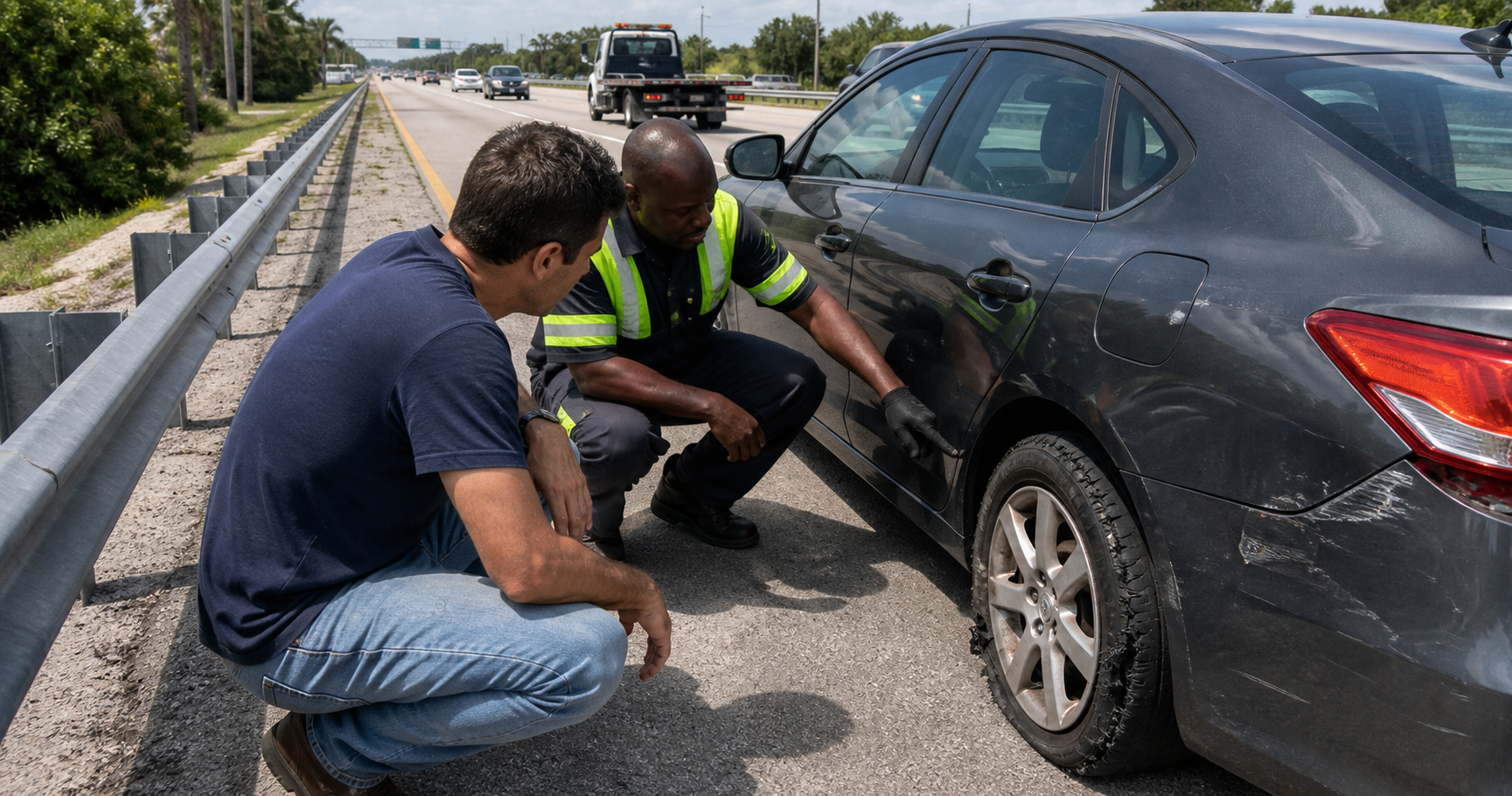
Tell the tow yard, repair shop, insurer, and vehicle owner not to discard the tire, wheel, valve, or related parts. Photograph them in place and after removal. Keep chain-of-custody information showing who handled the components and where they were stored.
A shredded tire can still contain evidence about tread separation, puncture, heat damage, underinflation, age, prior repair, or impact. Without the physical tire, a tire blowout accident claim may be harder to evaluate.
3. What does the tire identification show?
Photograph the full sidewall, including the tire identification number, size, load rating, manufacturer information, and date code. Record the make, model, mileage, and vehicle identification number. Check whether all tires matched the vehicle specifications.
Recall information and service records may become relevant, but a recall is not required for a tire to be defective or improperly maintained. Likewise, a recall does not by itself prove that it caused the crash.
4. Was the tire properly maintained?
Maintenance records may show pressure checks, rotations, balancing, alignment, tread measurements, repairs, and replacement recommendations. Uneven wear can point to alignment, suspension, inflation, or loading issues. A driver or vehicle owner may face questions about ignored warning signs.
Commercial fleets may have inspection schedules, driver reports, maintenance systems, and vendor records that should be preserved promptly.
5. Was the tire installed or repaired correctly?
A shop may have selected the wrong tire, damaged the bead, failed to tighten components properly, installed an unsafe used tire, or performed a repair outside appropriate limits. The work order, invoice, technician notes, and shop video may help.
Do not let a shop dispose of the failed components before an independent inspection is considered.
6. Could a manufacturing or design problem be involved?
Potential issues may include tread separation, belt failure, weak materials, contamination, or inadequate warnings. Product-liability questions often require engineering and tire experts. Preserve packaging, purchase records, warranty documents, and information about similar failures.
The vehicle may also have contributed through a wheel, suspension, or pressure-monitoring problem. A careful investigation should not focus too narrowly at the start.
7. Did another party create the road hazard?
Construction debris, unsecured cargo, a pothole, or objects dropped by another vehicle may puncture or destroy a tire. Photograph the hazard, roadway, nearby work, and surrounding cameras. Get witness information and identify the vehicle or business connected to any debris.
Our article on a falling cargo accident claim explains evidence to preserve when a load escapes from another vehicle.
8. How did the driver respond after the failure?
A sudden blowout creates an emergency, but driver conduct still matters. Investigators may consider speed, loading, distraction, steering, braking, seat-belt use, and whether warnings were ignored. Several causes can combine, and Florida’s current comparative-fault statute may affect claims involving shared responsibility.
What should you do at the scene?
- Move to a safe area and call 911 when injury or road danger exists.
- Do not stand beside traffic to inspect the tire.
- Photograph the vehicle, tire, roadway, debris, and damage from safety.
- Collect driver, owner, insurer, and witness information.
- Tell the tow operator that the tire and wheel must be preserved.
- Seek appropriate medical attention and document symptoms.
Current Florida Statute § 627.736 generally requires initial services and care within 14 days for PIP medical benefits after a motor-vehicle accident.
What if several cars were hit?
A tire failure can trigger secondary impacts. Review our guide to a chain-reaction accident claim for evidence that helps establish the order of collisions.
Talk with Tucker Law
A tire blowout accident claim may require physical preservation, expert inspection, maintenance records, product history, and several insurance policies. Tucker Law can review those issues and the resulting injuries and losses. Explore our personal injury practice areas or contact Tucker Law.
This article is general information, not legal advice. Product, maintenance, roadway, driver, insurance, and damages issues depend on the evidence and current law.