Who Is Liable When Falling Cargo Causes a Florida Accident?
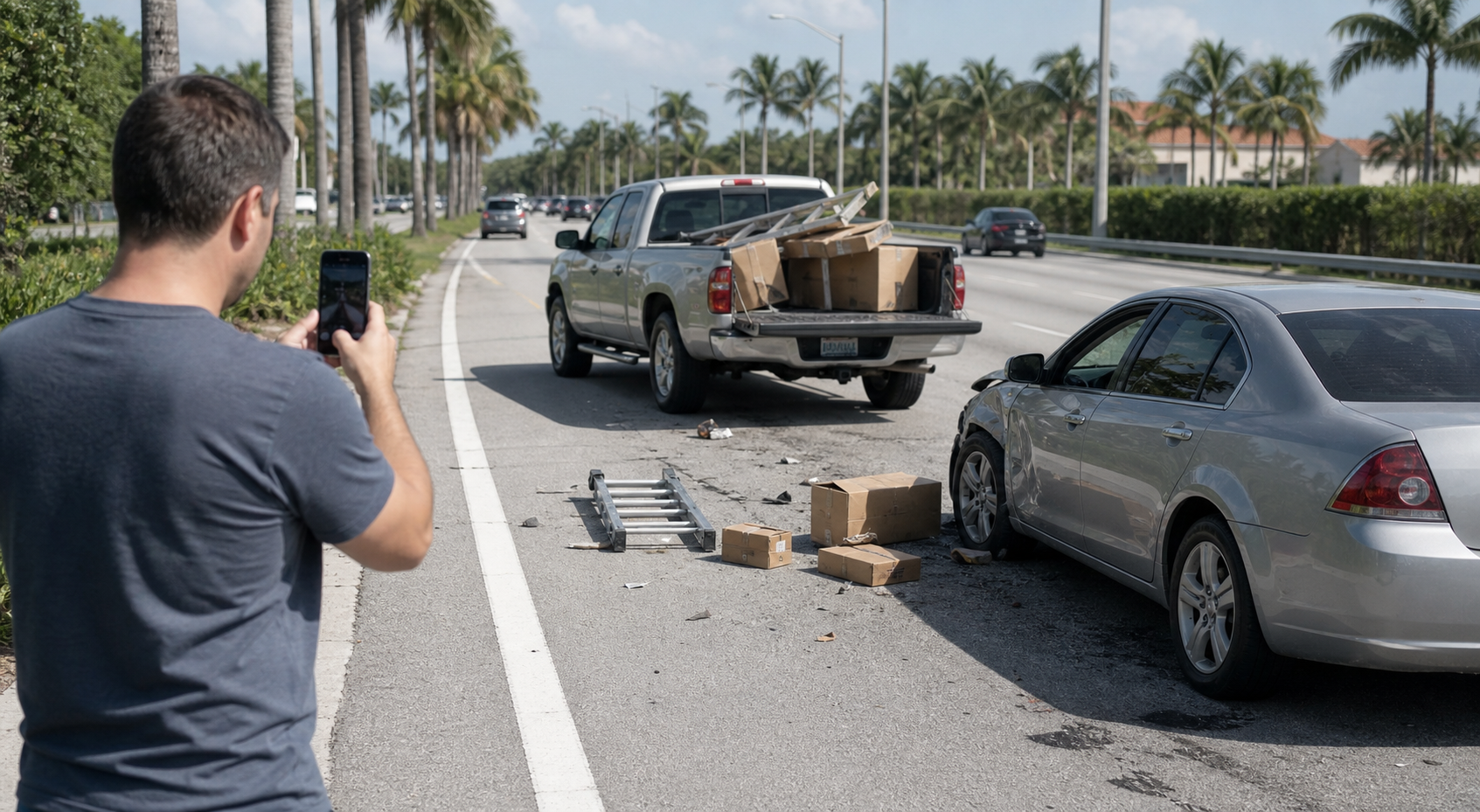
A falling cargo accident claim can arise when a ladder, box, construction material, furniture, gravel, trash, or another object leaves a vehicle and strikes traffic or forces a driver to swerve. The responsible party may be the driver, vehicle owner, company, loader, shipper, or another contractor.
The load may be removed quickly, and the vehicle that lost it may leave the scene. Immediate safety and documentation are essential. These eight steps can help preserve the evidence.
1. Move out of traffic and call for help
Do not stand in a travel lane to retrieve cargo or take photographs. Move to a safe location if possible, activate hazard lights, and call 911 when there is injury, a disabled vehicle, a dangerous obstruction, or another emergency. Warn the dispatcher about debris that threatens other motorists.
If the load-carrying vehicle continues, do not pursue it. Give law enforcement the description, plate information, company markings, direction of travel, and cargo type.
2. Photograph the cargo and its location
From a safe position, capture wide views of the roadway, traffic lanes, shoulder, debris field, skid or tire marks, vehicle positions, and surrounding cameras. Take close images of the cargo, straps, tie-downs, packaging, labels, and damage only when it is safe.
Do not move or alter items unless emergency personnel direct you. Their location may help establish how the incident occurred.
3. Document the vehicle that lost the load
Record the vehicle type, color, plate, trailer number, company name, and any regulatory or unit number. Photograph the truck bed, trailer, rack, tailgate, tarp, straps, and remaining cargo. Identify whether the driver was working or operating a commercial vehicle.
A falling cargo accident claim may depend on connecting the object to its source. Even a partial plate, distinctive equipment, or business name can help.
4. Understand Florida’s load rule
Current Florida Statute § 316.520 states that a vehicle may not be driven on a highway unless it is constructed or loaded to prevent its load from dropping, shifting, leaking, blowing, or otherwise escaping. The statute also places duties on owners and drivers hauling specified materials and other objects.
A traffic violation can be important evidence, but a civil claim still requires proof connecting the unsafe load to the crash and resulting injuries.
5. Identify everyone involved in loading and transport
The driver may not be the only responsible person. A business may have loaded the cargo, selected the tie-downs, provided the vehicle, trained the driver, or set the route. A separate shipper, warehouse, contractor, or equipment company may have played a role.
Preserve bills of lading, work orders, delivery documents, route data, weight tickets, inspection records, photographs taken at loading, and communications about the load.
6. Find witnesses and video
Other motorists may have seen the load shift before it fell. Obtain names and contact details, and note where each witness was traveling. Dashboard cameras, commercial fleets, toll systems, roadway cameras, and nearby businesses may have useful footage.
Recordings can be overwritten. Prompt preservation requests may prevent critical evidence from disappearing.
7. Preserve the vehicle and damaged property
Do not repair or dispose of the damaged vehicle before it is thoroughly photographed and potentially inspected. Keep the cargo or broken components when lawfully available, along with chain-of-custody information. Save tow records, repair estimates, storage invoices, and photographs of embedded debris or impact marks.
If the debris caused a tire failure, our guide to a tire blowout accident claim explains additional preservation steps.
8. Document medical care and insurance notices
Seek appropriate treatment and tell providers whether the vehicle was struck directly, swerved, rolled, or collided with another car. Keep medical records, bills, prescriptions, wage information, and documentation of daily limitations.
Report the crash to appropriate insurers according to policy terms. Current Florida Statute § 627.736 generally requires initial services and care within 14 days for PIP medical benefits.
What if you swerved but never hit the cargo?
A no-contact crash can still require investigation of the vehicle that created the hazard. Video, witness testimony, debris patterns, vehicle data, and law-enforcement records may help connect the unsafe load to the evasive maneuver. Do not assume that physical contact is required before the facts are reviewed.
What if several vehicles crashed?
Escaping cargo can cause a sequence of secondary impacts. See our article on a chain-reaction accident claim for guidance on documenting each collision and potential insurer.
Common mistakes
- Standing in traffic to photograph or retrieve debris
- Failing to record the source vehicle’s details
- Allowing cargo, straps, or vehicle damage to be discarded
- Waiting until commercial video is overwritten
- Assuming the driver is the only possible responsible party
- Signing a release before all injuries and policies are understood
Talk with Tucker Law
A falling cargo accident claim may involve vehicle owners, drivers, loaders, employers, carriers, contractors, and several insurers. Tucker Law can investigate the source, preservation needs, medical evidence, and available coverage. Visit our personal injury practice areas or contact Tucker Law.
This article provides general information, not legal advice. Liability, insurance coverage, damages, and deadlines depend on the evidence and current law.