A Dealership Loaner Car Causes a Florida Crash: What McAllister Changes
The driver who causes a crash is not always driving a car they own. Sometimes the vehicle still wears a dealership plate or carries paperwork from a service department because it was provided while the driver’s own car was being repaired. That detail can change the liability analysis.
On August 19, 2026, Florida’s Fourth District Court of Appeal issued McAllister v. Holman Automotive, Inc., a Broward County case involving an electric-scooter rider who was struck by a dealership-owned loaner. The court affirmed summary judgment for the dealership, holding that both federal and Florida law shielded it from vicarious liability based only on ownership of the loaner vehicle.
That does not mean a person injured by a loaner car has no claim. It means the identity of the proper defendants and insurers cannot be answered by looking at the registration alone. The driver’s conduct, the loaner agreement, the service transaction, the dealership’s own conduct, and the available policies must be separated and analyzed.
Decision-status note: The official opinion states that it is not final until disposition of any timely motion for rehearing. Later case history should be checked before relying on the decision.
What happened in McAllister?
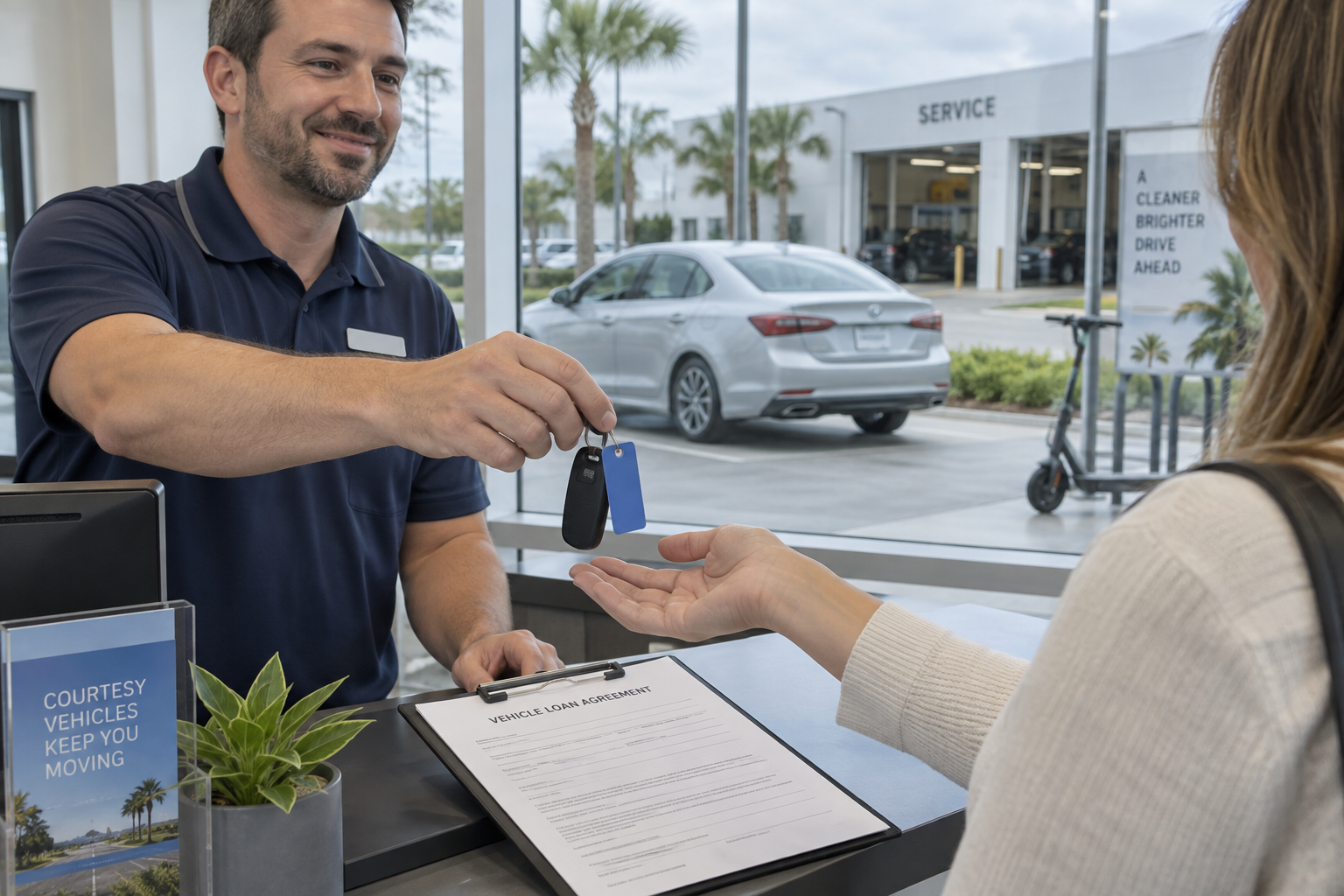
According to the opinion, a driver brought his leased vehicle to Lauderdale BMW for an oil change and tire replacement. The dealership temporarily provided another car while the work was performed. A few days later, the loaner allegedly struck Kenneth McAllister while he was riding an electric scooter.
McAllister sued the driver and the dealership. His theory against the dealership was vicarious liability: because the dealership owned the car, Florida’s dangerous-instrumentality doctrine could make the owner responsible for harm caused by a person to whom the owner voluntarily entrusted it.
The trial court entered summary judgment for the dealership, and the Fourth District affirmed. The appellate court concluded that the loaner arrangement qualified as a rental or lease protected by the federal Graves Amendment. It also held, as an independent ground for the result, that Florida’s temporary-replacement-vehicle statute protected the dealership.
Florida starts with a broad rule for vehicle owners
Florida’s dangerous-instrumentality doctrine generally imposes vicarious liability on a motor-vehicle owner who voluntarily entrusts the vehicle to someone whose negligent operation causes injury. This ownership-based responsibility is one reason a typical borrowed-car accident claim may require investigating both the driver and the vehicle owner.
But “owner” is not the end of the analysis. State statutes place limits on some ownership-based claims, and federal law partly preempts state vicarious-liability rules for businesses that rent or lease motor vehicles.
The federal provision, 49 U.S.C. § 30106, is commonly called the Graves Amendment. It generally prevents a vehicle owner engaged in the trade or business of renting or leasing vehicles from being held liable merely because it owns the vehicle, provided there is no negligence or criminal wrongdoing by the owner or its affiliate.
The distinction between liability “by reason of being the owner” and liability for the owner’s own conduct is critical. Graves Amendment immunity may defeat a purely vicarious claim without excusing negligent conduct by the rental or leasing business itself.
Why a complimentary loaner can still be a rental
The difficult question in McAllister was whether a temporary service loaner counted as a rental or lease even though the customer did not pay a separate daily charge for it.
The Fourth District compared two earlier decisions. In Romero v. Fields Motorcars of Florida, Inc., the Fifth District held that a complimentary loaner did not qualify where the record lacked identified consideration, the customer was not told he was entering a lease, and the transaction lacked the usual signs of a lease agreement. In Thayer v. Randy Marion Chevrolet Buick Cadillac, LLC, the Eleventh Circuit reached a different result because the dealership received consideration through the opportunity to service the customer’s vehicle and payment for that work.
The McAllister court said those results could be reconciled. The Lauderdale BMW customer signed a written agreement that described itself as a rental contract. The agreement identified forms of consideration, and the customer paid for tires and installation while the dealership serviced his vehicle. Those facts placed the transaction within the Graves Amendment, even without a separately itemized loaner-car fee.
For an injured person, that makes the paperwork unusually important. A service invoice showing what the customer paid, a repair order describing warranty work, and the precise language of the loaner agreement may determine whether a “free” replacement vehicle is treated as a rental.
Florida law gives dealerships a separate layer of protection
The Fourth District also relied on Florida Statute § 324.021(9)(c)3. The current 2026 statute addresses a motor-vehicle dealer or its leasing or rental affiliate that provides a temporary replacement vehicle, at no charge or at a reasonable daily charge, while a service customer’s vehicle is held for repair, service, or adjustment.
When the statutory conditions are met and the dealer has not committed negligence or criminal wrongdoing, the statute bars liability based solely on ownership of the temporary replacement vehicle. The provision also addresses a written rental or use agreement and the collection of the recipient’s driver-license and insurance information.
The customer in McAllister argued that the statute was not satisfied because the dealership did not retain physical photocopies of the license and insurance card. The Fourth District rejected that argument. The undisputed evidence showed that dealership employees viewed the physical documents and manually entered their information into the dealership’s system before generating the agreement. The court held that this process satisfied the requirement to obtain a copy of the information.
That part of the ruling matters beyond paper files. A dealership’s software entries, data fields, timestamps, and intake workflow may become evidence of statutory compliance even if no scanned card remains in the file.
What the decision does—and does not—resolve
McAllister resolves the ownership-based claim against the dealership on the record before the court. It does not erase the alleged negligence of the person driving the loaner, decide the driver’s ultimate liability, or establish that every dealership loaner arrangement receives immunity.
The outcome can change if the agreement is different, the service transaction does not supply consideration, the statutory conditions are not met, or evidence supports negligence by the dealership itself. A direct-negligence theory requires proof about what the dealership did or failed to do; title ownership alone is not enough. The Graves Amendment and the Florida statute both preserve the significance of the owner’s own negligence or criminal wrongdoing.
This is why a loaner-car collision should be investigated as two related events. The first is the crash: who violated the right of way, failed to keep a lookout, drove distracted, or otherwise caused the impact? The second is the entrustment transaction: why was the loaner provided, what documents were signed, what insurance information was collected, and did the dealer’s own conduct contribute to the danger?
The claim may shift toward the driver and the insurance policies
When a dealership is immune from vicarious liability, the negligent driver does not receive that immunity simply because the car came from a service department. The driver remains central to the fault analysis. The practical challenge is identifying enough coverage to address medical expenses, lost income, future care, and other losses.
The relevant coverage may include the driver’s personal auto policy, coverage associated with the loaner program, and uninsured or underinsured motorist coverage available to the injured person. Florida’s current uninsured-motorist statute protects insured persons who are legally entitled to recover damages from an uninsured or underinsured motorist, subject to the policy, any valid rejection or selection, and the statute’s other requirements.
No one should assume that the insurance card handed to the dealership tells the whole story. The declarations, endorsements, exclusions, loaner agreement, dealership program documents, and claim correspondence may point to different carriers or different positions on priority. Tucker Law’s Personal Injury Information Center provides additional guidance about the insurance and litigation phases of a Florida injury claim.
The evidence is divided between the roadway and the service department
Ordinary crash evidence still matters: photographs, witness contacts, surveillance or dash-camera footage, vehicle damage, electronic data, and medical records. A Florida car accident attorney must also look beyond the scene when a dealership loaner is involved.
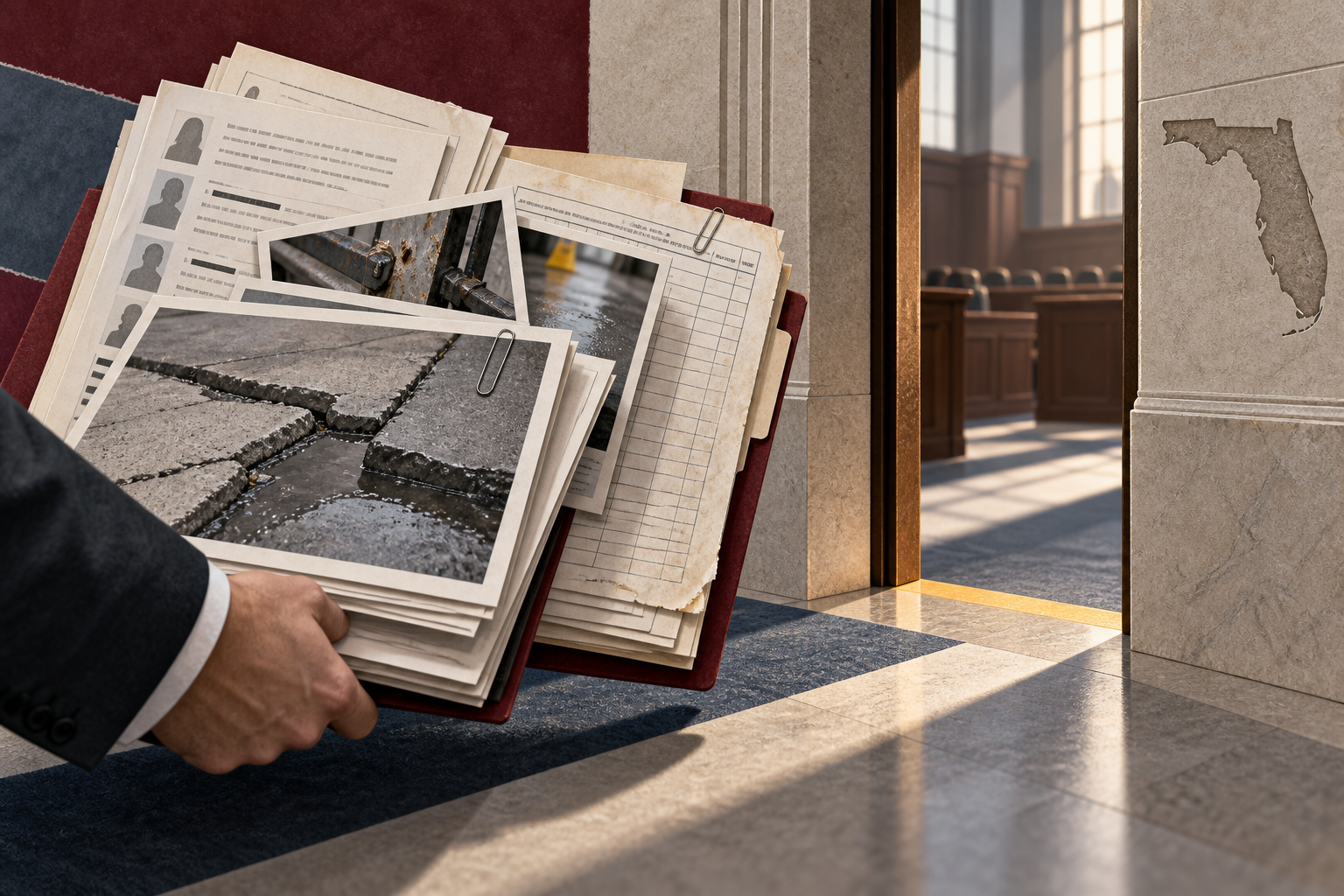
The second evidence set may include the signed loaner agreement, repair order, tire or service invoice, appointment messages, software audit trail, driver-license and insurance entries, dealership policies, proof of vehicle ownership, and records identifying any leasing or rental affiliate. These materials can show whether the vehicle was truly a temporary replacement, whether consideration existed, and whether the statutory intake requirements were followed.
Those records may be controlled by different businesses and stored in systems that overwrite or archive information on their own schedules. Early preservation requests can help prevent a coverage or immunity dispute from being decided on an incomplete file.
Why McAllister matters in South Florida
The Fourth District hears appeals from Broward, Palm Beach, St. Lucie, Martin, Indian River, and Okeechobee counties. McAllister arose from Broward County and involved a Fort Lauderdale dealership, making its analysis especially relevant to crashes investigated in this region.
Its practical lesson is narrow but important: a dealership logo on the car does not automatically create a viable ownership claim against the dealership, and the absence of a separate loaner fee does not automatically keep the Graves Amendment out of the case. The written agreement and the economics of the service transaction can control.
If you were injured by a driver using a dealership loaner, Tucker Law can review the crash evidence, service documents, ownership structure, and available insurance rather than treating the vehicle as an ordinary borrowed car. Learn more about our Fort Lauderdale car accident practice or contact Tucker Law to discuss the facts.
This article provides general information, not legal advice. Liability and insurance coverage depend on the evidence, policy language, governing law, and later history of the cited decision.