Florida Hydroplaning Accident Claims: When Rain Is Not the Whole Story
A hydroplaning accident claim should not begin and end with the statement that “the rain caused it.” Water can lift a tire away from the pavement, but fault usually turns on the decisions and conditions surrounding that loss of traction. Speed, tire condition, standing water, visibility, following distance, braking, road drainage, and another vehicle’s conduct can all matter.
Hydroplaning describes a mechanism, not a legal conclusion
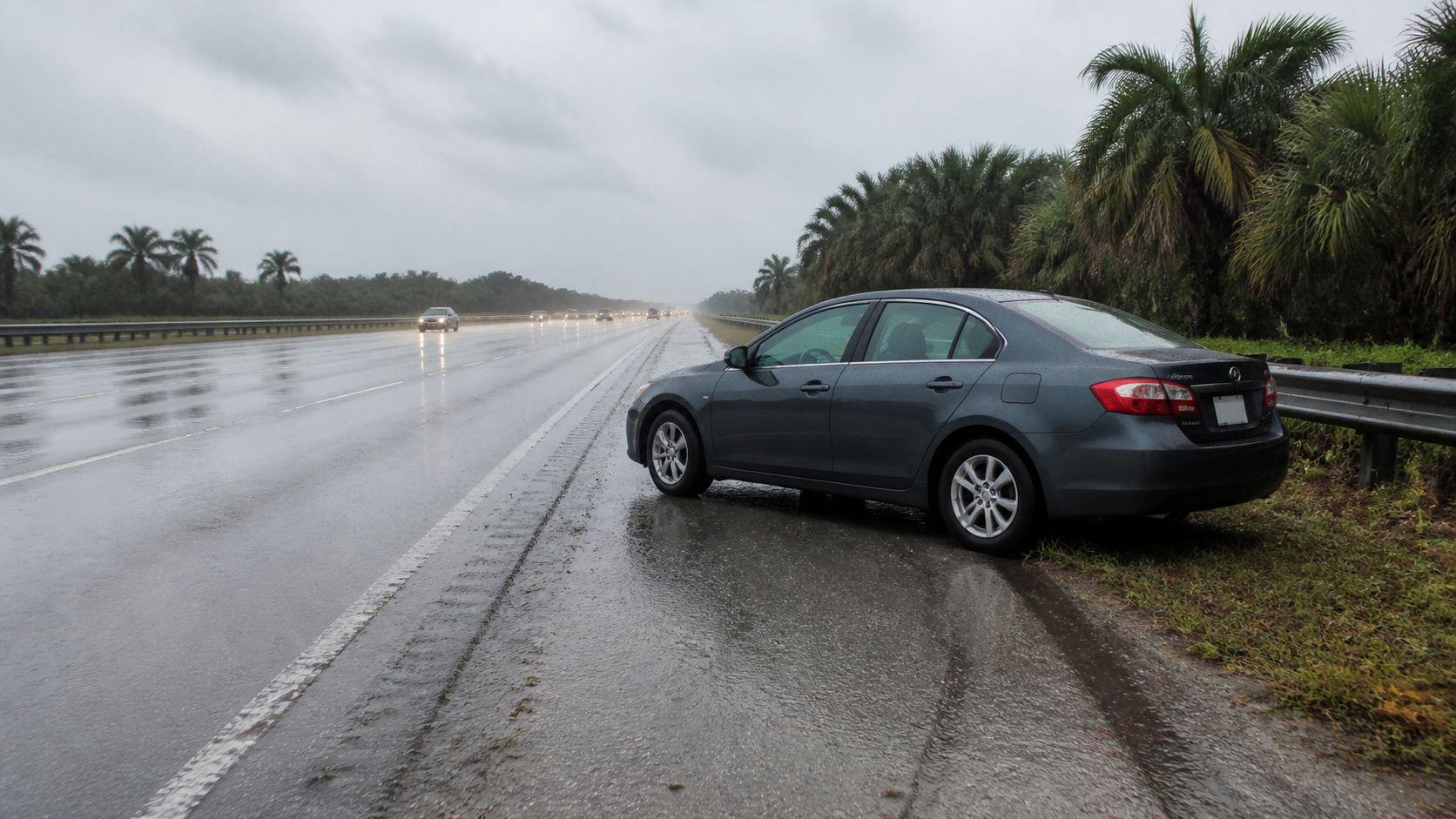
Hydroplaning occurs when a layer of water separates a tire from the roadway. Steering and braking response may drop quickly. That explains how control was lost, but it does not establish why the vehicle encountered the water at that speed or whether the driver responded reasonably. Investigators still ask what a careful driver would have done under the actual conditions.
Florida Statute section 316.183 requires speed to be reasonable and prudent under existing and potential hazards and controlled as necessary to avoid a collision. The posted limit is a maximum, not a promise that the same speed is safe in heavy rain.
Speed is more than the number on a citation
Vehicle data, dash-camera video, tire marks, rest positions, phone navigation history, and witness accounts may help estimate speed. Investigators also examine whether traffic had slowed, spray reduced visibility, or water was visibly pooling. A driver traveling below the posted limit may still have been too fast for conditions; a vehicle traveling steadily may have been struck by someone else who lost control.
That distinction is especially important in a chain-reaction accident. The first car to spin is not automatically the only cause. Following drivers may have left too little space, while an earlier collision or sudden lane change may have created the emergency.
Tires can change the investigation
Tread depth, inflation, age, prior repairs, mismatched tires, and visible damage can affect water evacuation. Photograph every tire and wheel before repairs. Keep service records, purchase receipts, inspection reports, and the damaged tire when preservation is practical. A mechanic should document observations rather than simply writing “flat.”
A defective product, poor maintenance, or an impact with road debris may raise issues beyond driver conduct. Our tire-blowout claim guide explains why throwing away a tire can eliminate evidence needed to distinguish those possibilities.
Road conditions may be relevant without being the whole case
Clogged drains, construction, worn pavement, ruts, and poor grading can cause unusual pooling. Photograph the depth and boundaries of standing water from a safe location, along with nearby drains, cones, warning signs, lane markings, and landmarks. Weather records can help establish rainfall timing, while maintenance requests or prior complaints may show whether a recurring condition was known.
Responsibility for a road can belong to the state, a county, a city, an authority, a private property owner, or a contractor. Claims involving public entities may have special notice and immunity rules, so ownership and maintenance control should be identified promptly. A defect does not erase a driver’s duties, and driver error does not automatically erase a serious maintenance problem.
Driver reactions need context
Sudden hard braking or sharp steering can worsen a skid, but an insurer should not evaluate a reaction without considering the emergency. Was a disabled car blocking the lane? Did another vehicle merge abruptly? Was the water hidden by darkness or spray? Did the driver have seconds or a fraction of a second to respond?
Video and vehicle data can place those questions on a timeline. Similar timing issues arise in a no-contact crash, where evasive action may be reasonable even though the vehicles never touch.
Medical and insurance evidence still matter
People injured in a wet-road crash should report symptoms accurately, obtain appropriate care, and keep medical, wage, towing, repair, and rental records. Notify insurers promptly, but avoid guessing in a recorded statement. “I hydroplaned” may be heard as an admission even when another driver forced the maneuver or a road defect contributed.
Preserve every applicable policy and endorsement. Depending on the facts, liability, personal injury protection, collision, and uninsured or underinsured motorist coverages may address different losses. A denial based on “weather” should be compared with the evidence and policy language.
How a hydroplaning accident claim comes into focus
A sound analysis separates mechanism from responsibility: water reduced traction; then particular road, tire, vehicle, and human factors explain why the crash occurred. Tucker Law Group’s practice-area overview describes its injury work. To discuss a rain-related Florida collision, contact the firm.
It also helps to build a simple weather timeline. Note when rain began, when traffic slowed, when wipers and headlights were used, and whether standing water appeared suddenly. Compare that account with radar, roadway video, toll records, and emergency calls. A consistent timeline can separate a genuine loss of traction from an unsupported attempt to blame every decision on the storm.
This article provides general information and is not legal advice. Every matter is different, and reading this page does not create an attorney-client relationship.