What If Another Driver Forces You Off the Road in Florida?
A no-contact accident claim may arise when a careless driver forces another vehicle off the road without actually striking it. A sudden lane change, unsafe merge, drifting vehicle, or aggressive maneuver can send a careful driver into a shoulder, guardrail, ditch, sign, or another car. The absence of vehicle-to-vehicle contact does not automatically erase responsibility, but it can make proof more demanding.
The practical question is whether the evidence can identify the other driver and show that the driver’s conduct caused the crash. When the vehicle leaves the scene, insurance coverage and prompt documentation become especially important. These eight steps can help protect a Florida no-contact accident claim.
1. Get to a Safe Location and Request Help
Move out of active traffic if the vehicle can be moved safely. Call 911 when anyone may be injured, traffic is blocked, or the crash scene is dangerous. Tell the dispatcher that another vehicle forced you off the road and left. That detail may help officers understand that this was not simply a single-vehicle loss of control.
Even if the other vehicle never touched yours, an officer can document the location, roadway conditions, visible damage, tire marks, debris, and witness information. If no officer responds, our earlier guide explains what to do when there is no police report after a Florida car accident.
2. Record Everything You Remember About the Other Vehicle
Write down the color, body style, make, model, direction of travel, lane position, and any portion of the license plate. Note stickers, commercial markings, damage, unusual lighting, or cargo. Record the driver’s appearance only if you saw it clearly. Do this promptly, because small details fade quickly after a frightening event.
Ask passengers to make separate notes before discussing the details together. Independent recollections can be more useful than a single account shaped by group conversation.
3. Photograph the Road, Vehicle, and Escape Path
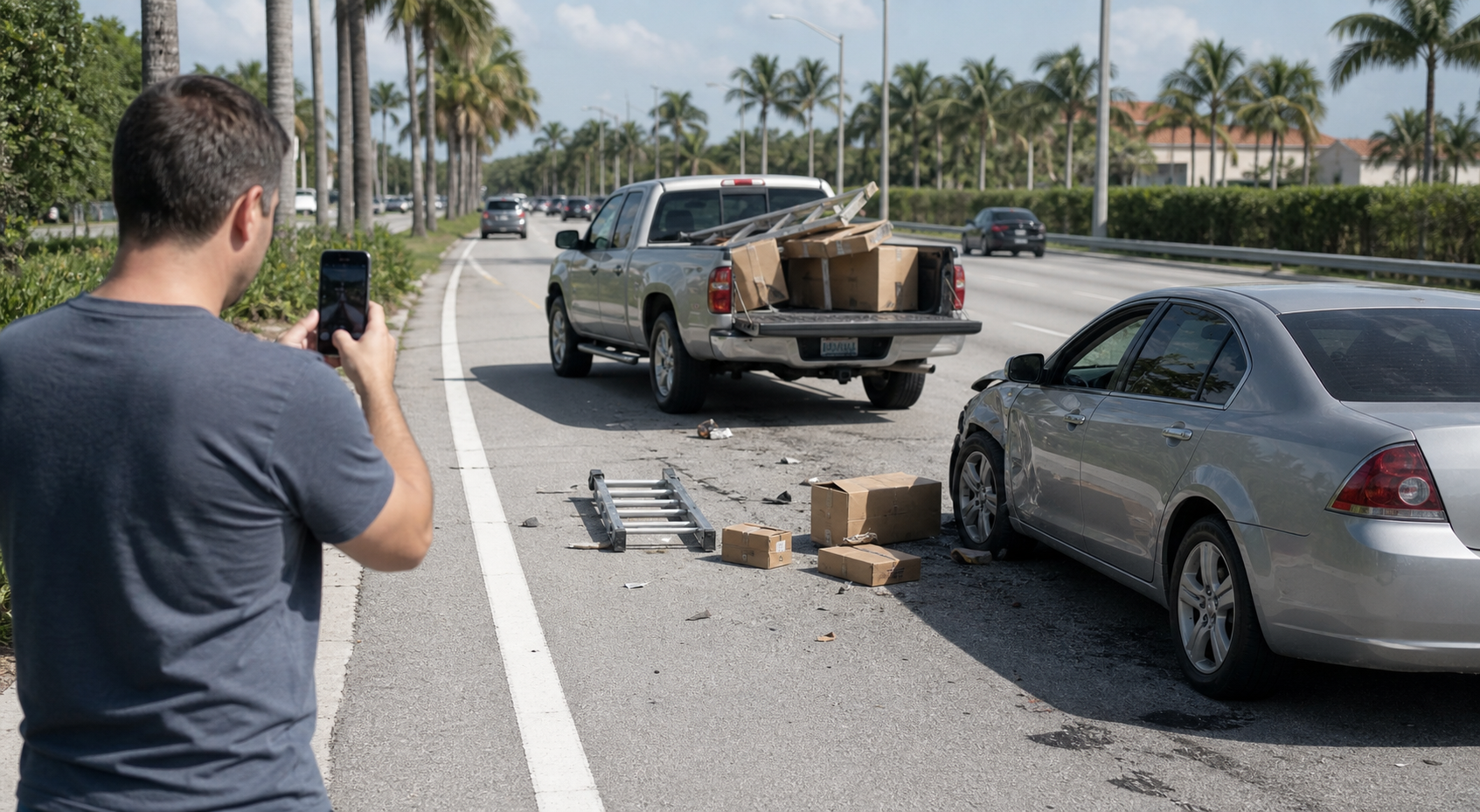
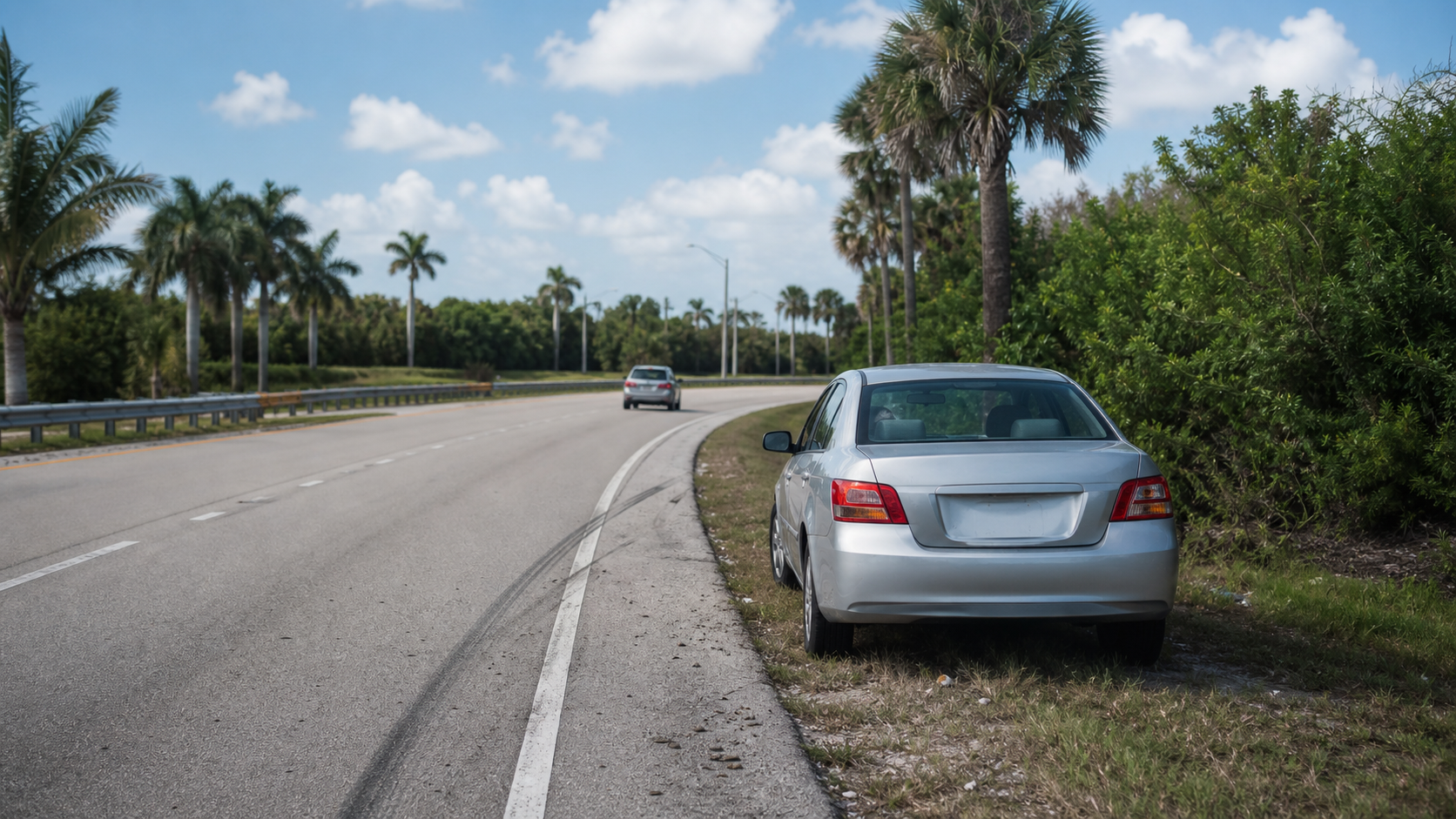
Take wide photographs showing the entire roadway and closer images of skid marks, gouges, shoulder drop-offs, damaged signs, guardrails, debris, and every side of your vehicle. Photograph lane markings, traffic signs, lighting, weather, and any obstruction that affected visibility. A short video walking through the sequence can preserve context that isolated photographs miss.
Do not stand in a travel lane to obtain evidence. Safety comes first.
4. Look for Witnesses and Video
Witnesses may be essential in a no-contact accident claim. Get names and reliable contact information from motorists, pedestrians, nearby workers, or residents. Ask whether anyone recorded the incident with a dashcam or phone.
Nearby businesses, homes, traffic systems, toll facilities, and commercial vehicles may also have cameras. Video is often overwritten, so preservation requests should be made quickly. The evidence issues can resemble those discussed in our article about a road rage accident claim, where identifying a fleeing driver may also be difficult.
5. Preserve Electronic and Vehicle Evidence
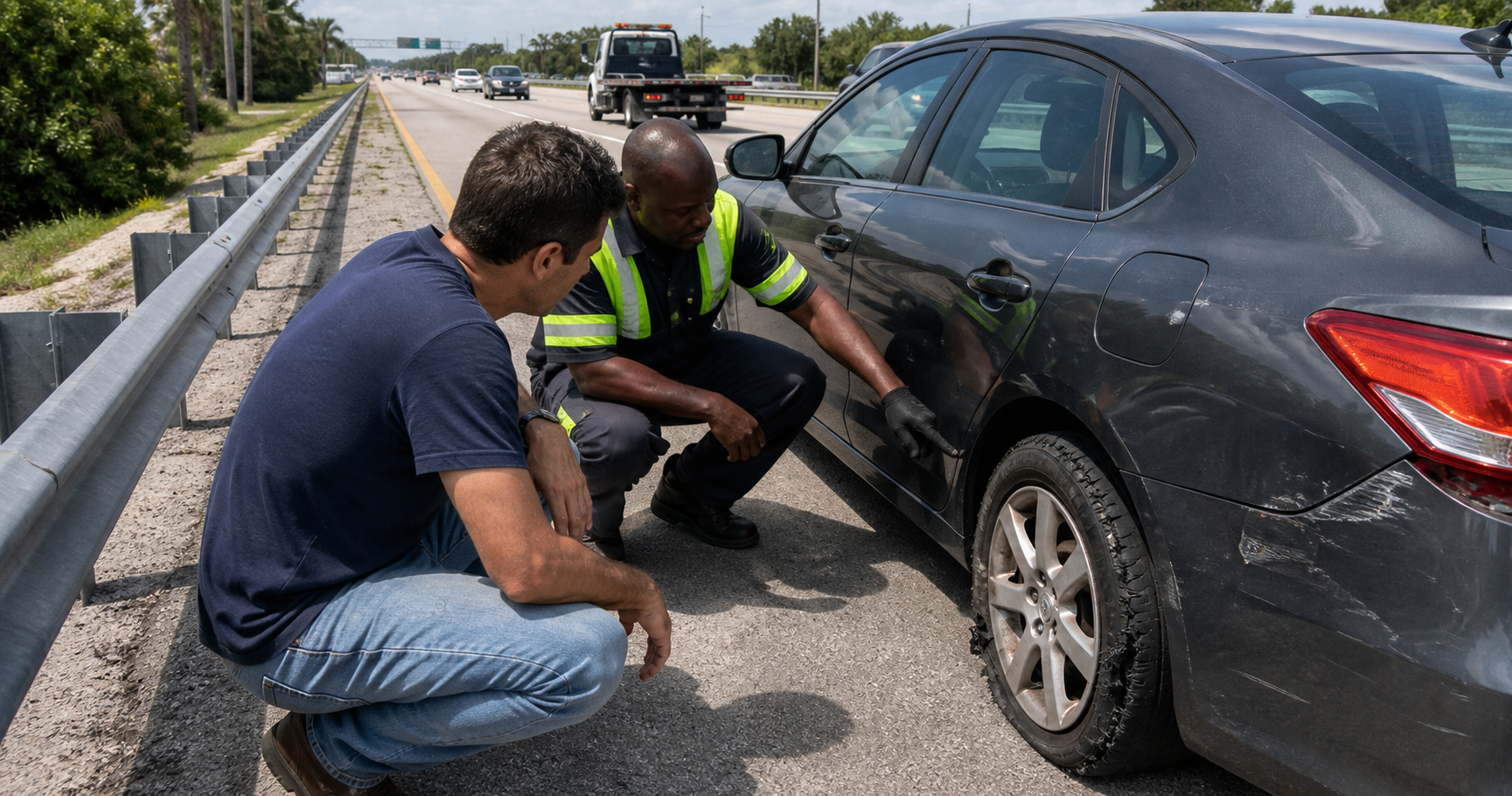
Save original dashcam files rather than only a compressed clip. Keep photographs in their original format with date and location information. Do not repair or dispose of the vehicle until it has been photographed and the insurer has had an opportunity to inspect it. Modern vehicles may also contain event data that helps explain braking, speed, or steering inputs.
6. Report the Claim Carefully
Notify your insurer promptly and give a factual description. Avoid guessing about speed, distance, or injuries. Ask which coverages may apply, including collision, personal injury protection, medical payments, or uninsured motorist coverage. Coverage depends on the policy language and facts.
Florida’s uninsured and underinsured motorist statute addresses protection for insured people who are legally entitled to recover damages from uninsured motorists. A hit-and-run or unidentified vehicle issue can be highly policy-specific, so the notice and proof requirements deserve close review.
7. Obtain Medical Evaluation and Track Your Losses
Seek appropriate medical attention after a significant jolt, rollover, or impact with a fixed object. Some symptoms become clearer after the initial adrenaline fades. Follow reasonable medical advice and keep records of appointments, prescriptions, mileage, missed work, and out-of-pocket expenses.
A consistent record helps connect the injury and financial losses to the incident. It also reduces later disputes about when symptoms began or why care was delayed.
8. Have Liability and Coverage Investigated Early
The other driver may be identifiable through a plate fragment, witness, camera, toll record, business vehicle marking, or police investigation. If the driver remains unknown, the available recovery may turn on your policy. If several vehicles were involved, the analysis may resemble a chain-reaction accident claim.
Tucker Law can review the sequence, identify evidence sources, communicate with insurers, and evaluate possible coverage. Learn more about our practice areas or contact Tucker Law to discuss a Florida accident.
Protect the Evidence Before It Disappears
A no-contact accident claim is not necessarily a lost cause, but it should be treated as an evidence problem from the beginning. Accurate reporting, photographs, witnesses, video preservation, vehicle inspection, and careful insurance review can help show what actually happened.
This article provides general information and is not legal advice. Every claim depends on its facts, policy language, and current Florida law.