Who Is Liable After a Wrong-Way Driver Accident in Florida?
A wrong-way driver accident claim often begins with a violent head-on or evasive-action crash. The immediate fault may appear obvious, but a complete investigation still matters. The wrong-way vehicle may enter through an exit ramp, cross a median, turn onto a one-way street, or continue in the opposing lane because of impairment, distraction, confusion, or a medical event.
Evidence can identify the driver, explain how the vehicle entered the roadway, reveal whether other parties contributed, and locate available insurance. These eight questions can guide a Florida wrong-way driver accident claim.
1. How Did the Vehicle Enter the Wrong Direction?
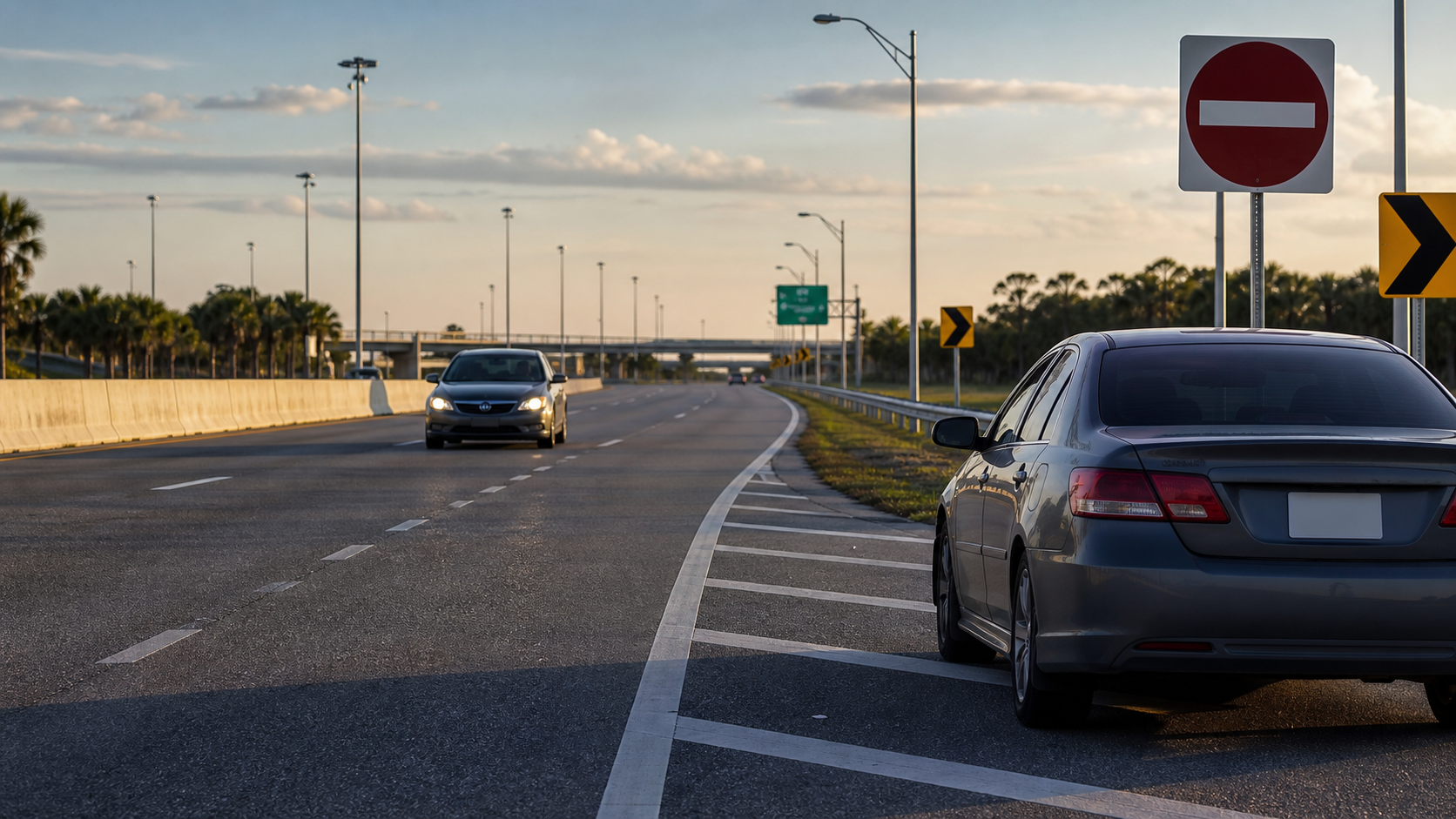
Trace the route backward from the collision when it is safe and practical to do so. Photograph ramps, medians, intersections, lane arrows, pavement markings, and signs. Note whether construction, darkness, weather, vegetation, or damaged signs affected visibility.
Florida’s right-side-of-the-road statute generally requires vehicles to travel on the right half of a roadway, subject to stated exceptions. The roadway evidence can help show where and when the driver departed from lawful travel.
2. Was the Driver Impaired, Distracted, or Fatigued?
Police observations, field testing, toxicology, phone records obtained through proper process, witness reports, and vehicle data may explain the conduct. Medical issues, age-related confusion, navigation instructions, or unfamiliar roads can also be relevant.
A reason for the mistake does not necessarily excuse it, but it may affect the evidence, insurance defenses, potential claims against other parties, and whether reckless conduct is alleged.
3. Did the Wrong-Way Vehicle Strike Anyone?
Some incidents involve direct contact. Others force a driver to swerve into a barrier, ditch, or another vehicle. A no-contact event can still require investigation of the wrong-way driver’s conduct and causation. Preserve dashcam files, witness information, 911 calls, and camera footage that may identify a fleeing vehicle.
Our guide to a no-contact accident claim explains why proof is especially important when the vehicles never touch.
4. Were Multiple Vehicles Involved?
A lead driver may brake or swerve, causing collisions behind or beside the vehicle. Another motorist may react unreasonably or follow too closely. Damage patterns, event data, video, and witness timing can help separate each impact and determine whether more than one driver’s conduct contributed.
When several impacts occur, review the evidence issues in a chain-reaction accident claim.
5. Did the Roadway or Signage Contribute?
Missing, obscured, damaged, poorly placed, or confusing signs may deserve investigation. So may inadequate lighting, unusual ramp geometry, construction changes, or a history of similar wrong-way entries. Photograph the scene from the perspective of the entering driver, not only from the crash location.
Potential claims involving a government agency, contractor, or property owner can raise special duties, defenses, notice requirements, and proof issues. A dangerous condition should be supported by evidence rather than assumption.
6. Was the Vehicle Borrowed, Rented, or Used for Work?
Identify the registered owner and determine why the driver possessed the vehicle. Rental records, employer information, delivery logs, and permission may affect coverage or potential responsibility. The driver’s policy may not be the only policy that requires review.
Our article about a borrowed car accident claim discusses ownership, permission, and insurance questions that may also arise here.
7. What Evidence Should Be Preserved?
Photograph vehicle positions, all damage, debris, skid marks, gouges, signs, lighting, and sight distance. Obtain witness names and identify traffic cameras, toll systems, businesses, homes, dashcams, and emergency vehicles that may have recorded the approach.
Do not repair or dispose of a severely damaged vehicle before the appropriate parties have an opportunity to inspect it. Preserve original electronic files and avoid editing or posting crash video on social media.
8. Which Insurance Coverages May Apply?
Possible sources include personal injury protection, bodily injury liability, collision, medical payments, and uninsured or underinsured motorist coverage. Commercial, rental, household, or employer policies may also be relevant. Coverage depends on the policy language and facts.
Report the collision promptly, describe what you know accurately, and avoid guessing about speed, distance, or injuries. Keep medical records, wage information, receipts, and a log of the practical ways the injuries affect daily life.
A Clear Timeline Can Reveal the Full Case
A wrong-way driver accident claim should address more than the point of impact. The entry route, warnings, driver condition, vehicle ownership, road design, other motorists, and insurance may all affect the result. Tucker Law can investigate the sequence and evaluate the available claims.
Review our practice areas or contact Tucker Law to discuss a Florida collision.
A reconstruction may be especially valuable when the collision involves severe damage, disputed speeds, or several impacts. Measurements, photographs, electronic vehicle data, and synchronized video can help build a reliable timeline. The sooner those sources are identified and preserved, the less likely important information will be lost.
This article provides general information and is not legal advice. Every claim depends on its facts, insurance policies, and current Florida law.