Tucker Law Footer Image
Call 1-800-TUCKERWINS

Who Is at Fault in a Left-Turn Accident in Florida?

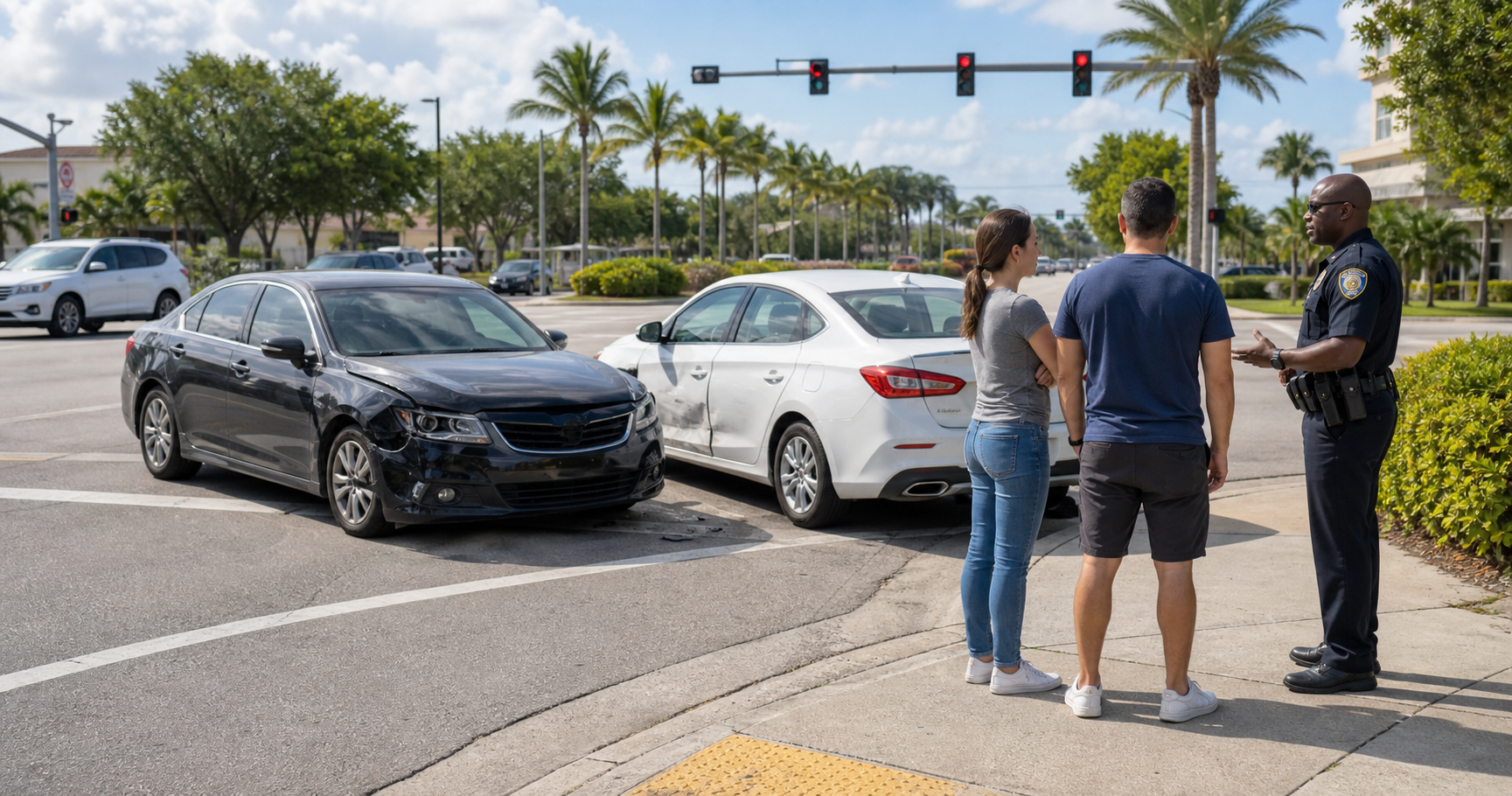
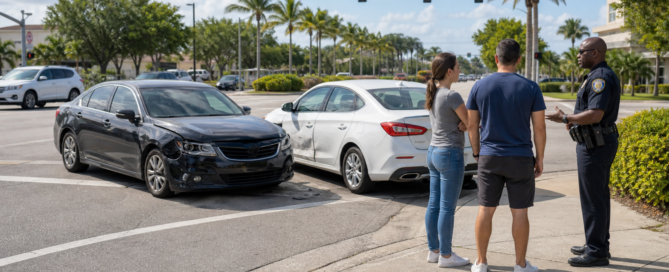
A left-turn accident claim often begins with a dispute about right of way. The turning driver may say the oncoming car was speeding or entered on a red light, while the oncoming driver may say the turn began without enough space. Signals, vehicle positions, video, and damage patterns can be more reliable than assumptions. Florida law places an important duty on drivers turning left, but fault is not automatically decided by the type of maneuver alone. These eight evidence steps can help clarify what happened. 1. Understand the basic left-turn rule Current Florida Statute § 316.122 says a driver intending to turn left within an intersection or into an alley, private road, or driveway must yield to approaching vehicles that are in the intersection or close enough to present an immediate hazard. The rule is central, but the facts still matter. An oncoming driver’s speed, signal, lane use, or other conduct may affect the analysis. 2. Photograph the complete intersection Take wide photographs of every approach, traffic signal, turn lane, stop line, sign, roadway grade, and sight obstruction. Capture vehicle resting positions, debris, fluid, skid or tire marks, and damage to all sides of each car. A close image of a dent cannot show whether a signal was visible or how far the vehicles traveled after impact. The full layout gives context to a left-turn accident claim. 3. Record the signal sequence Note whether the intersection had a protected green arrow, flashing yellow arrow, standard green light, stop sign, or no signal. Write down what you remember about the light at the moment the turn began and at impact. Do not claim certainty if you did not see a signal change. Signal timing records or [...]
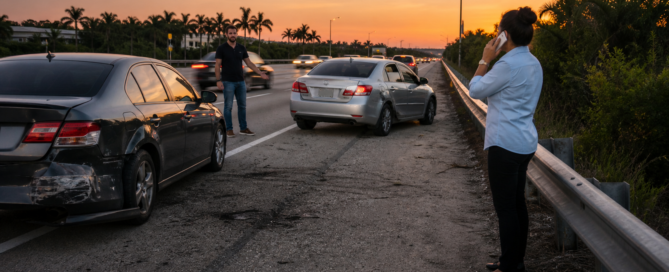
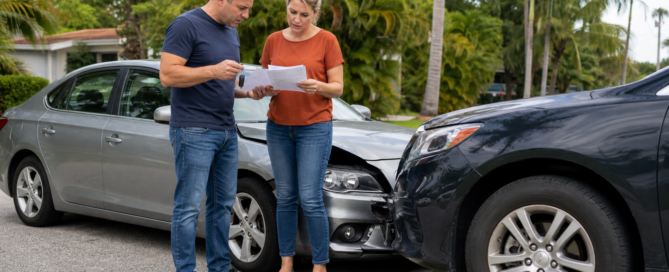
What Should You Do After a Road Rage Accident in Florida?

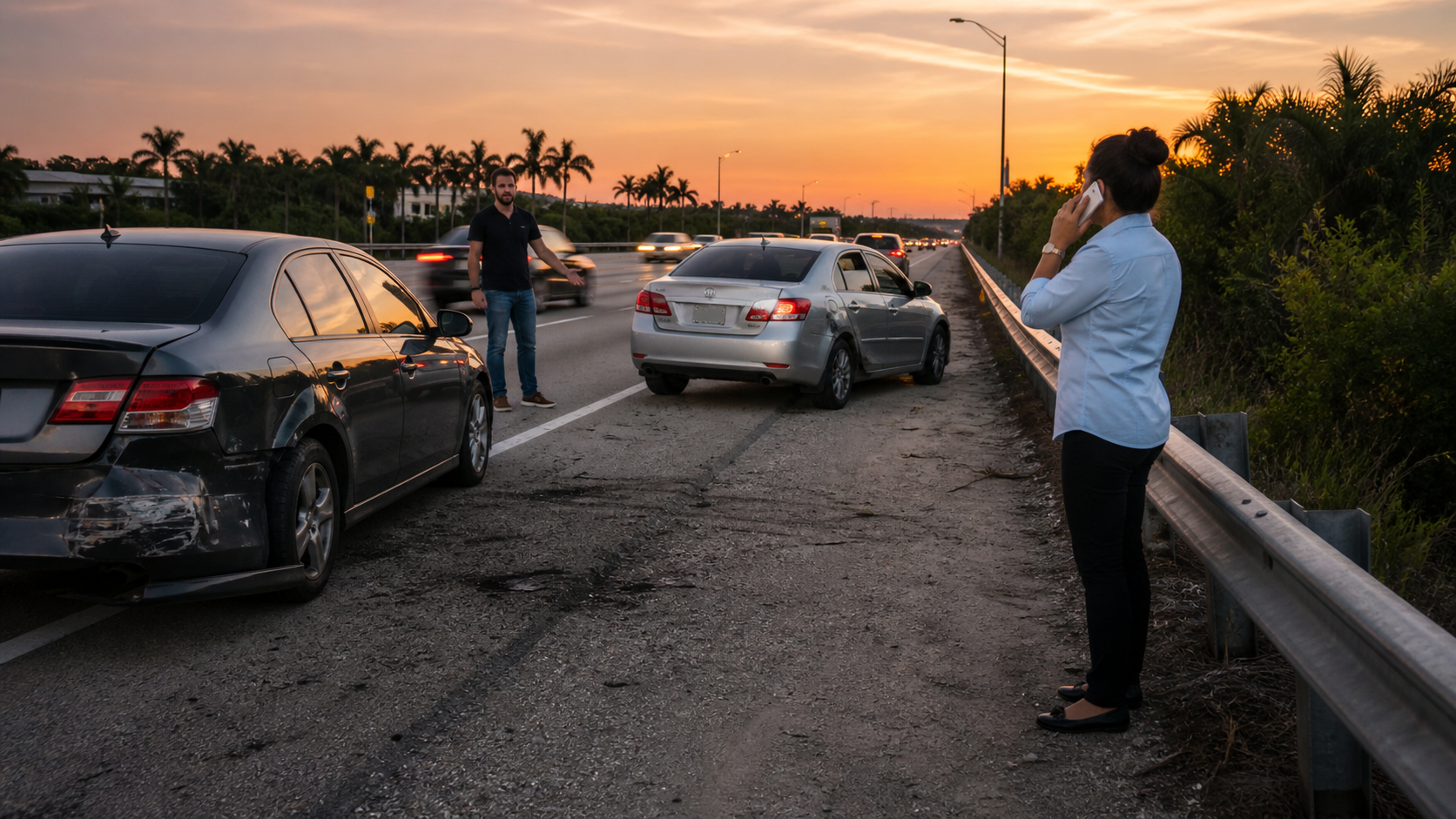
A road rage accident claim begins with personal safety. If another driver is following, threatening, blocking, or intentionally striking your vehicle, do not stop to argue. Move toward a well-lit public place or police station when safe, call 911, and follow the dispatcher’s directions. After the immediate danger passes, evidence becomes critical. Aggressive-driving incidents may involve fast-moving events, conflicting stories, possible criminal conduct, and insurance questions that differ from an ordinary negligence claim. These eight steps can help. 1. Do not engage or pursue the other driver Avoid eye contact, gestures, shouting, braking in retaliation, or following the vehicle. Keep doors locked and windows up. Do not get out of the car unless directed by law enforcement or necessary for immediate safety. If you can do so without creating more risk, increase distance and let the other vehicle pass. Your goal is to end the encounter, not gather a perfect photograph. 2. Call 911 and describe the danger clearly Give the dispatcher your location, direction of travel, vehicle description, plate information if known, and the conduct you observed. State whether there was a collision, visible weapon, threat, injury, or active pursuit. Do not exaggerate or speculate. Florida’s current reckless-driving statute addresses driving in willful or wanton disregard for the safety of persons or property. Whether a particular incident meets that standard is for authorities to determine. 3. Preserve dashboard and phone evidence Save dashboard-camera footage immediately so it is not overwritten. If a passenger safely recorded video, preserve the original file. Keep call logs, messages, location history, and photographs related to the event. Do not edit, filter, crop, or post recordings online. Video may show repeated braking, swerving, following, threats, or the impact sequence. It [...]

Who Is Responsible When a Borrowed Car Causes an Accident in Florida?

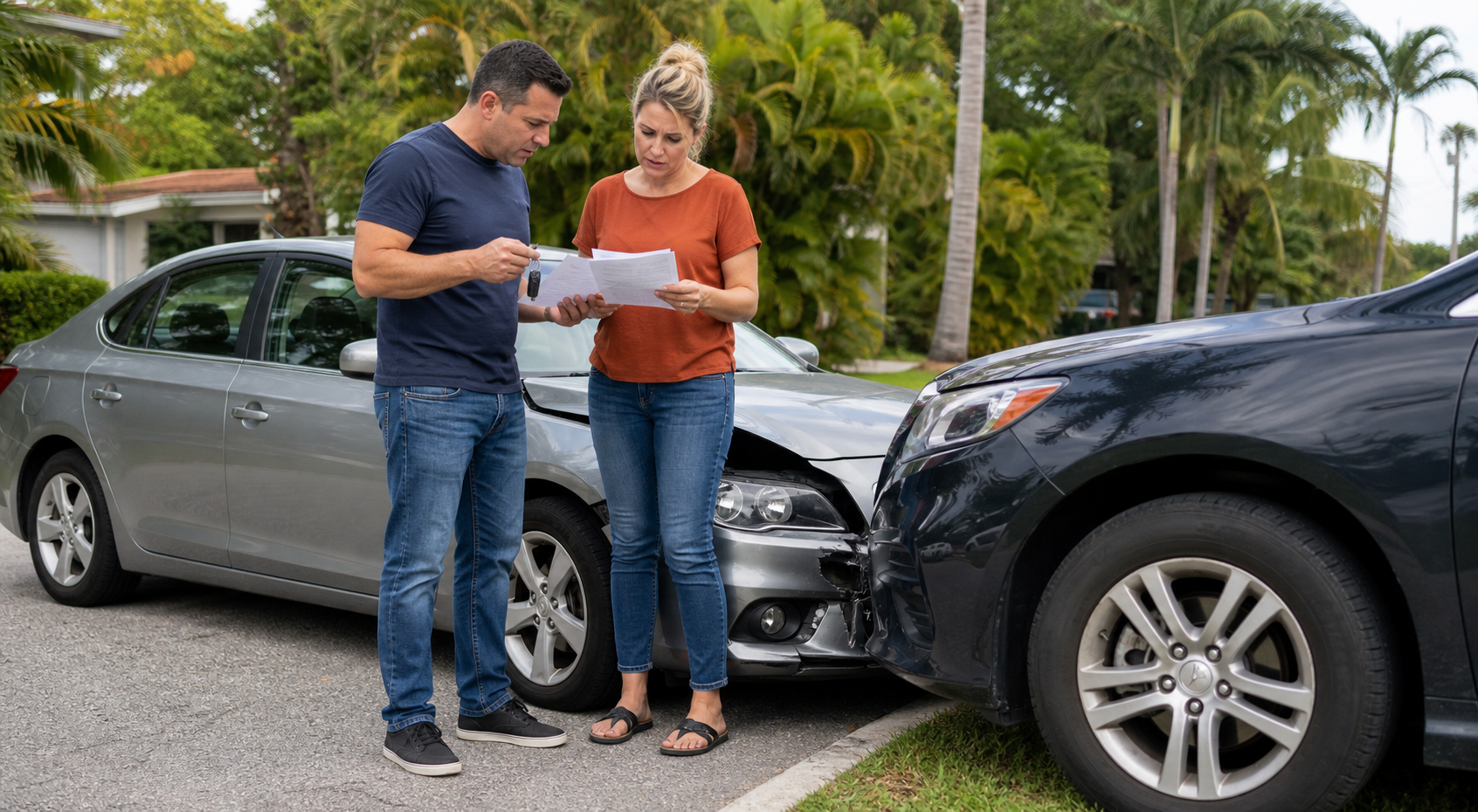
A borrowed car accident claim can involve both the person driving and the person who owns the vehicle. Insurance coverage may depend on permission, policy language, household relationships, exclusions, and whether the driver was using the car for personal or business purposes. The driver’s negligence remains important, but it may not be the only issue. These seven questions can help identify the people, policies, and evidence that should be reviewed after a Florida crash involving a borrowed vehicle. 1. Did the owner give permission? Start with whether the driver had express or implied permission to use the car. Permission may be shown by messages, prior use, household practice, key access, or testimony. A driver who took a vehicle without consent creates a different situation from a friend or family member who was allowed to borrow it. Preserve texts, emails, and call records about the loan. Do not delete messages simply because they feel informal. 2. Who was negligent? The borrowed-car issue does not replace the ordinary fault analysis. Investigators still examine speed, following distance, distraction, traffic controls, right-of-way, impairment, vehicle condition, and other conduct. Photos, witness statements, video, crash reports, and vehicle data may help establish what happened. If no officer prepared a report, follow the documentation steps in our guide to a Florida car accident with no police report. 3. Can the vehicle owner share responsibility? Florida law may make a vehicle owner responsible in some circumstances when a permissive user causes a crash. Current Florida Statute § 324.021 defines ownership for financial-responsibility purposes and includes specific provisions concerning natural-person owners who loan a vehicle to permissive users. The statute contains limits, exceptions, and special rules. The result can change when a vehicle is [...]

What Should You Do After a Parking Lot Accident in Florida?

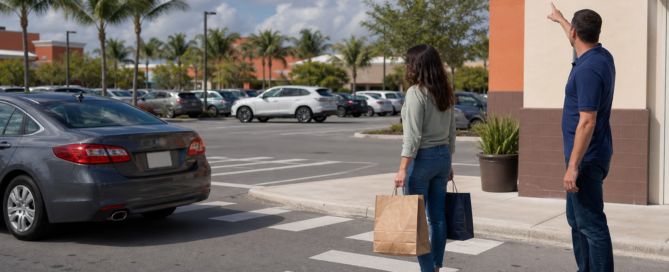
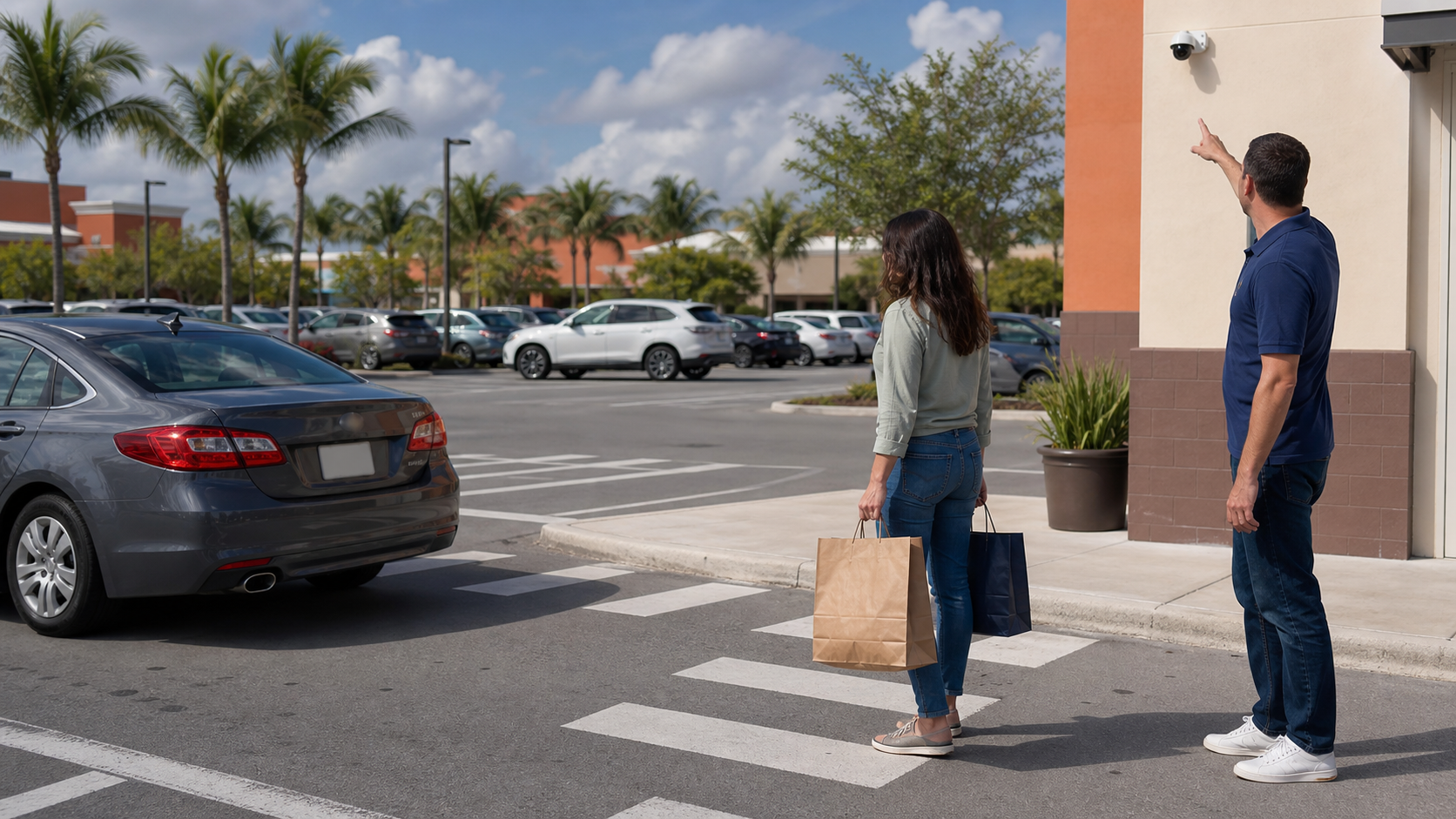
A parking lot accident claim may look simple at first, but these cases often involve limited sight lines, reversing vehicles, distracted pedestrians, faded markings, and conflicting accounts. Police may not respond to every low-speed incident, while security video can disappear quickly. Whether the accident involves two vehicles, a car and a pedestrian, or a dangerous property condition, early documentation can make a major difference. These nine steps can help preserve the facts after a Florida parking-lot injury. 1. Stop and check for injuries Do not leave the scene or assume that a low-speed impact cannot cause harm. Check yourself, passengers, pedestrians, and the occupants of other vehicles. Call 911 when someone is injured, complains of pain, is disoriented, or needs medical help. Move out of an active travel lane if it is safe, but first take quick wide photos when possible. Follow emergency and law-enforcement directions. 2. Photograph the layout, not just the damage Parking-lot fault often depends on where people and vehicles were located. Photograph the entire area, including travel lanes, parking spaces, crosswalks, stop signs, arrows, wheel stops, landscaping, lighting, and sight obstructions. Capture each vehicle’s position and all visible damage. If a pedestrian was involved, document the walking route, curb, ramp, crossing, and nearby parked vehicles. Preserve the original files without filters or edits. 3. Identify every possible camera Look for storefront, garage, gate, elevator, security, and traffic cameras. Nearby vehicles may have dashboard or parking-mode systems. Record the camera locations and the businesses or property managers that control them. Video may be overwritten in days. A prompt preservation request can be critical to a parking lot accident claim. Do not assume the business will keep footage merely because an employee saw [...]

Who Is at Fault in a Chain-Reaction Car Accident in Florida?

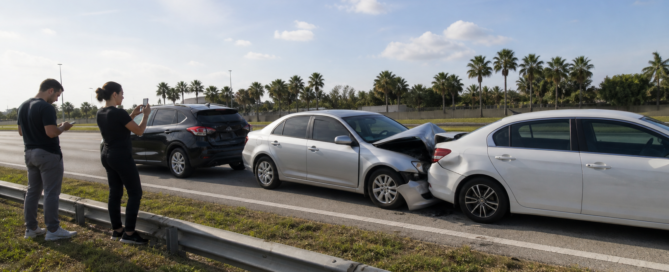
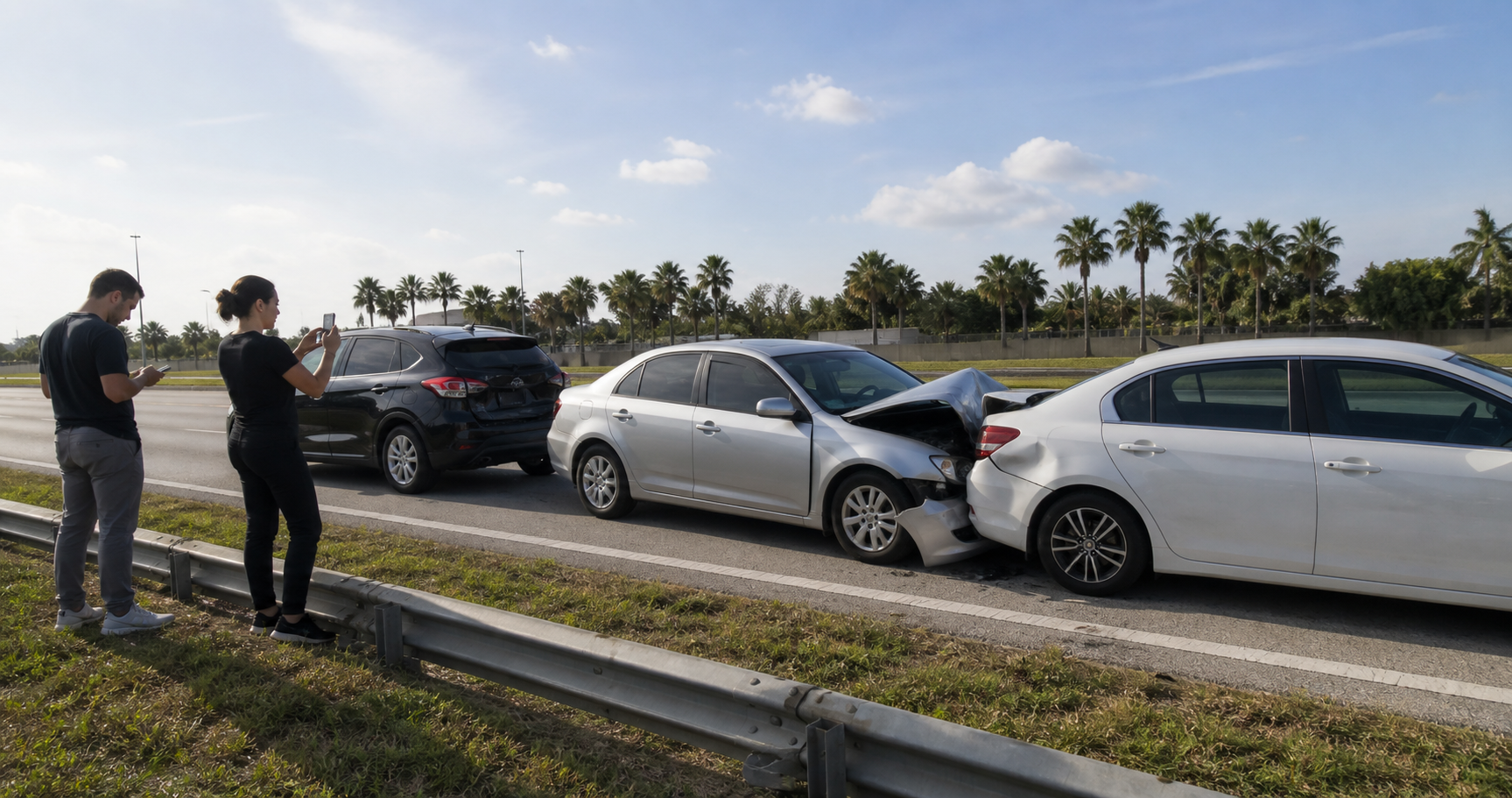
A chain-reaction accident claim can be harder to investigate than an ordinary two-car collision. Several impacts may occur within seconds, drivers may experience the sequence differently, and more than one person may share responsibility. Each insurer may focus on evidence that shifts fault elsewhere. Fault is not decided simply by counting the vehicles or assuming that every rear driver caused every impact. Investigators examine the timing, spacing, speed, road conditions, driver conduct, and physical evidence. These eight steps can help preserve the clearest possible record. 1. Identify every impact you felt As soon as you are safe, write down the sequence in your own words. Did you feel one impact or several? Were you pushed forward before being struck from behind? Did your vehicle hit the one ahead only after the rear impact? Note what you saw, heard, and felt without guessing about facts you could not observe. A prompt account can be valuable because details fade quickly. Keep it private and factual rather than posting it online. 2. Photograph the entire vehicle line Take wide photos showing all vehicles in their resting positions, the lanes, shoulders, traffic controls, debris, and skid or tire marks. Then photograph each vehicle’s front, rear, sides, interior damage, and license plate. Damage patterns may help an expert evaluate the order and force of impacts. Do not limit photographs to your own bumper. A strong chain-reaction accident claim often depends on understanding what happened to every vehicle. 3. Gather information from every driver and witness Names and contact details for drivers, owners, passengers, and witnesses Driver’s-license and insurance information Vehicle descriptions and plate numbers Employer information if any driver was working A brief note about where each witness was located [...]

Go to Top