5 Evidence Mistakes to Avoid After a Florida Construction Zone Crash
A construction zone accident claim can involve ordinary driver negligence, temporary traffic controls, a contractor’s work, a public roadway, or several causes at once. The scene may change by the next shift, making early mistakes unusually costly. These five evidence mistakes can prevent an injured person from showing what the work zone looked like at the critical moment.
Florida work-zone rules provide context
Florida Statute section 316.0745 addresses the state’s uniform traffic-control system and regulatory speed signs in work zones. Section 316.074 generally requires drivers to obey applicable official traffic-control devices. A civil claim still requires proof of the actual devices, their condition, driver conduct, causation, and injury.
1. Photographing only the damaged vehicles
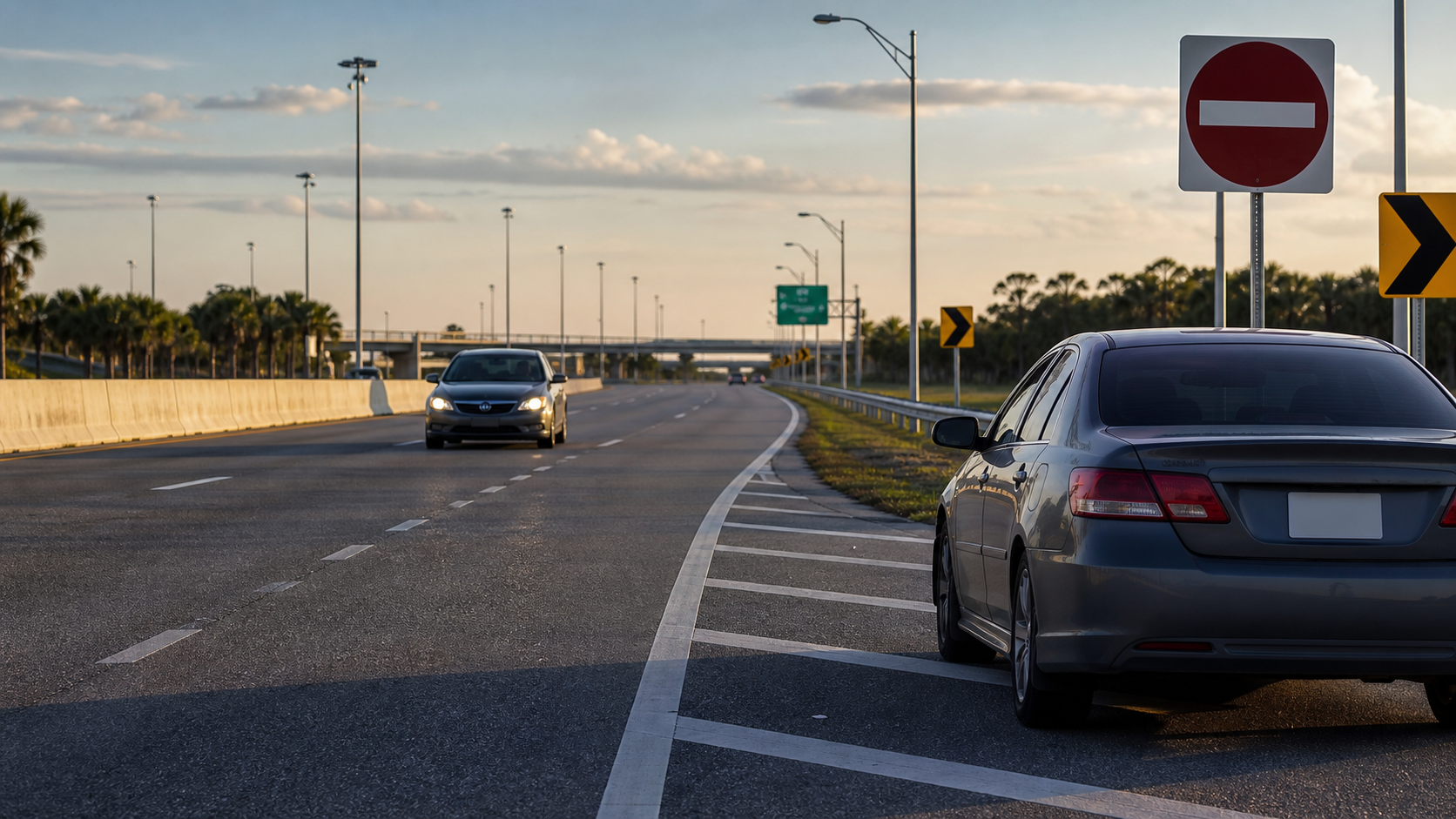
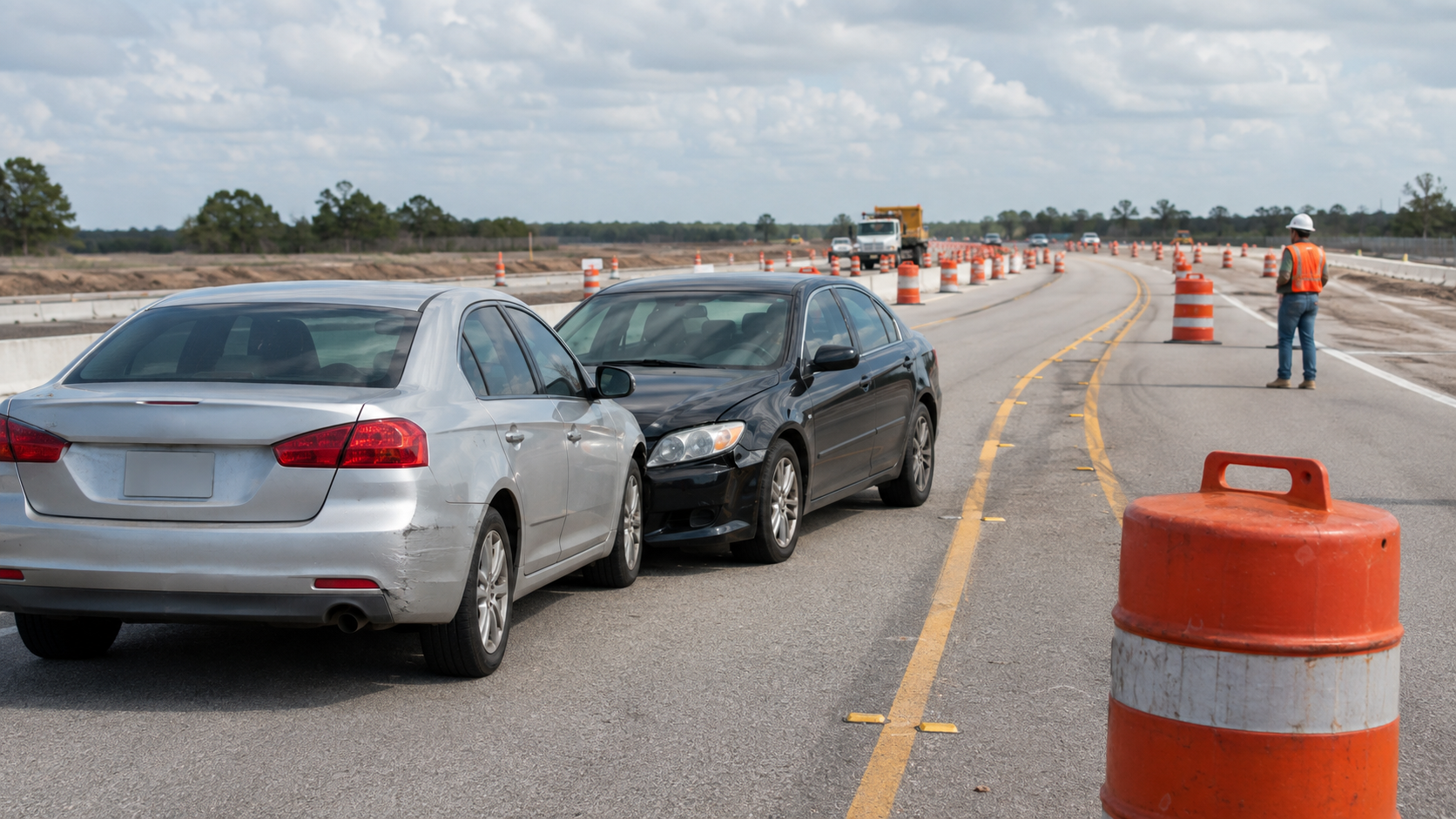
Close damage images matter, but temporary lane geometry often explains the crash. Photograph the full approach, taper, barrels, cones, arrow boards, portable signals, signs, pavement markings, barriers, equipment, lighting, shoulder, and worker positions. Capture each driver’s viewpoint and the distance at which warnings first become visible.
Take a continuous video from a safe location when possible. A single cone out of line may mean little without the wider layout. Never enter a live lane or active work area to collect evidence.
2. Assuming the construction company controls everything
A project may involve a state or local agency, general contractor, subcontractors, traffic-control vendor, utility, engineer, property owner, and multiple crews. Names on a truck do not establish responsibility. Permits, contracts, daily reports, lane-closure plans, inspection records, and work orders can identify control.
Public entities may have special procedures and legal protections. A prompt investigation helps identify the proper recipients before sending a preservation or notice request.
3. Waiting to request video and project records
Traffic cameras, work vehicles, businesses, homes, and drivers may hold footage. Systems overwrite files, and a crew may reset an arrow board or move barriers within hours. Preservation requests should identify the date, time, location, direction of travel, and specific equipment or records.
Daily logs may show weather, shift changes, incidents, inspections, closures, and traffic-control adjustments. Compare those records with photographs and witness accounts rather than treating any one source as conclusive.
4. Treating every crash as a contractor case
A distracted, speeding, impaired, or following-too-closely driver may cause a collision even when the work zone is properly designed. Another driver may merge across temporary markings or stop abruptly. Florida comparative-fault principles allow multiple contributing acts to be examined.
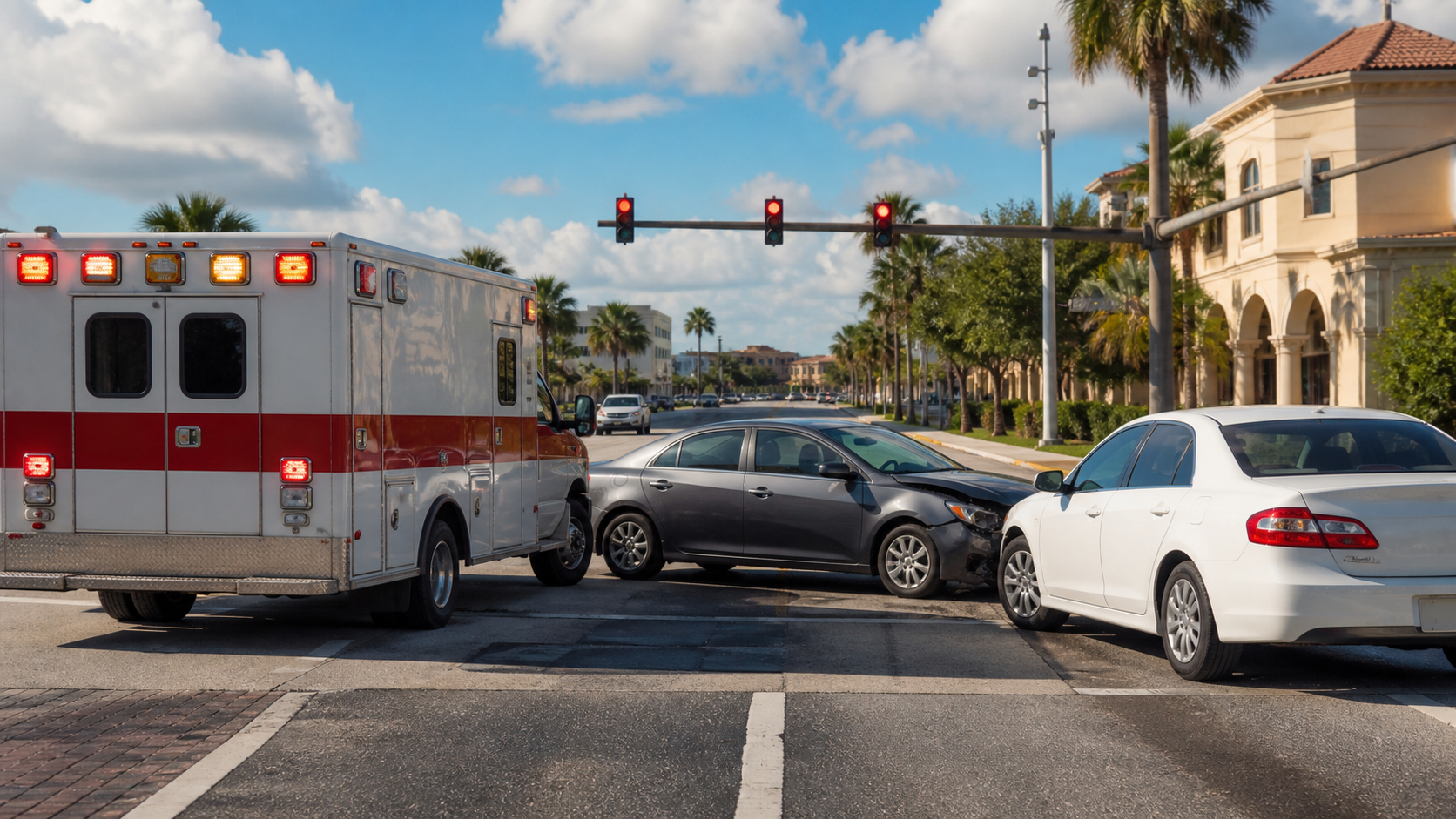
A chain-reaction crash needs a vehicle-by-vehicle timeline. A wet-road collision may require drainage and weather evidence in addition to construction records. Avoid choosing a theory before the facts are collected.
5. Repairing or discarding physical evidence too quickly
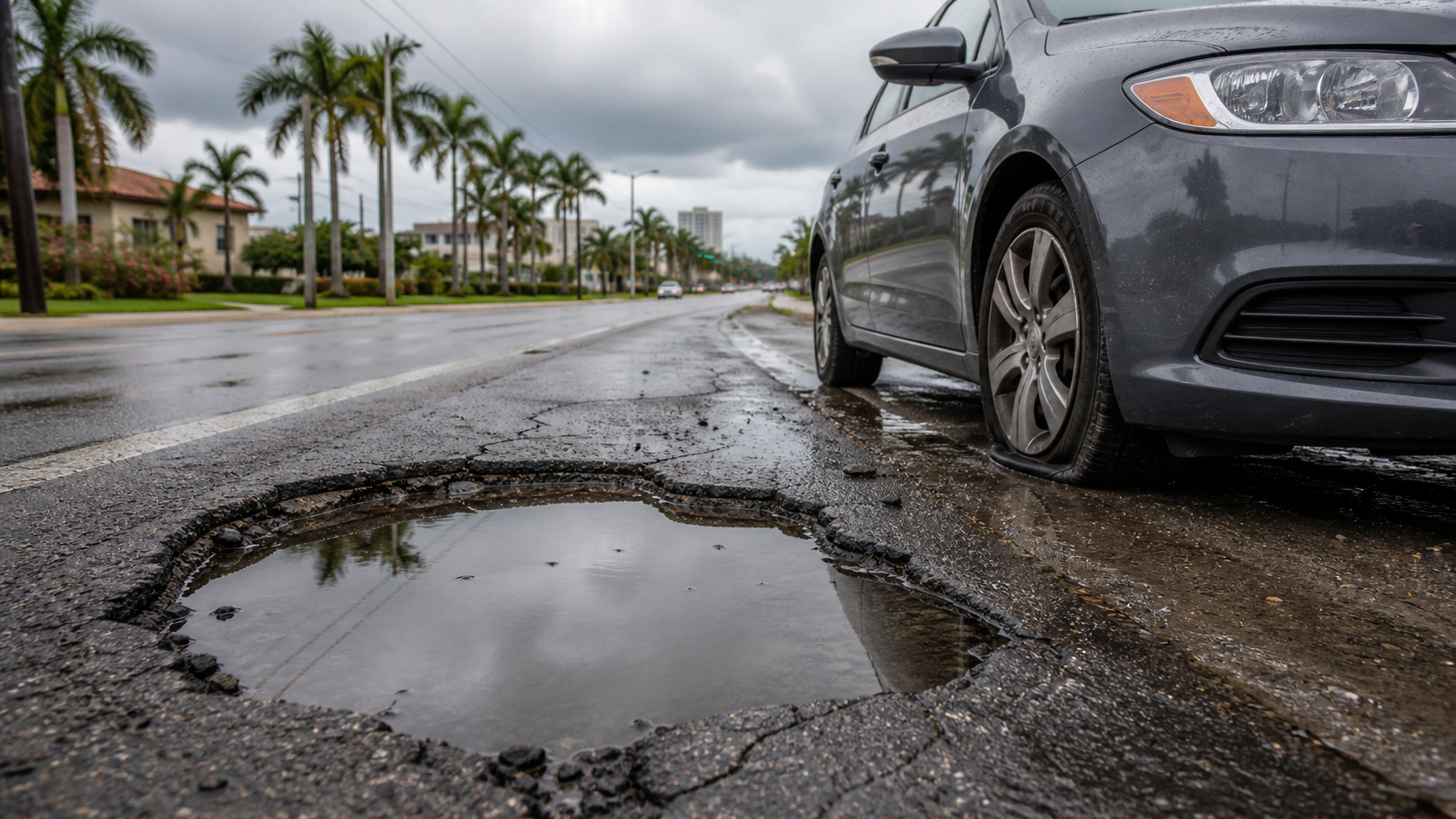
Preserve damaged tires, wheels, suspension parts, lights, mirrors, dash cameras, and vehicle data when they relate to the claimed mechanism. Photograph debris and any contact with barrels or barriers. Towing, storage, and salvage records establish where the vehicle went and who controlled it.
If a tire strike, road drop-off, or barrier contact is disputed, an appropriate inspection may be necessary before repair. TuckerUp’s tire evidence guide explains why components sometimes matter more than estimates.
Medical proof belongs in the same timeline
Report symptoms accurately, obtain appropriate care, and keep medical records, wage documents, receipts, and activity notes. Explain the direction and sequence of impacts to providers without guessing. A low-speed appearance does not prove that an injury is minor, and severe vehicle damage does not establish a diagnosis.
Keep complete insurance policies and correspondence. Liability, personal injury protection, collision, and uninsured motorist coverage may address different losses. Read releases carefully before resolving property damage.
What a careful construction zone accident claim shows
The best presentation connects the temporary layout, warnings, project control, driver decisions, vehicle movement, and medical proof. Record witness positions and original contact details. Avoid social-media blame or edited clips that remove context.
Tucker Law Group’s practice-area overview describes its injury work. To discuss a Florida work-zone collision, contact the firm.
Preserving the changing scene
Work zones can be reconfigured between daylight and nighttime shifts. Record the date and exact time of every photograph, along with weather, lighting, traffic volume, and active equipment. If possible, identify the project number displayed on signs and the nearest mile marker or intersection. Those details help match the crash to the correct daily report and lane-closure plan.
Drivers and passengers should also preserve navigation data, toll records, work schedules, and communications that establish their route and timing. Ask witnesses where they stood or drove when they observed the event. A witness who saw only the aftermath should not be treated as though the person observed the lane change or impact.
This article provides general information, not legal advice. Every case is different, and reading this page does not create an attorney-client relationship.