The Shop Floor Was Wet. Why Rain Was Not Enough to Prove a Florida Slip-and-Fall Claim
It was raining when an auto-glass technician arrived at a Florida car dealership. He asked for a covered place to work, followed a manager into a service bay, pulled the customer’s vehicle inside, and stepped out. Both feet went out from under him.
The technician’s clothes were wet after the fall. He had seen tire tracks and moisture elsewhere in the shop. Employees agreed that rainwater sometimes entered the service area on rainy days. Even so, the claim ended at summary judgment.
In Ausburn v. Wesley Chapel-T, LLC, decided September 25, 2026, Florida’s Second District Court of Appeal held that those facts did not establish the dealership’s constructive knowledge of the condition that caused the fall. The decision is useful because it isolates a problem that appears in many Florida wet-floor cases: evidence that water could be present is not necessarily evidence that the particular dangerous condition existed long enough—or happened dangerously enough and regularly enough—to charge the business with notice.
The Fall Was Real. The Missing Link Was the Condition.
The court did not hold that the technician fabricated his fall or escaped injury. The evidentiary problem came earlier. He could not identify what caused his feet to slip. In his deposition, he could not say whether the substance was oil, water, or something else. He had not noticed a puddle at the place where he stepped down, and he did not know how long anything had been on that part of the floor.
Those admissions left the court without a reliable starting point. If the substance could not be identified, its source and age could not be established. If its age could not be established, the court could not infer that an employee should have discovered it before the fall.
This distinction can feel technical to an injured person. It is not. A Florida slip-and-fall claim against a business normally requires proof about both the hazard and the business’s opportunity to respond. A wet shirt after a fall may support that moisture was present somewhere, but it does not necessarily show what was underfoot, how it got there, or how long it had remained there.
Florida Requires Proof of Actual or Constructive Knowledge
Florida’s current section 768.0755 governs a slip and fall on a transitory foreign substance in a business establishment. The injured person must prove that the business had actual or constructive knowledge of the dangerous condition and should have acted to remedy it.
Actual knowledge can be shown when an employee created the condition, saw it, received a report about it, or otherwise knew it was there. Constructive knowledge is different. The statute permits it to be shown circumstantially in either of two ways: the dangerous condition existed long enough that ordinary care should have revealed it, or the condition occurred with such regularity that it was foreseeable.
Ausburn addressed both routes. The court concluded that the record supported neither.
“Water Happens When It Rains” Did Not Prove a Regularly Dangerous Condition
Employees acknowledged that rainwater could be seen on the service-bay floor during rainy weather. That might establish a recurring condition in the broadest sense. But section 768.0755 does not ask whether any condition recurred. It asks whether the dangerous condition occurred with regularity.
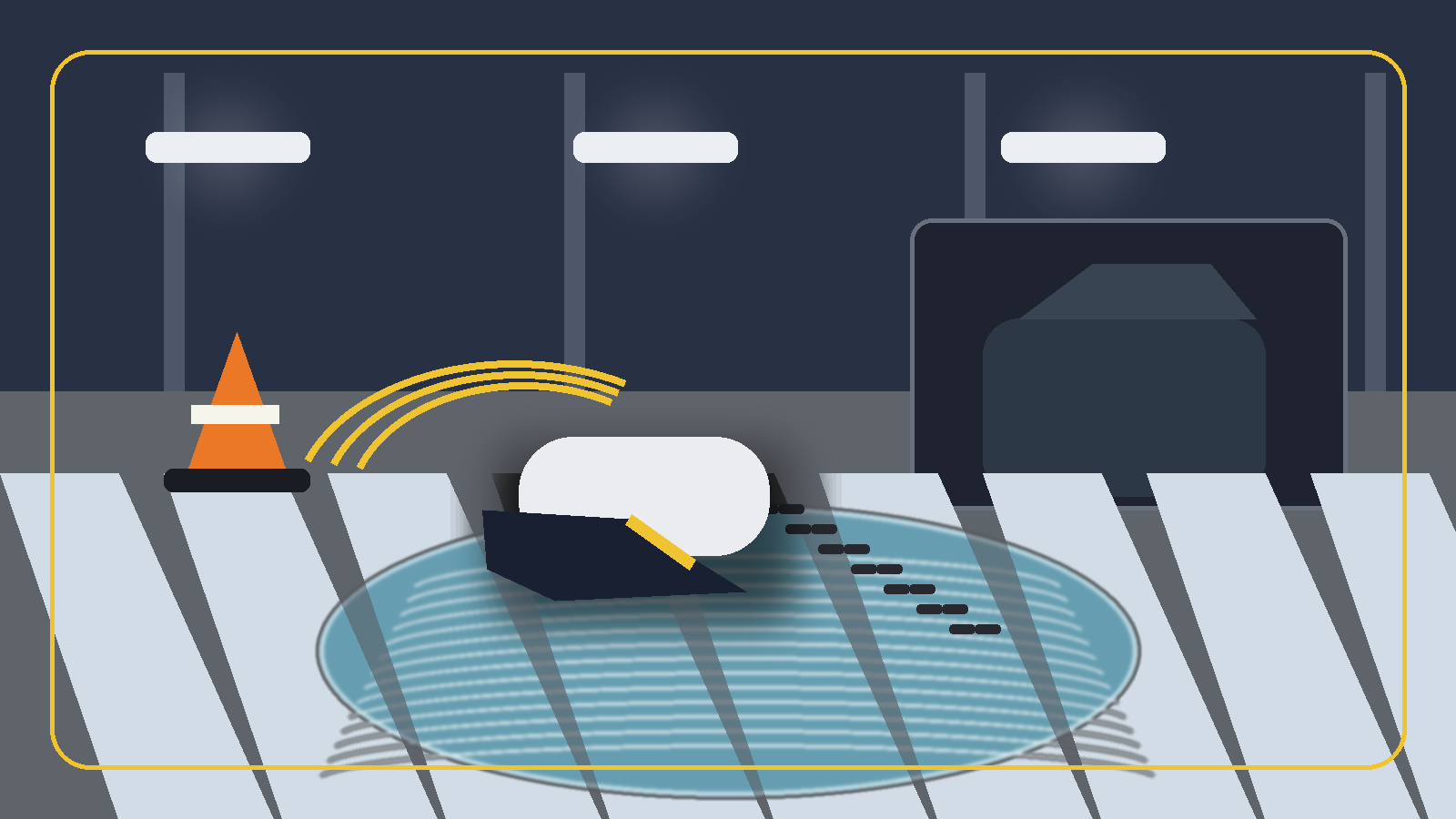
The dealership presented undisputed testimony that the shop floor was grated, angled toward drains, and painted with a slip-resistant material. Employees could not recall prior falls in the shop. The technician himself had worked at the dealership many times, including in the bays during rainy weather, without a similar incident.
Against that evidence, testimony that water sometimes reached the floor did not show that the water regularly accumulated in a slippery or otherwise dangerous form. The court emphasized the difference between a floor that becomes wet and a floor that repeatedly becomes dangerously wet. That distinction defeated the regularity theory.
The point is not that rainwater can never support a Florida premises claim. A repeated puddle at the same drain, recurring runoff from a roof edge, a known leak, prior incident reports, or employee testimony that a particular area routinely becomes slick may create a materially different record. The proof must connect the recurrence to danger, not merely to Florida weather.
The Exact Spot Matters More Than General Conditions Elsewhere
The technician recalled tire tracks and wetness when he drove into the service area, but he did not describe tracks, footprints, dirt, drying edges, or other marks in the substance at the location of his fall. The appellate court found that conditions elsewhere in the shop did not establish how long a substance had been present at the precise spot where he stepped out of the vehicle.
That location-specific proof is often how duration becomes visible. Footprints or wheel marks through a spill can suggest traffic after the substance appeared. Dirt, discoloration, changes in consistency, or partially dried edges can support an inference that it was not deposited seconds earlier. Surveillance footage may show when the condition formed or how many employees passed it. Without comparable evidence, a jury would have to guess.
The opinion rejected a chain of speculation: because it was raining, wet vehicles must have deposited water; because water could collect, an excessive amount must have accumulated; because it accumulated, an employee must have had time to see it; and because the technician fell, that water must have caused the fall. Florida law permits reasonable inferences from evidence, but it does not allow one unsupported inference to be stacked on another until the missing facts appear proven.
No Written Inspection Schedule Was Not Enough by Itself
The dealership did not have a written policy requiring floor inspections at fixed intervals. The injured technician argued that the lack of a formal rain-response and inspection policy supported constructive knowledge. The court disagreed on this record.
Employees testified that technicians were responsible for cleaning their bays, that spills were addressed when seen, and that excessive water was pushed toward the grates. The floor’s drainage and slip-resistant design also mattered. Because the plaintiff could not identify the condition or show how long it existed, the absence of a timed inspection sheet did not supply the missing proof.
This does not make inspection practices irrelevant. Logs, policies, training, staffing, and employee routes can be powerful evidence when tied to an identifiable hazard and a meaningful timeline. But a business’s imperfect policy does not automatically prove that it knew or should have known about an unknown substance of unknown duration.
What a Stronger Rainwater Record Would Have to Show
A stronger claim begins by fixing the scene in time. Photographs should capture the substance before it is mopped, including its boundaries, depth, color, footprints, wheel tracks, splash pattern, and relationship to doors, drains, roofs, mats, and parked vehicles. Wide views establish location; close views preserve texture and contamination. Video can reveal whether water was actively entering, whether employees crossed the area, and whether the hazard existed before the injured person arrived.
Witnesses can add the missing history. A customer who saw the puddle earlier, an employee who had already placed a cone, or a worker who regularly pushed water from the same area can transform “it was raining” into evidence about the actual condition. Maintenance requests, prior complaints, drainage repairs, incident reports, and photographs from earlier storms may establish the regular dangerous recurrence that was missing in Ausburn.
Physical evidence can matter too. The type of floor coating, its coefficient of friction when wet, worn areas, the slope toward drains, clogged grates, and the path taken by vehicles may require inspection before the scene changes. A claim involving a recently resurfaced bay or a known drainage defect is not the same as one involving a functioning slip-resistant floor.
An Incident Report Creates a Timestamp, Not Automatic Liability
Reporting a fall promptly gives the business a chance to photograph the condition, identify employees and witnesses, preserve surveillance footage, and record what was found on the floor. It does not prove negligence by itself, but it can prevent a later dispute over whether anything was present.
A person who left without completing a report may still have a claim. Tucker Law’s article on reporting a store fall after leaving explains why acting quickly still matters. The evidence that matters most—video, the substance itself, cleaning activity, and witness memory—often disappears much sooner than the legal filing deadline.
This Was a Notice Decision, Not an Open-and-Obvious Shortcut
The dealership also argued that it owed no warning because the condition was open and obvious. The Second District did not need to decide the appeal on that ground. Its published analysis rested on the absence of evidence establishing actual or constructive knowledge under section 768.0755.
That matters because notice and obviousness answer different questions. An obvious condition can affect a duty to warn and comparative fault, while negligent maintenance may remain a separate issue depending on the facts. Tucker Law’s discussion of open-and-obvious hazards in Florida premises cases addresses that distinction. Ausburn should not be reduced to a rule that rainwater is always obvious or that every wet-floor case fails.
The Case Turned on Proof That Was Missing at the Exact Place and Time
Ausburn shows why a slip-and-fall investigation cannot stop with the weather report or a general statement that a floor gets wet. The substance, location, source, duration, dangerous character, and business’s opportunity to respond must be connected with evidence rather than assumption.
If a fall in a store, dealership, restaurant, hotel, or other Florida business caused a serious injury, Tucker Law can evaluate the scene evidence, notice issues, surveillance, maintenance history, and available insurance. Review the firm’s Personal Injury Information Center or contact Tucker Law before the physical and electronic record changes.
This article provides general information and is not legal advice. Every claim depends on its specific facts and evidence.