Pedal Misapplication in Florida: 5 Questions That Can Explain a Sudden-Acceleration Crash
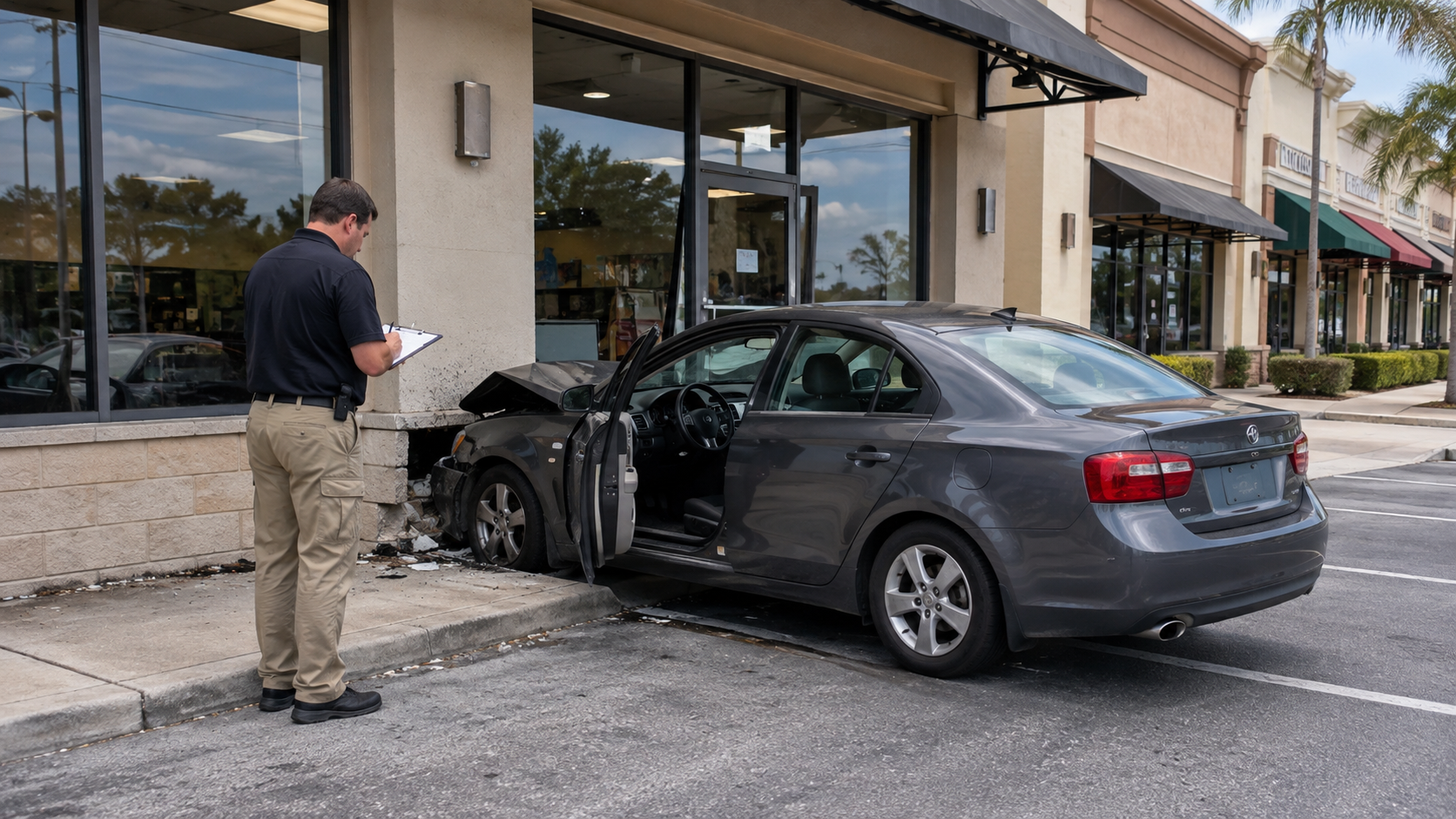
A pedal misapplication accident claim may follow a car’s sudden movement through a parking space, curb, storefront, garage, or crowd area. People often assume the driver pressed the accelerator instead of the brake. That may be correct, but a responsible investigation tests the driver’s inputs, vehicle condition, site design, and recorded evidence before reaching a conclusion.
1. What did the vehicle do before impact?
Build a second-by-second sequence: direction of travel, steering, pause or stop, engine sound, wheel spin, brake lights, curb contact, and final position. Identify every witness and the exact viewing angle. Storefront, parking, doorbell, dash-camera, and phone video may show whether the car accelerated continuously or moved in stages.
Preserve 911 calls and early statements, but consider stress and confusion. A witness who heard an engine may not know which pedal was pressed. Physical evidence and vehicle data should be compared with the account.
2. What can the vehicle record?
Depending on the model and event, data may include accelerator position, braking, speed, steering, gear selection, and restraint information. A qualified download should occur before repair, battery loss, software changes, or disposal. Photograph the dashboard, warning lights, gear selector, floor mat, pedal area, seat position, adaptive controls, and aftermarket equipment.
Do not assume a lack of skid marks proves no braking. Modern braking systems, surface material, low speed, and short distance can affect visible evidence.
3. Could a mechanical or layout issue have contributed?
Inspect for a trapped or displaced floor mat, damaged pedal, electronic fault, unintended obstruction, improper repair, or control modification. Collect service invoices, complaints, recall information, diagnostic codes, and prior photographs. Preserve the car and disputed parts with notice to interested parties before destructive testing.
A mechanical explanation should be supported, not guessed. TuckerUp’s brake-failure claim guide explains how maintenance records, component condition, and driver input can be evaluated together.
Site layout may also matter. Parking stops, bollards, curb height, slope, markings, lighting, and pedestrian routes can affect both the occurrence and severity. Photograph dimensions and damage before repairs alter the area.
4. Which people and policies may be involved?
The driver, vehicle owner, employer, repair facility, product company, and property operator may have different roles depending on the evidence. Confirm ownership, permission, work status, and maintenance responsibility with documents rather than assumptions.
Obtain complete automobile, commercial, property, umbrella, personal injury protection, medical payments, and uninsured or underinsured motorist policies when applicable. A property payment should not be allowed to resolve an unfinished injury claim unintentionally.
Florida Statute section 316.1925 addresses careless driving. A traffic citation can be relevant, but the civil investigation still must connect conduct, causation, and injury.
5. How should injury and loss be documented?
People outside the vehicle may experience direct impact, crushing, falls, glass injuries, or secondary contact with walls and merchandise. Occupants may experience restraint loading or airbag deployment. Report the mechanism and symptoms accurately to medical providers.
Keep emergency, diagnostic, specialist, therapy, pharmacy, wage, business-income, home-care, and transportation records. Photograph visible injuries and damaged personal property. Maintain a factual account of activities affected without exaggeration.
If the car struck several people or objects, separate each impact in the timeline. TuckerUp’s multiple-impact guide offers a useful evidence framework. When the event began with a vehicle malfunction allegation, the tire-failure article illustrates the importance of preserving the physical item at issue.
Turning the five answers into a coherent claim
Organize video, scene measurements, data, inspection materials, medical records, wage proof, and insurance communications in one chronology. Distinguish confirmed facts from open questions. Tucker Law Group’s practice-area overview describes its injury services, and a person hurt in a Florida sudden-acceleration event may contact the firm for a specific review.
What happens if the driver reports “the car took off”?
Treat the statement as evidence to investigate, not as proof of either defect or mistake. Record the driver’s exact words, footwear, seating position, familiarity with the vehicle, and whether the car was recently purchased, borrowed, rented, or modified. Fatigue, medication, mobility limits, and distraction may be relevant only when supported by facts.
A neutral inspection can test pedal travel, floor-mat placement, diagnostic history, and control systems. Investigators should preserve both explanations until the data and physical evidence permit a reasoned conclusion. Public speculation can make a careful claim harder, especially when short video clips lack the moments before movement.
Storefront owners should preserve interior and exterior video, incident reports, repair records, and photographs before cleanup. Witnesses inside may have a better view of brake lights or engine sound than people who arrived afterward.
This article provides general information and is not legal advice. Every pedal misapplication accident claim depends on its particular facts, evidence, and applicable law.