Can a Pothole Crash Become a Florida Injury Claim?
A pothole accident claim is rarely as simple as showing a photograph of broken pavement. A dangerous road defect may contribute to a motorcycle fall, bicycle crash, loss of control, tire failure, or secondary collision. But a viable Florida injury claim usually turns on road control, notice, response, driver conduct, causation, and compliance with special procedures.
Myth: The city is responsible for every pothole
Fact: Florida roads are controlled by different entities. A state road may involve the Florida Department of Transportation, while a county, municipality, toll authority, private community, shopping center, contractor, or utility may control another location. Maintenance duties can also be divided by contract. The correct name on a map does not necessarily identify the party responsible for inspecting and repairing the pavement.
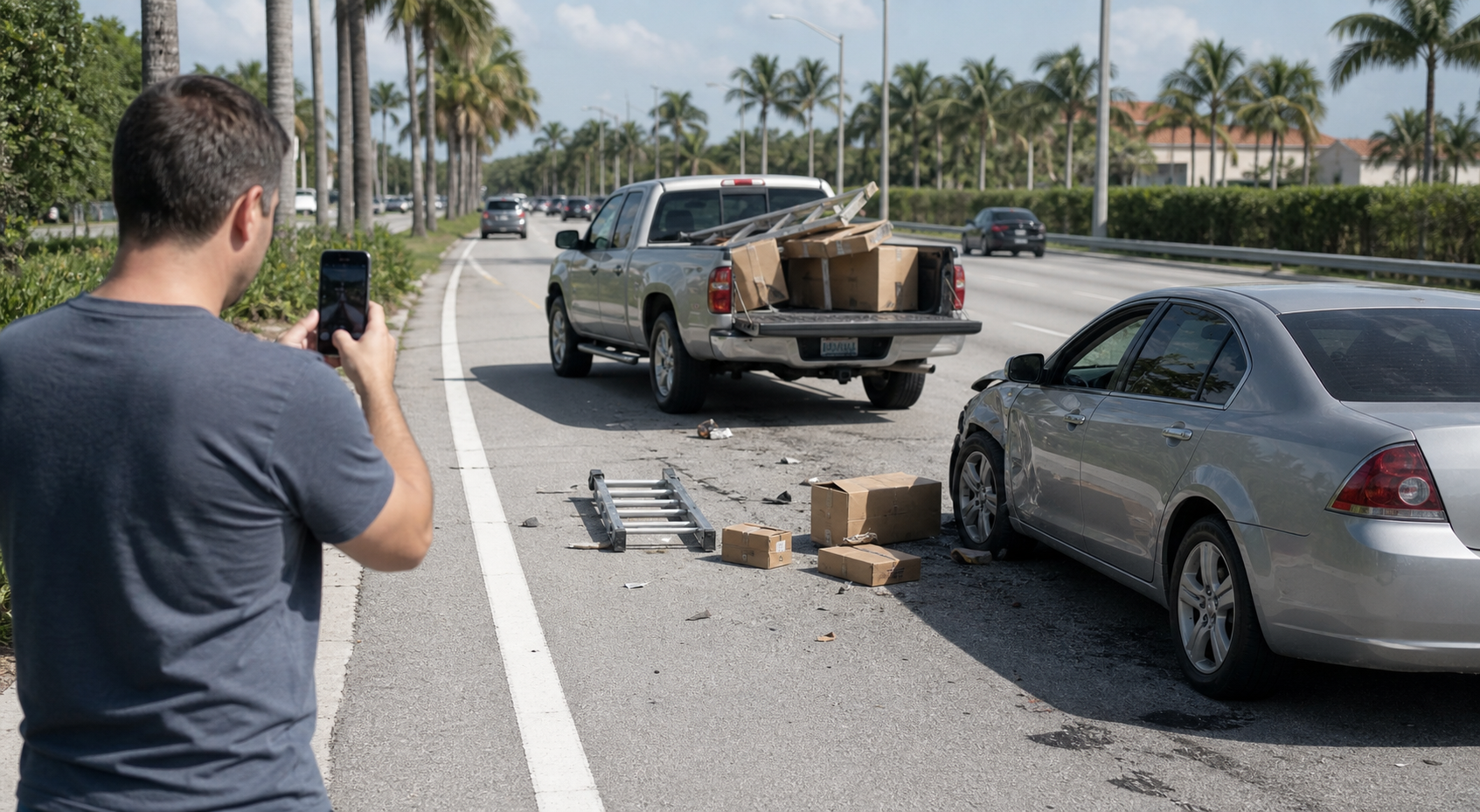
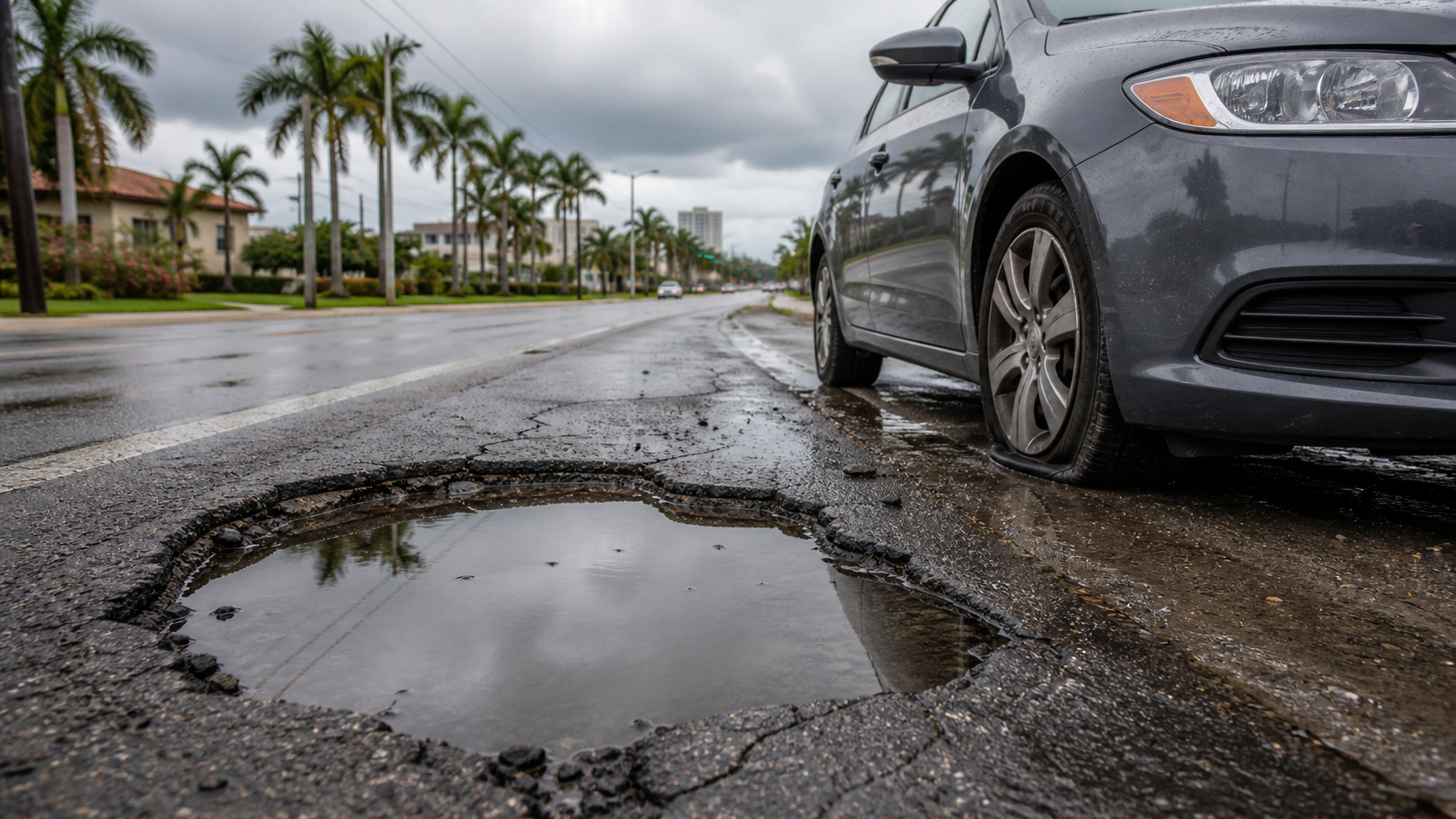
A useful investigation begins with the precise location: direction of travel, lane, nearest address, mile marker, intersection, and GPS coordinates if available. Photographs should show both a close view and the larger roadway context. This helps connect the defect to the right agency and avoids confusion with a similarly named road.
Myth: A photograph alone proves negligence
Fact: A photograph can establish dimensions and condition, but it may not show how long the defect existed or who knew about it. Work orders, inspection logs, prior complaints, repair histories, 911 calls, public-service requests, and dated online imagery may help establish notice. Weather and construction records may explain when the pavement failed.
Preserve the original image file, not just a screenshot. Metadata, date, lighting, and a recognizable landmark can strengthen its value. Measure only when it is safe and lawful; no evidence is worth stepping into active traffic.
Myth: Hitting the pothole guarantees compensation
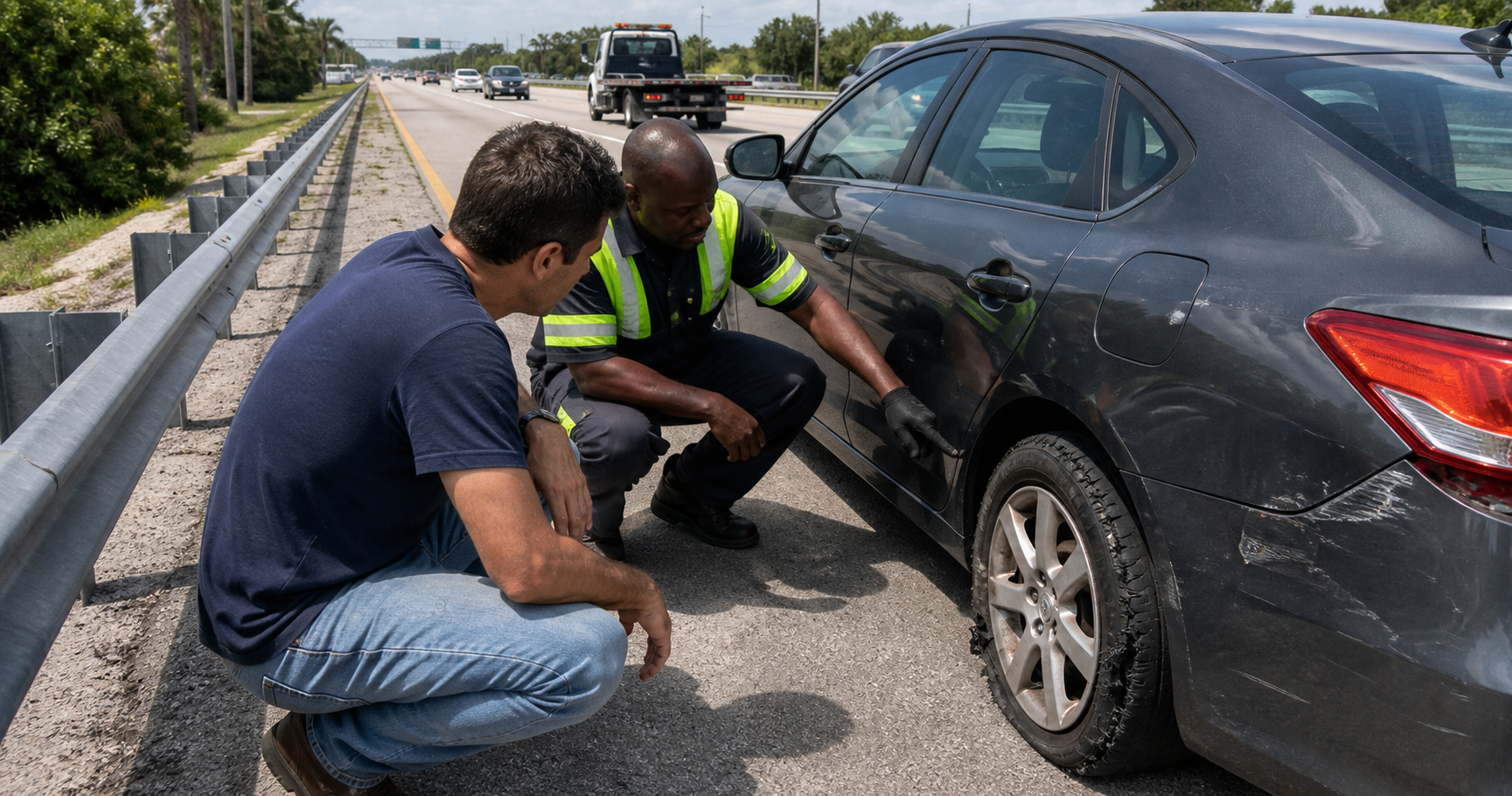
Fact: The claimant must still connect the defect to the crash and the crash to an injury. Tire damage, wheel marks, debris, dash-camera footage, helmet-camera video, witness accounts, towing records, and a prompt mechanic’s inspection can help. Medical records should accurately describe the event and symptoms. A delayed or inconsistent history may invite an insurer to argue that something else caused the condition.
Mechanical evidence matters because a sudden tire failure can have several causes. Our guide to a tire-blowout accident claim discusses why the tire and wheel should sometimes be preserved rather than discarded after repairs.
Myth: The driver’s reaction never matters
Fact: Insurers often examine speed, visibility, traffic, distraction, lane position, and whether the driver could safely avoid the defect. A rider may face a choice between striking a hole and swerving into traffic. A driver may encounter standing water that hides the depression. Those circumstances should be documented before the scene changes.
Florida comparative-fault principles can affect recovery when more than one person or condition contributed. The existence of a road defect does not erase another driver’s unsafe conduct, and another driver’s involvement does not necessarily erase a maintenance issue. A no-contact crash can raise similar questions about evasive action and proof.
Myth: Government claims work like ordinary insurance claims
Fact: Claims against the state or its agencies and subdivisions are subject to special rules. Florida Statute section 768.28 addresses sovereign immunity, notice, and other requirements. The details can be outcome-determinative, and identifying the wrong public entity can waste valuable time.
A private contractor may also have repaired, resurfaced, excavated, or inspected the road. Contracts, permits, lane-closure records, and utility work can show who controlled the work and when. Early public-records and preservation requests may prevent routine deletion of useful material.
Myth: Repairing the car destroys every claim
Fact: Necessary repairs do not automatically end a pothole accident claim, but documentation should come first when possible. Photograph the tire, wheel, suspension, undercarriage, and any impact marks. Keep damaged parts if safe and practical, obtain the technician’s written findings, and save invoices and towing records. Give potentially responsible parties a fair opportunity to inspect evidence when counsel advises that preservation is appropriate.
For a bicycle or motorcycle incident, also preserve the helmet, clothing, lights, and damaged components. Similar preservation concerns arise after a bicycle dooring crash.
Myth: Reporting the hole hurts the case
Fact: A prompt, accurate report can protect other road users and create a dated record. Save the service-request number and a copy of what was submitted. Do not exaggerate dimensions or say you know how long the defect existed unless you actually do. If the road is repaired quickly, earlier wide-angle photographs and video become especially valuable.
A practical way to evaluate the facts
Put the evidence into four groups: who controlled the roadway, what made it dangerous, what notice existed, and how the defect caused the crash and injury. Then identify every deadline and procedure that may apply. Tucker Law Group’s practice-area page provides more information about injury claims. To discuss a Florida roadway-defect incident, contact the firm.
This article provides general information and is not legal advice. Every case is different, and reading this page does not create an attorney-client relationship.