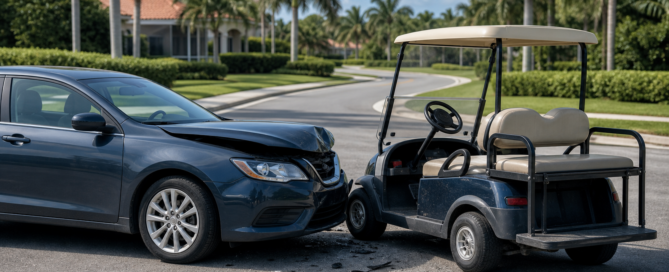
Who May Be Liable After a Golf Cart Accident in Florida?
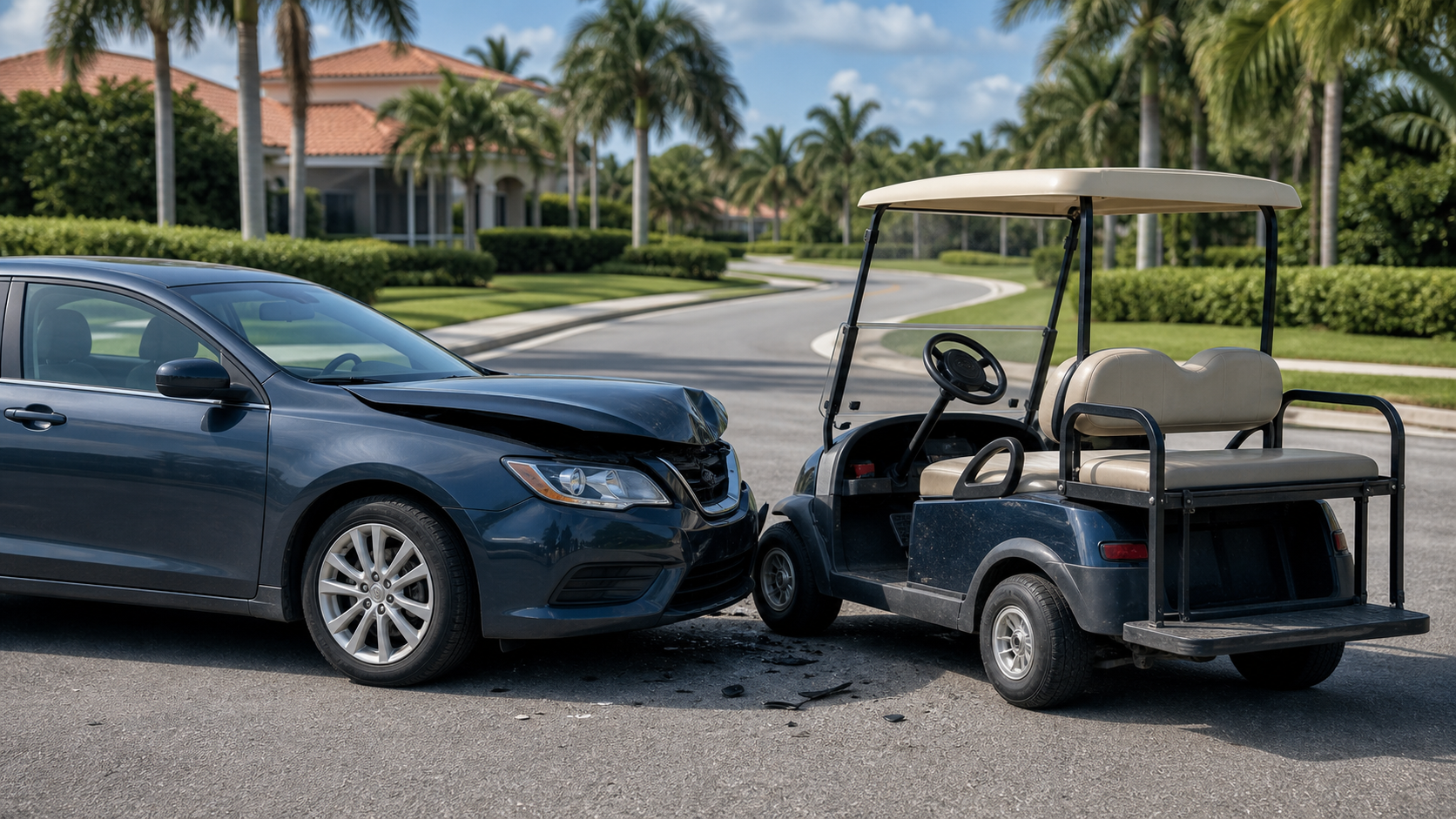
A golf cart accident claim can be more complicated than it first appears. Golf carts are common in Florida communities, resorts, campuses, and recreation areas, but they offer little protection in a collision. A crash may involve the operator, cart owner, another motorist, an employer, a rental company, or the entity responsible for the property or roadway. Liability depends on where the cart was operated, how the crash happened, who controlled the cart, and what insurance applies. These eight questions can help organize the investigation after a Florida golf cart accident. 1. Where Did the Golf Cart Accident Happen? The location matters because Florida law does not allow ordinary golf cart operation on every public road. Florida Statute section 316.212 generally limits golf carts to designated roads and addresses operating hours, required equipment, and operator qualifications. Local governments may adopt additional restrictions. A crash on a designated neighborhood street may present different questions from one in a resort parking area, private community, golf course crossing, or public highway. Photograph signs, gates, crossings, lane markings, and posted local rules. 2. Was the Operator Driving Carelessly? Common issues include excessive speed for the conditions, sharp turns, distracted operation, failure to yield, overloading, and driving after alcohol use. Golf carts have a high center of gravity and can tip when turned abruptly. An operator should account for pedestrians, cyclists, traffic, road surface, and the cart's limited braking and protection. Statements from passengers and independent witnesses can help show how the cart was being operated before the impact or rollover. 3. Did Another Motorist Cause the Collision? A passenger car, truck, delivery vehicle, or motorcycle may strike a cart after speeding, following too closely, turning across its path, or [...]