Tucker Law Footer Image
Call 1-800-TUCKERWINS

Florida Hydroplaning Accident Claims: When Rain Is Not the Whole Story

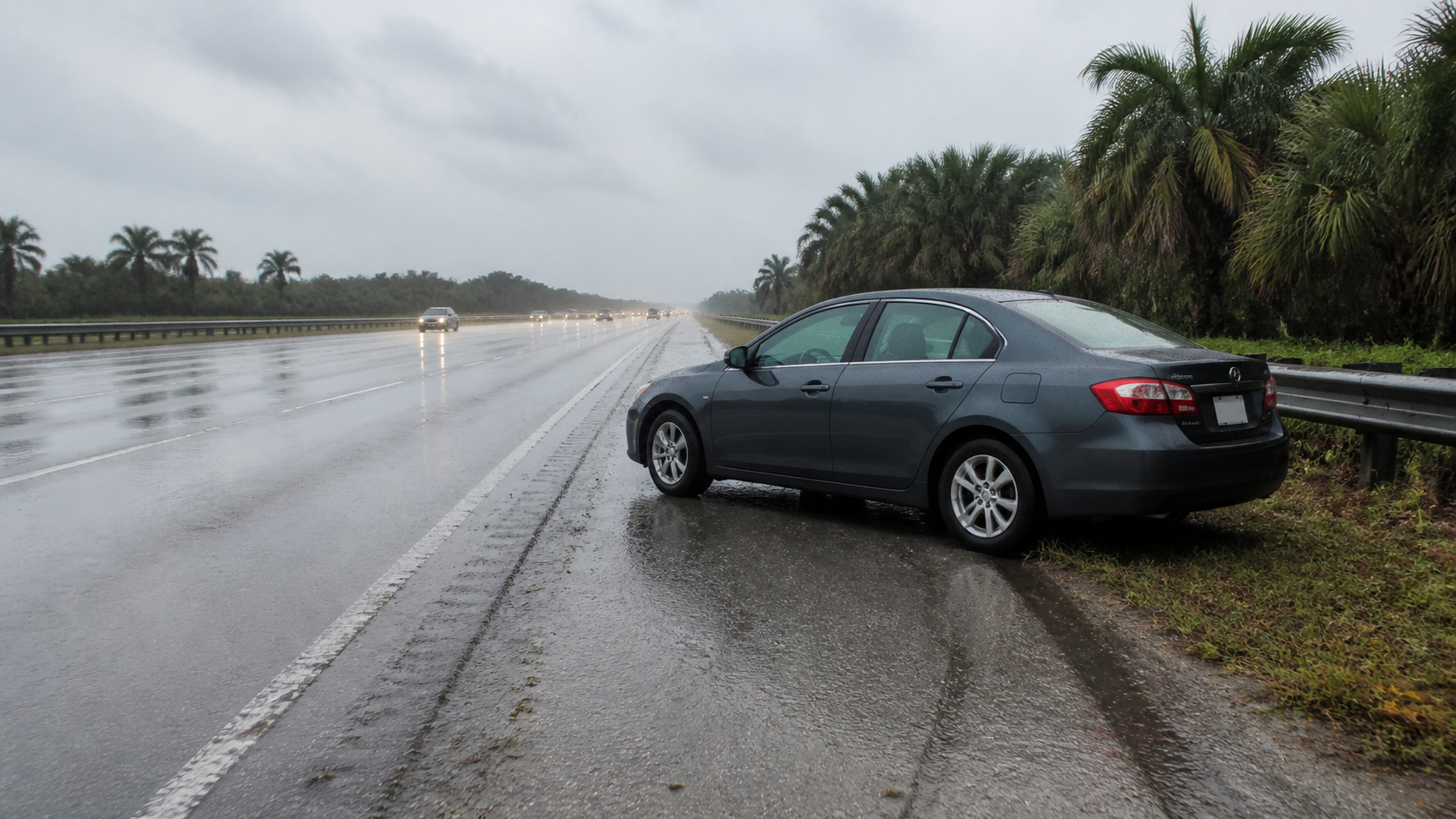
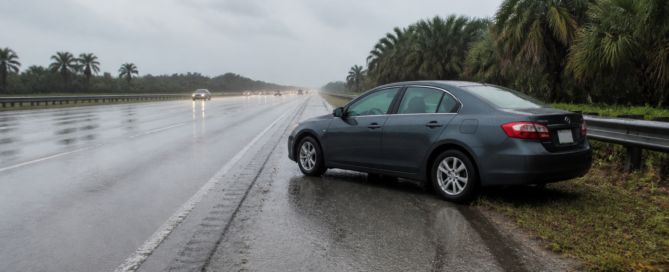
A hydroplaning accident claim should not begin and end with the statement that “the rain caused it.” Water can lift a tire away from the pavement, but fault usually turns on the decisions and conditions surrounding that loss of traction. Speed, tire condition, standing water, visibility, following distance, braking, road drainage, and another vehicle’s conduct can all matter. Hydroplaning describes a mechanism, not a legal conclusion Hydroplaning occurs when a layer of water separates a tire from the roadway. Steering and braking response may drop quickly. That explains how control was lost, but it does not establish why the vehicle encountered the water at that speed or whether the driver responded reasonably. Investigators still ask what a careful driver would have done under the actual conditions. Florida Statute section 316.183 requires speed to be reasonable and prudent under existing and potential hazards and controlled as necessary to avoid a collision. The posted limit is a maximum, not a promise that the same speed is safe in heavy rain. Speed is more than the number on a citation Vehicle data, dash-camera video, tire marks, rest positions, phone navigation history, and witness accounts may help estimate speed. Investigators also examine whether traffic had slowed, spray reduced visibility, or water was visibly pooling. A driver traveling below the posted limit may still have been too fast for conditions; a vehicle traveling steadily may have been struck by someone else who lost control. That distinction is especially important in a chain-reaction accident. The first car to spin is not automatically the only cause. Following drivers may have left too little space, while an earlier collision or sudden lane change may have created the emergency. Tires can change the investigation [...]
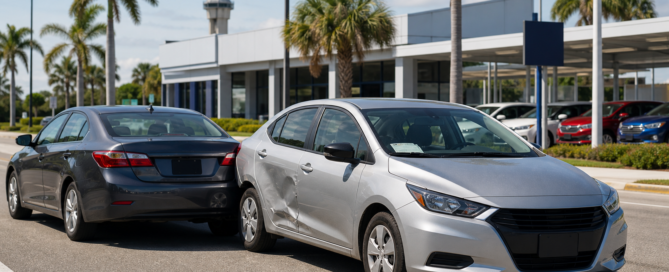

A Florida Rental Car Crash: What Happens From Scene to Claim

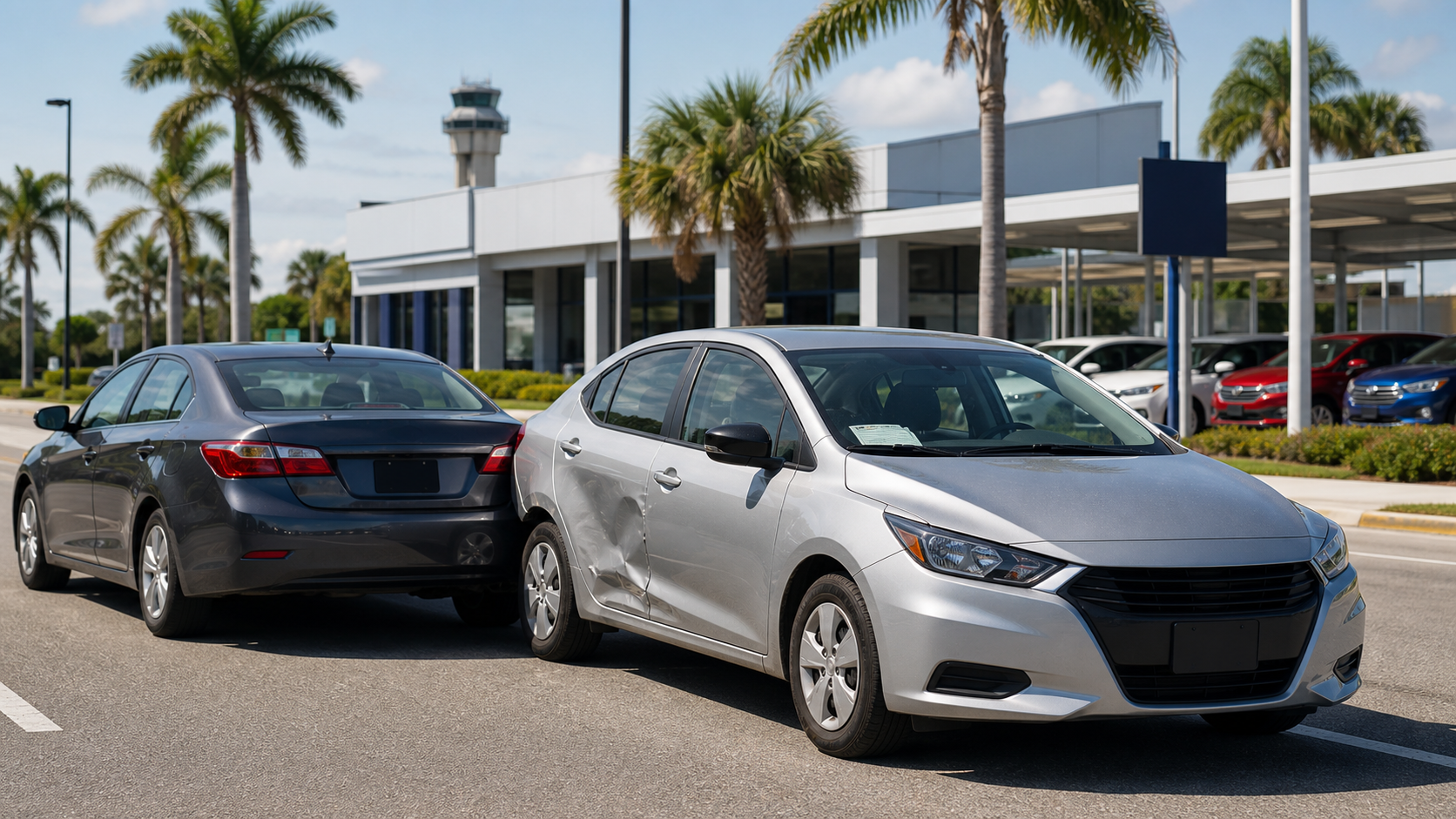
A rental car accident claim can involve the renter, an authorized driver, another motorist, the rental company, a credit-card benefit, and several insurance policies. The safest way to manage that complexity is chronologically. What you document at the scene affects the coverage review, vehicle-damage process, and injury claim that follow. At the scene: treat it like any serious crash Move to safety if possible, call for appropriate emergency help, and exchange driver, vehicle, and insurance information. Photograph vehicle positions before they move when it is safe, then capture damage, license plates, road markings, signals, debris, and the surrounding area. Ask witnesses for direct contact information. Do not rely on the rental company or police report to locate them later. Identify which vehicle is rented and who was driving it. Keep the rental agreement available, but avoid roadside arguments about coverage or fault. A driver can be authorized under one agreement and still face a separate negligence investigation. If several vehicles are involved, the proof issues described in a chain-reaction accident may also apply. Before leaving: protect the human and physical evidence Seek appropriate medical evaluation for concerning symptoms. Adrenaline can mask pain, but an injury claim should be based on truthful, documented symptoms rather than assumptions. Note whether airbags deployed, seat belts locked, luggage moved, or any occupant struck the interior. Obtain the report or event number. Do not discard trip records. Flight confirmations, hotel reservations, toll receipts, parking records, and phone location data can help establish who was using the car and when. Preserve dash-camera files before they loop over. If a passenger was hurt, our passenger injury claim guide explains why passengers may need information from multiple drivers. Within the first day: follow [...]

Florida Crosswalk Accident Claim: 7 Pieces of Evidence That Matter

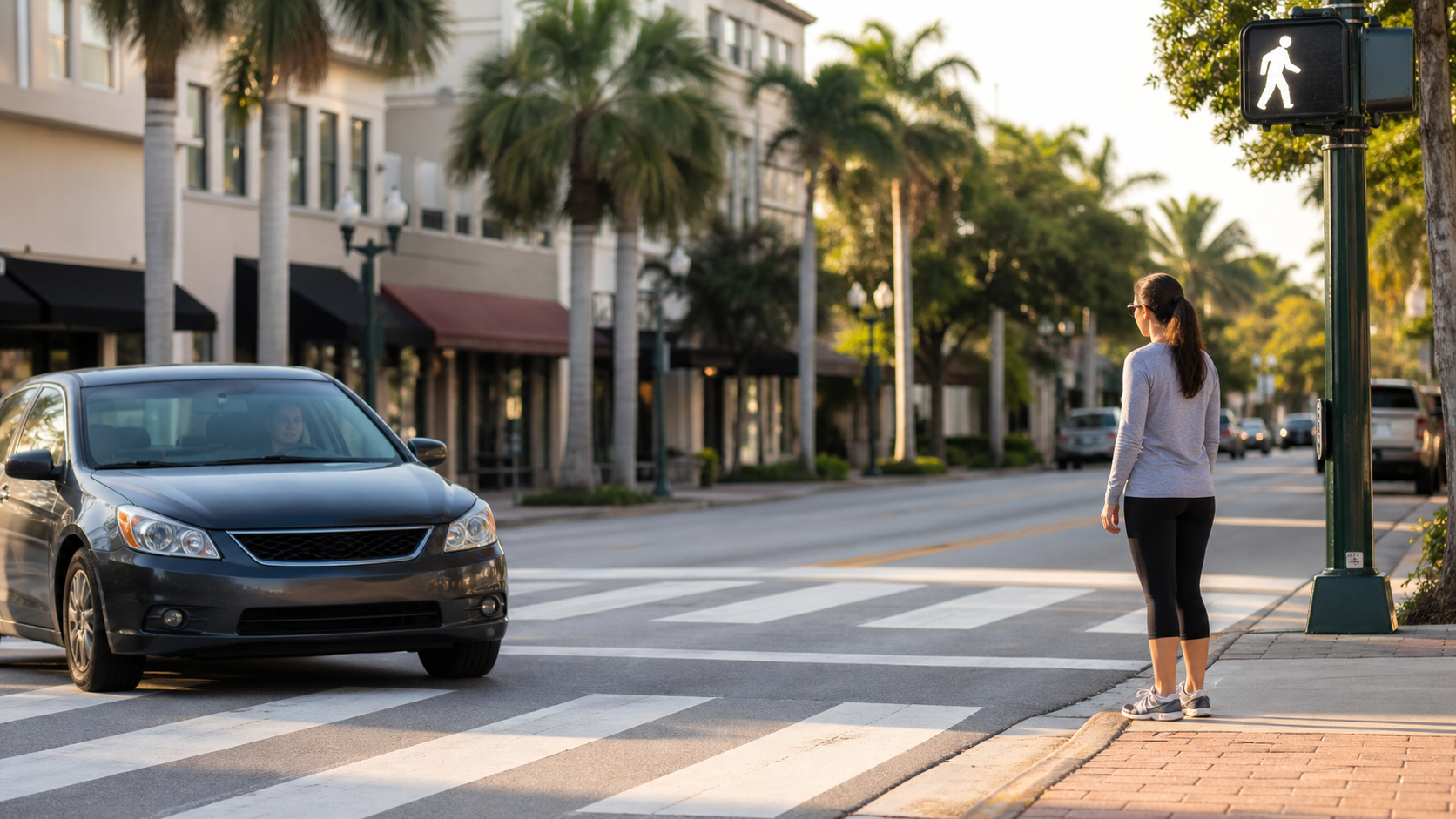
A crosswalk accident claim may turn on evidence that disappears within hours: a signal phase changes, surveillance video is overwritten, vehicles move, and sight lines shift with traffic. Florida law addresses duties of drivers and pedestrians, but applying those rules requires a reliable account of where each person was, what the signals showed, and what each could see before impact. Florida Statute section 316.130 includes rules for signalized crossings and other crosswalk situations. Depending on the setting, drivers may have duties to stop or yield to a pedestrian in the crosswalk, while pedestrians also have duties concerning signals and sudden entry into a vehicle’s path. The following evidence helps place those rules in factual context. 1. The exact signal phase “I had the light” can mean different things. Was there a walk symbol, flashing countdown, solid hand, green arrow, flashing yellow arrow, or red light? Photograph every signal facing both the pedestrian and driver. Record the time precisely so the agency’s timing plan or controller data can be compared with video. If a signal was dark or malfunctioning, preserve that fact separately. The analysis may overlap with intersection right-of-way questions found in a left-turn collision. A short video that captures a full signal cycle can be more informative than a single still image. 2. Wide views of the crosswalk and sight lines Close-up damage photographs are useful, but wide-angle images show distance and visibility. Capture the driver’s approach, pedestrian’s direction, lane markings, stop bar, curb ramps, median, signs, lighting, landscaping, parked vehicles, construction barriers, and weather. Photograph from both eye levels when safe—approximately where a driver and pedestrian would have looked. Sight lines can change quickly when a truck leaves, branches are trimmed, cones move, [...]

Teen Driver Crash in Florida: Who May Be Responsible?

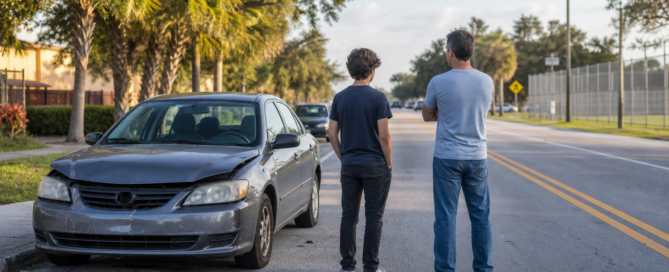
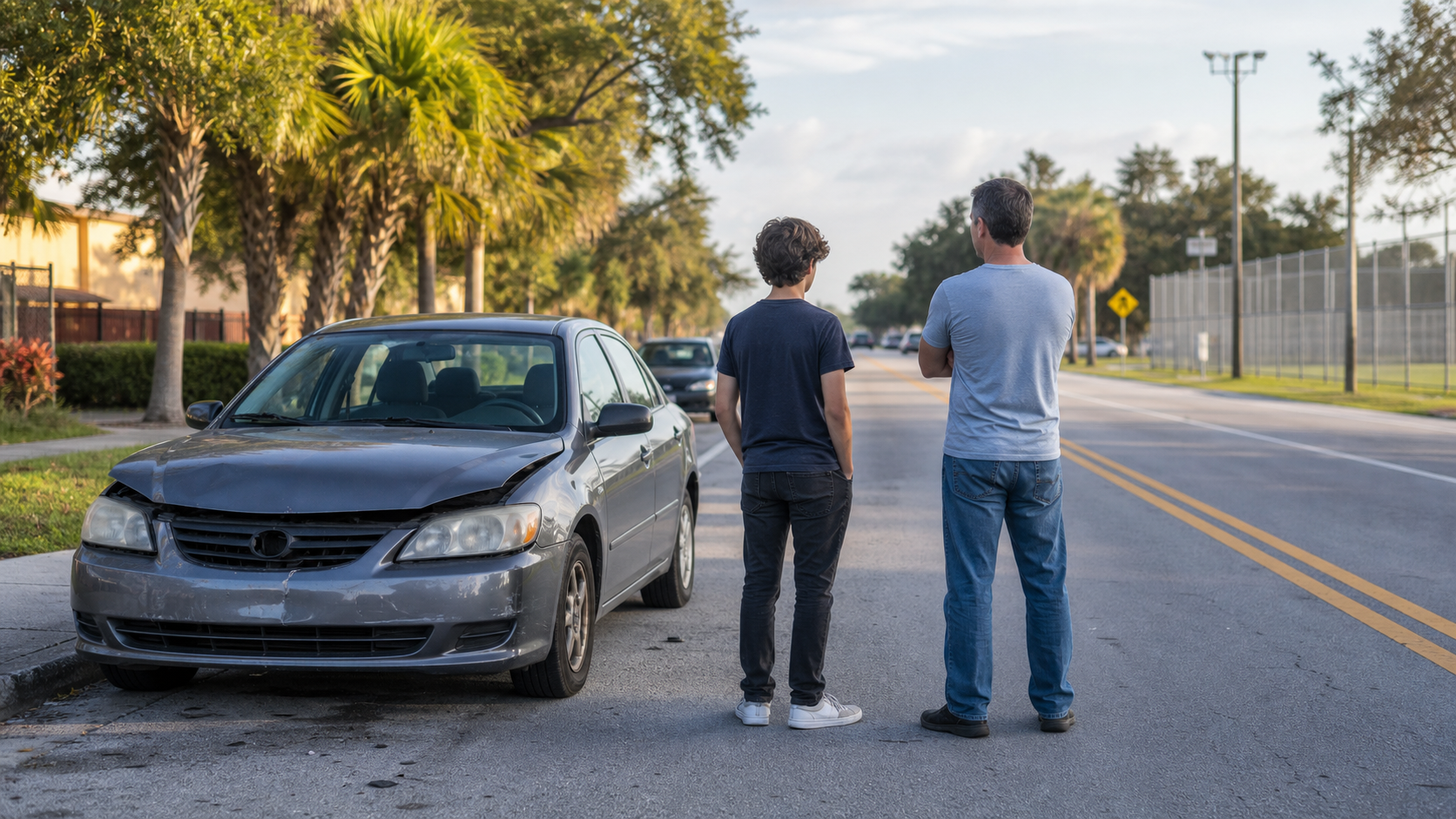
A teen driver accident claim may involve more than the young person behind the wheel. Florida families often have questions about the vehicle owner, the adult who signed a license application, household insurance, and what happens when a learner was driving. The answers depend on the driver’s license status, ownership, permission, conduct, and available policies. Is a teen judged by different traffic rules? Generally, no. A teen driver must obey the same rules of the road that apply to other motorists. Investigators evaluate speed, distraction, following distance, right of way, impairment, and evasive action. Age alone does not establish negligence, and an injured person still needs evidence showing how the collision happened and how it caused the claimed injuries. That is why photographs, video, witness accounts, vehicle data, and the police report remain important. The practical evidence issues resemble those in a left-turn crash or multi-vehicle collision, even when the at-fault driver is a minor. What if the teen had a learner’s license? Florida Statute section 322.1615 requires a learner’s-license holder to be accompanied by a licensed driver at least 21 years old occupying the seat closest to the driver. The statute also limits driving hours: daylight only at first, with driving permitted until 10 p.m. after the initial three-month period. A violation may be relevant context, although it does not replace proof that particular conduct caused the crash. The supervising adult’s actions may also become part of the investigation. Questions can include whether the adult was in the required seat, was attentive, allowed driving under unsafe conditions, or distracted the learner. Those facts are highly case-specific. Can the person who signed the license application be responsible? Florida has a statute addressing applications for drivers [...]

When Traffic Signals Fail: How Florida Crash Fault Is Investigated

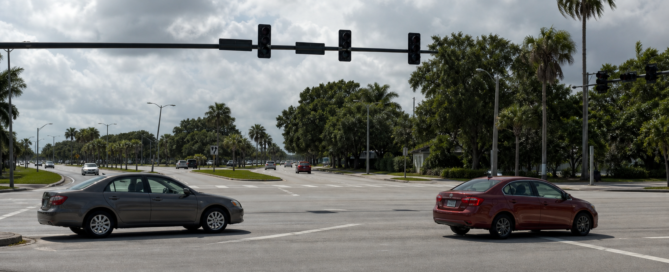
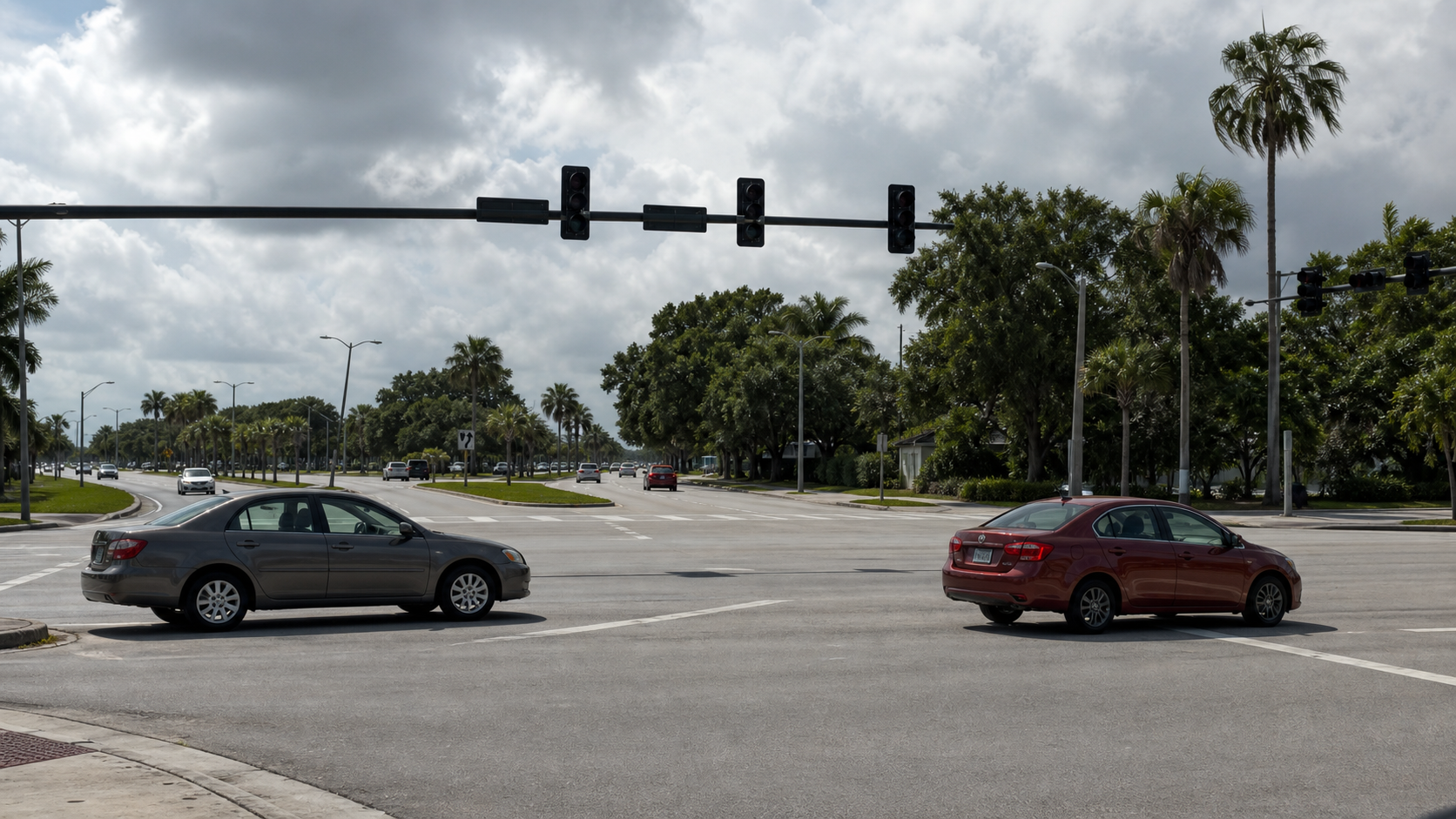
A traffic signal failure accident claim can look straightforward at first: the light was dark, two vehicles entered the intersection, and a collision followed. In reality, fault often depends on what each driver saw, how long the signal had been malfunctioning, and whether anyone followed the rule that applies to an inoperative light. Preserving evidence quickly can make the difference between a clear reconstruction and two competing stories. The rule at a completely dark signal Florida law does not treat a dark traffic signal as permission to proceed. Under Florida Statute section 316.1235, a driver approaching an inoperative traffic light must stop as though approaching a stop-sign-controlled intersection. If only some signal heads are out, the driver facing the inoperative light must stop. That rule gives investigators a starting point, but it does not automatically resolve every dispute. Drivers still must assess who arrived first, whether another vehicle was already in the intersection, and whether it was reasonably safe to proceed. A motorist who rolls through a dark signal, follows the car ahead without making an independent stop, or accelerates despite an obvious conflict may bear responsibility. More than one driver may also share fault. Flashing lights are different A signal that is flashing is not necessarily “broken” in the legal sense. Florida Statute section 316.076 distinguishes a flashing red indication from a flashing yellow one. Flashing red calls for a stop before proceeding subject to right-of-way rules. Flashing yellow tells a driver to proceed with caution. Photographs and video must therefore show not only that the signal was unusual, but exactly what it displayed for each direction of travel. How investigators rebuild the intersection Evidence in a traffic signal failure accident claim usually comes [...]

Go to Top