When Traffic Signals Fail: How Florida Crash Fault Is Investigated
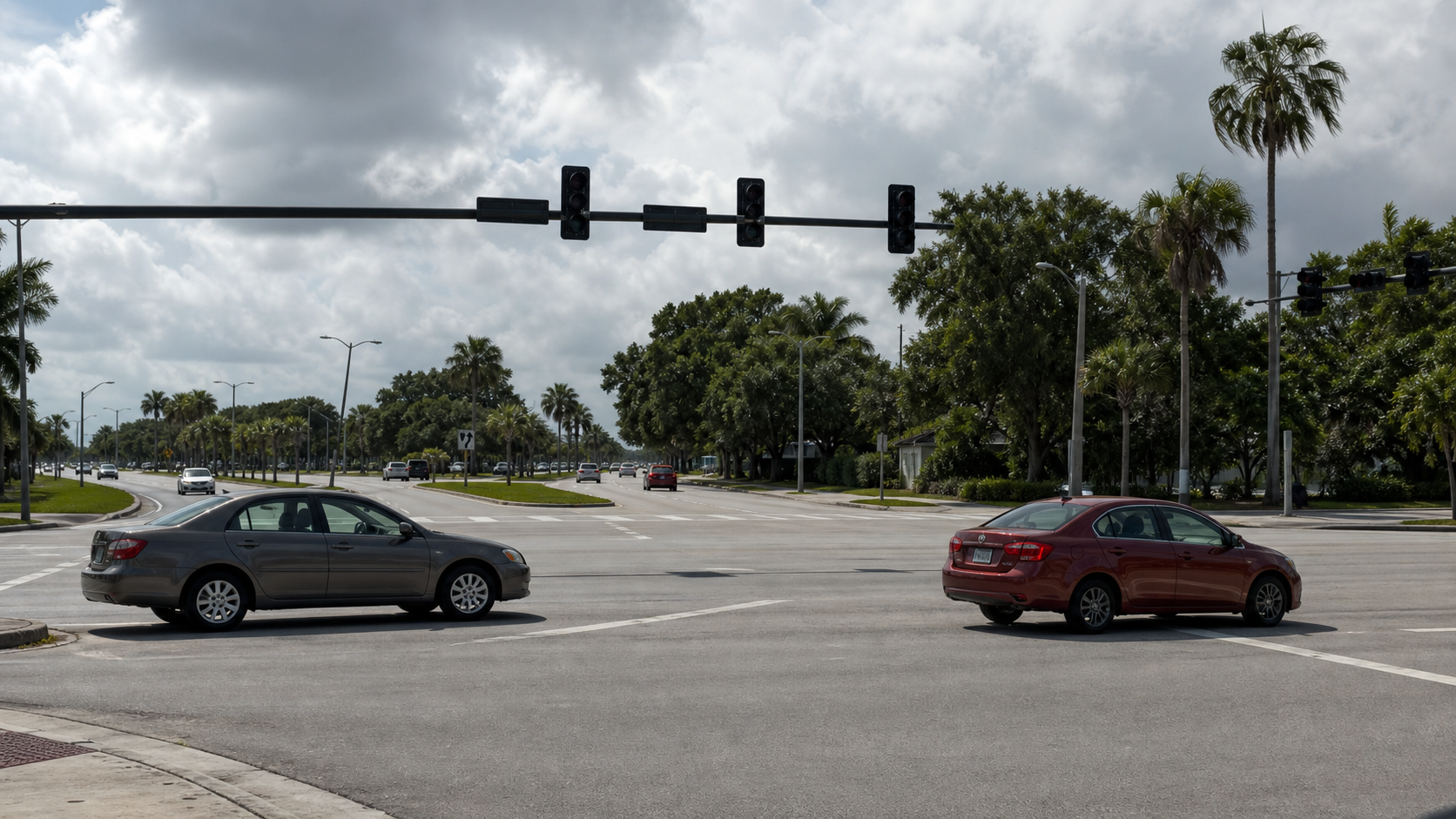
A traffic signal failure accident claim can look straightforward at first: the light was dark, two vehicles entered the intersection, and a collision followed. In reality, fault often depends on what each driver saw, how long the signal had been malfunctioning, and whether anyone followed the rule that applies to an inoperative light. Preserving evidence quickly can make the difference between a clear reconstruction and two competing stories.
The rule at a completely dark signal
Florida law does not treat a dark traffic signal as permission to proceed. Under Florida Statute section 316.1235, a driver approaching an inoperative traffic light must stop as though approaching a stop-sign-controlled intersection. If only some signal heads are out, the driver facing the inoperative light must stop. That rule gives investigators a starting point, but it does not automatically resolve every dispute.
Drivers still must assess who arrived first, whether another vehicle was already in the intersection, and whether it was reasonably safe to proceed. A motorist who rolls through a dark signal, follows the car ahead without making an independent stop, or accelerates despite an obvious conflict may bear responsibility. More than one driver may also share fault.
Flashing lights are different
A signal that is flashing is not necessarily “broken” in the legal sense. Florida Statute section 316.076 distinguishes a flashing red indication from a flashing yellow one. Flashing red calls for a stop before proceeding subject to right-of-way rules. Flashing yellow tells a driver to proceed with caution. Photographs and video must therefore show not only that the signal was unusual, but exactly what it displayed for each direction of travel.
How investigators rebuild the intersection
Evidence in a traffic signal failure accident claim usually comes from several sources. Intersection cameras, nearby business surveillance, dashboard cameras, and doorbell footage may capture the signal cycle or the vehicles’ approach. Witnesses can describe whether the lights were dark, flashing, or changing. Vehicle damage, debris, tire marks, event-data information, and final resting positions help reconstruct speed and movement.
Signal timing and maintenance records can be equally important. The agency responsible for the intersection may have outage reports, work orders, complaints, controller logs, or communications with law enforcement. A utility interruption or storm record may establish when the problem began. Those records can disappear under routine retention policies, so a prompt preservation request is often valuable.
Fault is about conduct, not just equipment
A failed signal can contribute to a crash without being the only cause. Investigators also examine distraction, speed, visibility, following distance, lane choice, impairment, and evasive action. For example, a driver who entered after stopping may still have proceeded when another vehicle was plainly too close. A driver who had the apparent right of way may have been moving too fast to react. Florida’s comparative-fault principles can make the allocation of responsibility important to the value of a claim.
Intersection crashes can resemble disputes involving a left-turn collision or a wrong-way driver: the geometry matters, but the seconds before impact matter more. A careful diagram and synchronized timeline are more persuasive than a simple statement that one driver “had the light.”
What an injured person can preserve
If health and safety permit, photograph every signal head from each approach, not merely the damaged vehicles. Record the intersection name, time, weather, construction activity, and whether police or repair crews arrived. Ask witnesses for contact information. Report symptoms accurately and obtain appropriate medical care; gaps or vague histories can later complicate the connection between the collision and an injury.
Keep the crash report number, towing documents, repair estimates, medical records, receipts, and communications from insurers. Avoid guessing about the light’s condition in a recorded statement. If you do not know whether it was dark or flashing, say what you actually observed. The same evidence-first approach is useful in a crash without a police report and a chain-reaction accident.
Could a public agency be involved?
Sometimes a maintenance failure raises questions about a government entity or contractor, but that is not automatic. Responsibility can turn on control of the signal, notice of the problem, response time, contractual duties, causation, and immunity rules. Claims involving Florida public entities are subject to special procedures under section 768.28. Identifying the correct parties early helps avoid sending notice to the wrong office or overlooking a private maintenance contractor.
How a traffic signal failure accident claim comes into focus
A useful review starts with the signal display, approach paths, available video, and each driver’s opportunity to avoid the crash. Our practice-area overview explains how Tucker Law Group handles injury matters. If a malfunctioning intersection caused injuries, you can also contact the firm to discuss the evidence and next steps.
This article provides general information and is not legal advice. Every case is different, and reading this page does not create an attorney-client relationship.