Blinded by the Sun: A Florida Crash Scenario Explained
A sun glare accident claim often begins with a familiar sentence: “I could not see because the sun was in my eyes.” Glare can be intense on an eastbound morning commute or a westbound evening drive, but it does not automatically excuse a collision. Consider a hypothetical Florida intersection to see how evidence can change the analysis without inventing a client or result.
The setup: a low sun and an ordinary intersection
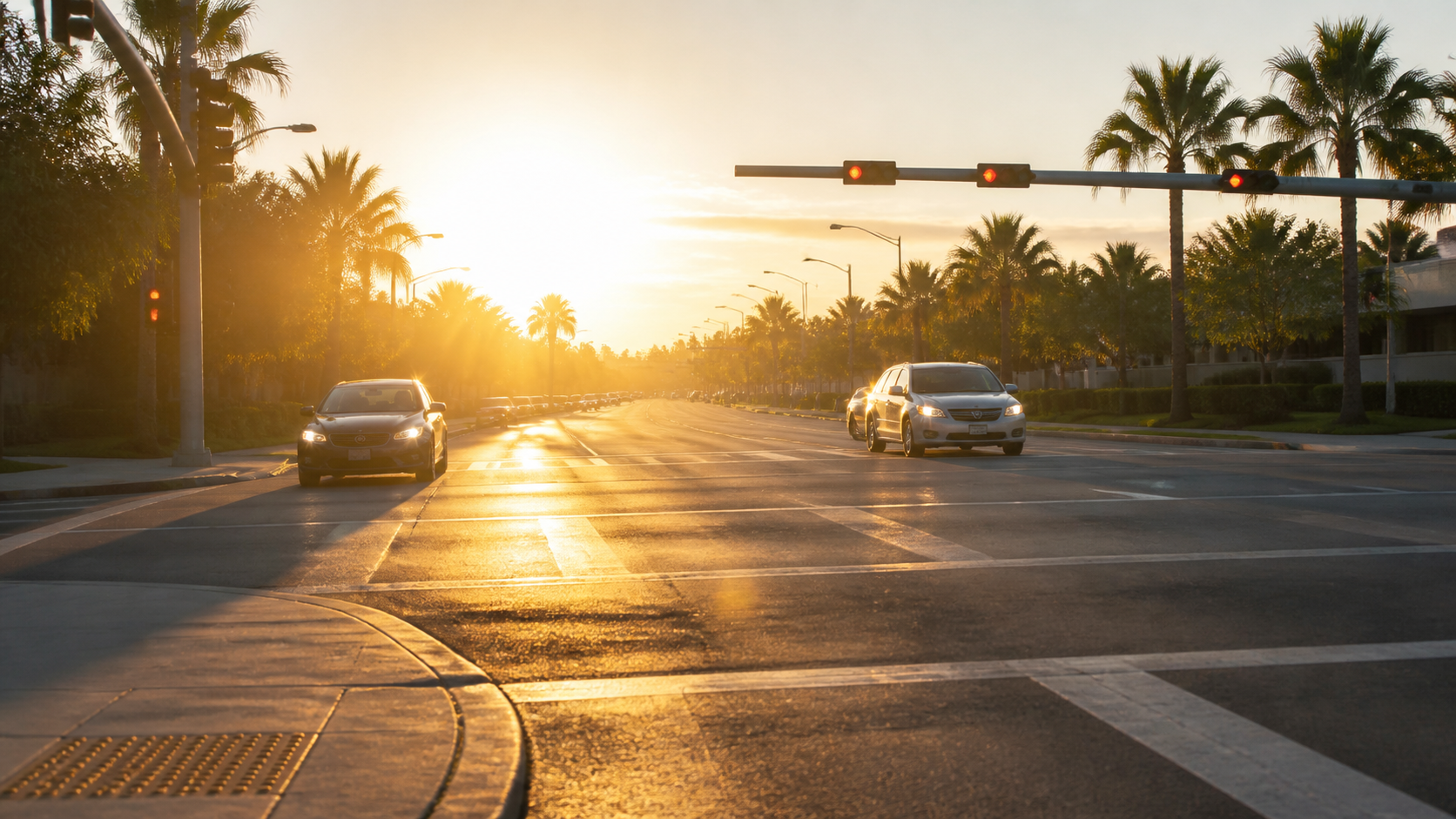
Imagine Driver A traveling east shortly after sunrise. The sun sits just above the road, and reflections stretch across a damp windshield. Driver B enters from a side street. The vehicles collide near the crosswalk. Driver A says the traffic light was green but admits the glare made Driver B difficult to see. Driver B says the signal had changed and Driver A never slowed.
Those accounts identify disputed facts, not the answer. Investigators need the signal phase, each vehicle’s approach speed, sight lines, braking, lane position, and the moment Driver B entered. The work resembles a left-turn collision investigation: the right-of-way rule matters, but the seconds before impact often decide how it applies.
What the driver facing glare was expected to do
Florida’s speed rule requires driving at a reasonable and prudent speed under actual and potential hazards. Section 316.183 also requires speed control as necessary to avoid a collision. An investigator may therefore ask whether Driver A slowed, increased following distance, used a visor, cleaned the windshield, or continued despite severely limited vision.
Glare is foreseeable at certain times and directions. That does not make every glare-related driver negligent. A sudden reflection from glass or water may be brief, and another road user may still violate a signal. The analysis is about whether each person used reasonable care under the specific circumstances.
The scene visit changes the picture
A useful inspection occurs near the same time of day and season, because the sun’s angle changes. Photographs should show the driver’s eye-level view, signals, signs, tree cover, buildings, elevation, lane geometry, and reflective surfaces. Weather records can establish clouds, rain, or haze. Construction records may explain a temporary obstruction.
One photograph pointed at the sun is not enough. Wide views should identify where Driver B became visible and whether another vehicle blocked the view. A short video showing the approach can demonstrate how glare increases and recedes.
Digital evidence tests both stories
Intersection and business cameras may capture signal timing even if glare washes out part of the image. Dash cameras, doorbell footage, and phones may supply location and time. Vehicle event data may record braking, throttle, and speed near impact. Investigators should preserve original files before systems overwrite them.
Witnesses positioned at different angles may not experience the same glare. Their location must be recorded before relying on an opinion that visibility was “fine” or “impossible.” A witness behind Driver A may also clarify whether brake lights activated. These principles are useful when a traffic signal problem is alleged too.
Windshield condition can become a quiet issue
Interior film, condensation, scratches, tint, dashboard reflections, and worn wipers can amplify glare. Photograph the windshield from inside and outside before cleaning or repair. Preserve repair receipts and inspection records. Sunglasses and visor position can be documented without assuming that their absence proves fault.
The goal is not to blame someone for imperfect equipment automatically. It is to determine whether visibility was limited by the natural light alone or by conditions within the driver’s control.
Suppose Driver B also made a mistake
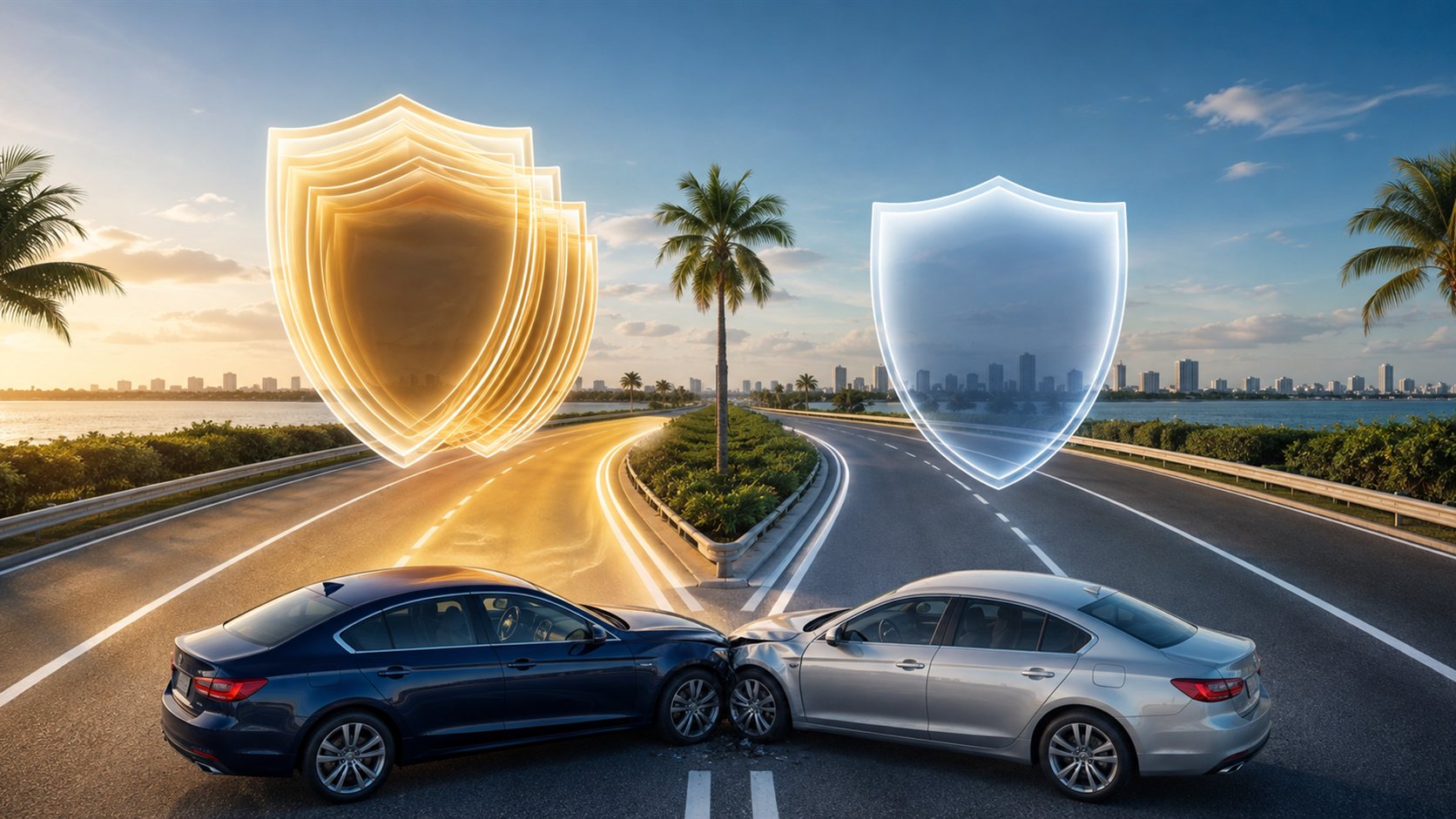
If Driver B entered late, turned across traffic, or ignored a signal, both drivers’ conduct may matter. Florida comparative-fault principles can allocate responsibility among people whose actions combined to cause harm. A driver facing glare does not lose every right of way, and a driver with a favorable signal still must act reasonably when danger is apparent.
Damage patterns and a synchronized timeline may reveal whether Driver A had enough time to react after Driver B entered. Avoiding simplistic labels produces a stronger, more accurate sun glare accident claim.
From hypothetical facts to a real claim
An injured person should preserve photographs, video, witness contacts, the crash report, medical records, wage documents, and insurance correspondence. Report symptoms accurately and do not speculate about a signal or speed. Our article on a crash without a police report offers additional preservation guidance.
Tucker Law Group outlines its personal-injury services on the practice-area page. If glare contributed to a Florida collision, contact the firm for a fact-specific review.
Before repairs, photograph the visor, windshield, dashboard, mirrors, and any mounted devices from the driver’s seat. Record the exact date and time of the scene visit. Preserve eyewear and dash-camera settings when they are genuinely relevant. These details allow an expert or insurer to test the visibility explanation rather than accept or reject the word “glare” in the abstract.
This article provides general information and is not legal advice. Every matter is different, and reading this page does not create an attorney-client relationship.